
• Home
  • About us
  • Capabilities
    • Condo, Coop, HOA Counsel
    • Litigation
    • Business Law
    • Technology
    • Real Estate
    • Employment Law
    • Tax Audits
    • Family Law
  • Insights
  • References
  • FAQ
  • Inquiry
    • Payment
Colbert LawColbert Law
  • Home
  • About us
  • Capabilities
    • Condo, Coop, HOA Counsel
    • Litigation
    • Business Law
    • Technology
    • Real Estate
    • Employment Law
    • Tax Audits
    • Family Law
  • Insights
  • References
  • FAQ
  • Inquiry
    • Payment

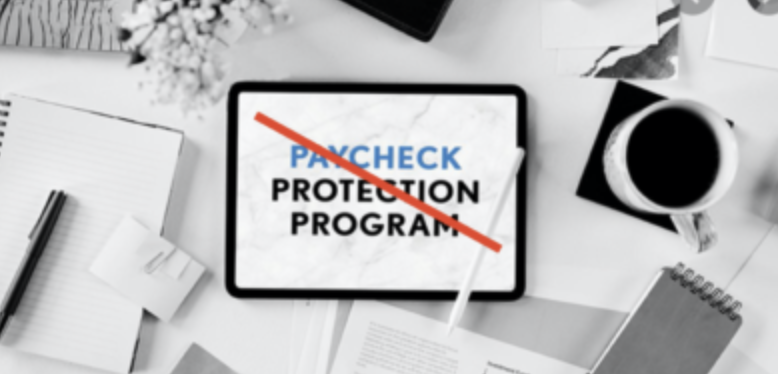
Lenders are excluding Coops, Condos and HOAs from the Paycheck Protection Program

Home BoardsLenders are excluding Coops, Condos and HOAs from the Paycheck Protection Program
Lenders are excluding Coops, Condos and HOAs from the Paycheck Protection Program

Lenders are excluding Coops, Condos and HOAs from the Paycheck Protection Program

Posted by Team Colbert Law Boards, Business, Condo Coop HOA, COVID-19

This is a follow up from our article on April 3rd about the Paycheck Protection Program (“PPP”). Read the article.

Our observation then that it did not seem that the PPP was going to apply to coops, condos and HOAs, is turning out to be true.  Some people in the industry still feel that the PPP should apply and are likely going to lobby for a change but for the time being it seems that community associations are excluded.  

For example, the National Cooperative Bank’s (NCB) website (https://www.ncb.coop) specifically provides now that “Unfortunately, housing cooperatives, condo associations, and homeowner associations are not eligible for this program.”

Stay tuned for more, but for the time being it seems that managers and boards who were gearing up to apply for their associations will not be able to do so for the time being.  

The Treasury Department has not yet officially said that community associations are not eligible for PPP, but as we explained in our article last week, it does not seem that community associations would be eligible.   Now that lenders are speaking on this issue, the lobbying for community associations is sure to follow to try to change things.  While the PPP may not end up applying to them, other programs may open up for community associations; particularly ones struggling with labor expenses like any small business.  We often say that community associations are small businesses which should be governed as such by their boards, the government should acknowledge this reality and open programs to help them.

As previously suggested, if such programs become available, coops, condos and HOAs should get ready now and make sure that their governing documents allow their boards to participate in the programs without first obtaining owner approval.  Reviewing your governing documents now to anticipate and address any such hurdle is a good idea because some programs like the PPP have limited funding which may be on a first come, first serve basis. Be ready or you may lose out on a limited opportunity.

Share

About Team Colbert Law

With offices in New York and Connecticut, we are ready to handle your legal needs. We have been representing condo, coop and HOA boards, businesses and individual clients for over twenty five years.

You also might be interested in

Protect Your Condo Association: The Legal Power of Your Governing Documents

Protect Your Condo Association: The Legal Power of Your Governing Documents

May 13, 2024

A recent decision from the New York Supreme Court, Appellate[...]

New Law – 6 Year Statute of Limitations Applies to Martin Act Claims by the NY Attorney General against Developers

New Law – 6 Year Statute of Limitations Applies to Martin Act Claims by the NY Attorney General against Developers

Aug 26, 2019

The New York Court of Appeals’ decision that a shorter[...]

Navigating Late Fees and Fines: A Guide for Co-op and Condo Boards

Navigating Late Fees and Fines: A Guide for Co-op and Condo Boards

Jul 20, 2024

Governing a cooperative or condominium association requires maintaining order and[...]

Recent Attorney Publications

  • When Contractors Lack Licenses: Key Lessons for Condos, Co-ops, and HOAs July 25, 2026
  • When Bankruptcy Won’t Stop Your Foreclosure Sale: What Condo Boards and Management Need to Know About Repeat Filers July 22, 2026
  • When Repetitive Filings Cross the Line: Lessons from Fulton v. Yameogo July 21, 2026
  • Condominium Boards: Why Being Aware of First Mortgage “Standing” Can Protect Your Community’s Bottom Line July 13, 2026
  • Winning the Common Charge Battle: How Condo Boards Prevail Against Defiant Unit Owners July 2, 2026

Contact Us

Send us a note and we'll get back to you promptly.

OFFICES

  • Manhattan Office
  • 315 Madison Avenue, Suite 4032, New York, New York 10017
  • 646.880.3000
  • 646.880.3048
  • Westchester Office
  • 44 South Broadway, 21st Floor, White Plains, New York 10601
  • 646.880.3000
  • 646.880.3048
  • Connecticut Office
  • 55 Post Road W, 2nd Floor, Westport, Connecticut 06880
  • 203.349.8100
  • 646.880.3048

Latest Publications

  • When Contractors Lack Licenses: Key Lessons for Condos, Co-ops, and HOAs July 25, 2026
  • When Bankruptcy Won’t Stop Your Foreclosure Sale: What Condo Boards and Management Need to Know About Repeat Filers July 22, 2026
  • When Repetitive Filings Cross the Line: Lessons from Fulton v. Yameogo July 21, 2026
  • Condominium Boards: Why Being Aware of First Mortgage “Standing” Can Protect Your Community’s Bottom Line July 13, 2026

© 2026 Colbert Law LLC Attorney Advertising. Prior results do not guarantee a similar outcome.

Highend Logo

Manhattan Office

  • 315 Madison Avenue, Suite 4032, New York, New York 10017
  • 646.880.3000
  • 646.880.3048

Westchester Office

  • 44 South Broadway, 21st Floor, White Plains, New York 10601
  • 646.880.3000
  • 646.880.3048

Connecticut Office

  • 55 Post Road W, 2nd Floor, Westport, Connecticut 06880
  • 203.349.8100
  • 646.880.3048

OUR EXPERTISE

When Contractors Lack Licenses: Key Lessons for Condos, Co-ops, and HOAs

July 25, 2026

A recent NYC Civil Court decision (Fortes v. Decorating and...

When Bankruptcy Won’t Stop Your Foreclosure Sale: What Condo Boards and Management Need to Know About Repeat Filers

July 22, 2026

For condominium boards foreclosing on unpaid common charges,...

When Repetitive Filings Cross the Line: Lessons from Fulton v. Yameogo

July 21, 2026

Community association boards—whether governing condos,...

Condominium Boards: Why Being Aware of First Mortgage “Standing” Can Protect Your Community’s Bottom Line

July 13, 2026

When a condominium unit owner defaults on their monthly...

Winning the Common Charge Battle: How Condo Boards Prevail Against Defiant Unit Owners

July 2, 2026

Condominium boards and property managers face a unique,...

When the Neighbor Builds: What Condo and Co-Op Boards Need to Know

June 29, 2026

Construction in New York City is a fact of life, but when a...

Succession Rights in Limited-Equity Co-ops: Practical Lessons from Mutual Redevelopment Houses v. Manyevitch

June 12, 2026

Succession disputes are among the most sensitive and...

The Post-Settlement Trap: What Fiondella Teaches Co-op Boards About Stipulations and Continuing Habitability Claims

June 9, 2026

For New York cooperative boards and managing agents,...

The Derivative Action Threat: Why “Limited Common Elements” Present Litigation Risks for Condominium Boards and Managers

May 16, 2026

A recent decision by the Appellate Division, First...

Governance and Rule-Making in the Modern Condominium

April 27, 2026

Reflections on 10MSW17D LLC v. Bd. of Managers of 10...

Don’t Delay: Why Timely Enforcement of Common Charges is Critical for Condo Boards

April 15, 2026

A recent decision from the Supreme Court of New York,...

RPAPL § 881 Licenses, and Why Fee Reimbursement Is a Core Deal Term

April 13, 2026

Boards and managers of condominiums, cooperatives, and...

The 432 Park Decision: A Masterclass in Risk Management for New York Condo Boards

April 2, 2026

New York condominium boards and management companies operate...

Protecting Your Building’s Integrity: Lessons from Board of Mgrs. of the 80th at Madison Condominium v. 1055 Madison Ave. Owners LLC

March 31, 2026

As a condominium board member or property manager, your...

Press Enter to search · Esc to close