
A recent decision from the Supreme Court of New York, Appellate Division, serves as a stark reminder for condominium boards and management companies: when it comes to collecting unpaid common charges, time is literally money.
In Board of Mgrs. of Grandview Condominiums v. Medina, 245 A.D.3d 878 (2026), the court reaffirmed a board’s power to enforce liens, but also set a strict boundary on how far back those collections can go.
The Power to Enforce: Real Property Law §§ 339-z and 339-aa
The court’s decision highlights the robust statutory framework available to New York condominium boards. Under Real Property Law § 339-z, a board of managers holds a lien on each unit for unpaid common charges. This lien can be foreclosed upon in a manner similar to a real estate mortgage under Real Property Law § 339-aa.
In the Medina case, the Board successfully established its authority by providing:
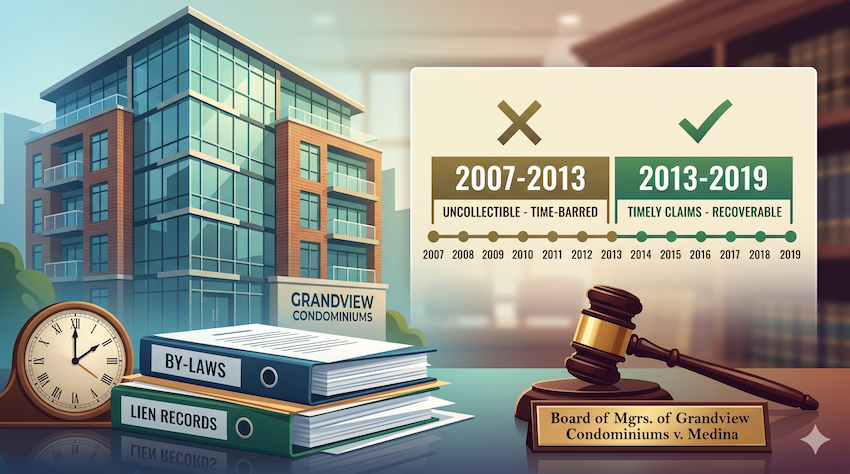
- Governing Documents: The bylaws and the owner’s deed, which mandated the payment of charges.
- Detailed Records: An affidavit from the Board president and payment records showing unpaid dues from 2005 through 2020.
- Recorded Liens: A supplemental lien recorded in 2019.
While the Board proved the “validity of its authority” to impose and collect these charges, they hit a significant legal wall regarding the timeline.
The Six-Year Trap: CPLR 213(2)
The critical takeaway for management companies is the application of the six-year statute of limitations under CPLR 213(2). The court ruled that:
- Separate Causes of Action: A new “cause of action” accrues for each individual monthly charge as it becomes due.
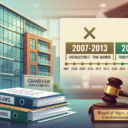
- The Cut-off Date: Because the Board did not commence the action until July 18, 2019, they were only entitled to recover charges that accrued on or after July 18, 2013.
Consequently, the Board was unable to recover any charges from the period between 2005 and mid-2013. Years of arrears were essentially rendered uncollectible because the Board waited too long to file its lawsuit.
Lessons for Boards and Management
The Medina case is a cautionary tale. While the court upheld the Board’s right to pursue the recent debt, the loss of eight years of previous charges represents a significant financial blow to the condominium’s common funds.
Waiting for a “better time” to sue a delinquent owner can result in a permanent forfeiture of the association’s funds. As the Second Department has made clear, the clock is always ticking.
Here is the Court’s decision: