

As a condominium board member or property manager, your primary responsibility is to protect the long-term value and structural integrity of the building. However, disputes over unit owner alterations—particularly those involving exterior walls and façades—often turn into protracted legal battles.
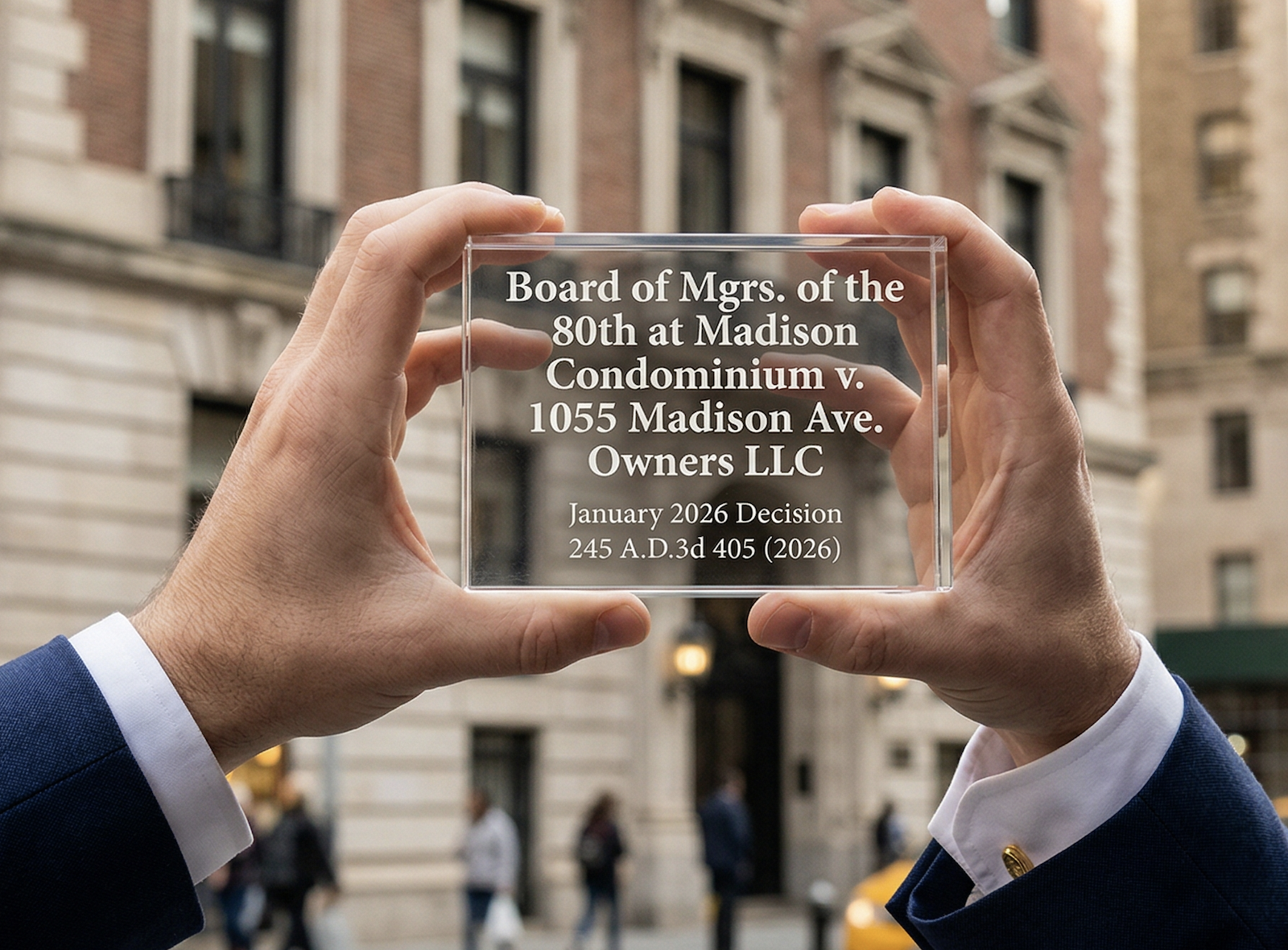
The January 2026 appellate decision in Board of Mgrs. of the 80th at Madison Condominium v. 1055 Madison Ave. Owners LLC offers a blueprint for how boards can successfully defend their governing documents and stop unauthorized work before it becomes permanent.
The Dispute: When Ownership and Authority Collide
In this case, a unit owner attempted to make significant alterations to the building’s exterior, including modifying exterior walls, eliminating existing easements, and affixing signage to the façade.
The Board moved for an injunction, arguing these actions violated the condominium’s declaration and bylaws. The Appellate Division ultimately sided with the Board, reinforcing a critical principle: The Board’s authority over the building’s common elements and exterior “envelope” is paramount.
Why This Case Matters for Your Board
The court’s decision to grant an injunction and declare these actions as violations provides several strategic advantages for boards and managers moving forward:
1. Affirmation of the “Exterior Envelope” Control
This case clarifies that even high-value or commercial unit owners cannot unilaterally alter the building’s façade. If your governing documents define exterior walls as common elements, this decision reinforces your right to seek an immediate injunction to stop work, rather than waiting for the damage to be done and suing for “money damages” later.
2. Strengthening the Business Judgment Rule
In New York, courts typically defer to board decisions under the Business Judgment Rule, provided the board acts in good faith and within its authority. By successfully litigating the 80th at Madison case, the board demonstrated that enforcing the bylaws against unauthorized alterations is a legitimate exercise of board power that courts will respect.
3. Protection Against “Easement Erosion”
The owner’s attempt to eliminate easements was a significant red flag. Easements are often vital for maintenance, utility access, or structural support. This decision reminds boards that they have a fiduciary duty to protect these legal rights, as allowing one owner to “extinguish” an easement sets a dangerous precedent for the entire building.
Action Items for Managers and Boards
How can you use this ruling to your advantage? Here are three proactive steps:
- Review Your “Alteration Agreement”: Ensure your agreements specifically mention that any work affecting exterior walls, windows, or the building façade requires explicit, written Board approval, regardless of the owner’s internal permits.
- Audit Your Signage Rules: The Madison Avenue case specifically addressed the affixing of signs. If your building has commercial components, review your bylaws to ensure you have clear aesthetic and structural standards for signage.
- The “Injunction-First” Strategy: If an owner begins unauthorized exterior work, do not simply send a “nasty letter.” Use the 80th at Madison case as precedent to show your legal counsel that an immediate preliminary injunction is a viable and supported path in New York courts.
The Bottom Line
The 80th at Madison decision is a win for architectural uniformity and board authority. It sends a clear message to unit owners: the governing documents are not suggestions—they are enforceable contracts. By staying vigilant and citing recent case law, boards can deter aggressive owners from taking “self-help” measures that compromise the building’s character.
Here’s the case.