
• Home
  • About us
  • Capabilities
    • Condo, Coop, HOA Counsel
    • Litigation
    • Business Law
    • Technology
    • Real Estate
    • Employment Law
    • Tax Audits
    • Family Law
  • Insights
  • References
  • FAQ
  • Inquiry
    • Payment
Colbert LawColbert Law
  • Home
  • About us
  • Capabilities
    • Condo, Coop, HOA Counsel
    • Litigation
    • Business Law
    • Technology
    • Real Estate
    • Employment Law
    • Tax Audits
    • Family Law
  • Insights
  • References
  • FAQ
  • Inquiry
    • Payment

Posts by jgc@boardsecured.com

Home Author jgc@boardsecured.com

About jgc@boardsecured.com

This author hasn't written their bio yet.
jgc@boardsecured.com has contributed 2 entries to our website, so far.

Coop and Condo Right to Seek Legal Fee Reimbursement at Risk

Coop and Condo Right to Seek Legal Fee Reimbursement at Risk

The New York Appellate Court that oversees the Manhattan and the Bronx Supreme Courts issued a unanimous decision at the beginning of November, 2018, which will significantly impact the right of cooperatives, and likely condominiums, that try to seek the reimbursement of legal fees from defaulting shareholders or owners.

In Krodel v. Amalgamated Dwellings, the Appellate Division, First Department held that the provision in the cooperative defendant’s proprietary lease covering reimbursement of legal fees is “unconscionable and unenforceable as a penalty.”  Thus, even though the cooperative there may have prevailed in the lawsuit, it could not recover its defense counsel’s fees and costs from the shareholder plaintiff who lost.

The provision there is the same or very like the provision in most cooperative’s proprietary leases.  Below is the provision.  Please check your proprietary lease and if it contains the same or a very similar provision, you should seriously consider amending your provision.  This is not an easy task because it will likely require a supermajority of shareholders, but there are ways of accomplishing this.  Some firms like our firm may handle such matter on a flat fee basis so that it is cost effective.

The lease provision provides in Section 7 of the proprietary lease that:

[i] Lessor shall incur any cost, fee or expense (whether paid or not), including reasonable legal fees and other professional fees and disbursements: (a) in performing any act which the Lessee is required to perform; or (b) in connection with any action or proceeding brought by the Lessor against the Lessee, including any counterclaim asserted therein, which is based on a default of the Lessee hereunder or which is based on any other matter or thing relating to this lease, or to the Lessee’s failure to perform any act which the Lessee is required to perform, or to the Lessee’s occupancy in the Apartment, or to the shares of the Lessor issued to the Lessee, or to the Lessor’s Bylaws, Certificate of Incorporation, House Rules, or regulations duly adopted by the Board of Directors; or (c) in connection with any action or proceeding brought by the Lessee against the Lessor, including any counterclaim asserted therein, which is based on an alleged default of the Lessor hereunder or which is based on any other matter or thing relating to this lease, or to any alleged failure by the Lessor to perform any act which the Lessor is required to perform, or to the Lessee’s occupancy in the Apartment, or to the shares of the Lessor issued to the Lessee, or to the Lessor’s Bylaws, Certificate of Incorporation, House Rules, or regulations duly adopted by the Board of Directors, then such cost or expense shall be paid by the Lessee to the Lessor, on demand as additional rent.  The Lessee’s obligation to reimburse the Lessor for such costs, fees and expenses shall include the costs, fees and expenses incurred by the Lessor in (a) obtaining an award of such costs, fees and expenses, including but not limited to proceedings to determine the amount of reasonable legal fees and other professional fees to be awarded, and (b) recovering payment in full of such costs, fees and expenses from the Lessee.

If your proprietary lease provision is the same or similar, and you’re in Manhattan or the Bronx, then the law right now is that the provision is not enforceable and thus, your cooperative or its complaining shareholder can’t recover legal fees or costs even if they are victorious based on this provision.  This is a lot of legalese and if you’re having problems comparing or understanding the provision you should seek counsel.  If you’re not represented and would like to know for sure, we would be happy to provide a free consultation.  This is a critical issue for community associations because the ability to seek effectively a reimbursement of legal fees and costs is a tremendous deterrent against bad conduct and could devastate a cooperative or condominium that can’t seek reimbursement.

The Court’s problem with the provision is that it provides for example, that even if the complaining shareholder was the winner in a lawsuit, the cooperative could still demand that the shareholder pay its defense fees and costs.  In the Court’s words:

In the present case, we find that an attorneys’ fees provision which provides that the tenant must pay attorneys’ fees if it commences an action against the landlord based upon the default of the landlord is unconscionable and unenforceable as a penalty. Paragraph 6(7)(c) of the proprietary lease permits the landlord to recover attorneys’ fees when the tenant brings an action against the landlord even when the landlord is in default. To enforce such a provision would produce an unjust result because it would dissuade aggrieved parties from pursuing litigation and preclude tenant-shareholders from making meaningful decisions about how to vindicate their rights in legitimate instances of landlord default.

It is not clear whether the Court considered Section 234 of the Real Property Law, which is applicable to co-ops (but not condominiums), and was meant to level the playing field with regard to legal fee and cost reimbursement between landlords and tenants.  A review of the legal papers submitted by Amalgamated shows that they did raise Section 234 which provides that if a residential lease permits a landlord to recover legal fees incurred in any action or proceeding arising out of the lease, the tenant is also entitled to recover legal fees if it successfully defends or prosecutes an action arising out of the lease.  The Court, however, did not discuss Section 234 in its decision, but it is possible that the Court silence on that point meant that it was just not persuaded by the point.

All of the above applies to cooperatives with proprietary lease provisions like the one above, but it also could have reaching effect for condominium as well.  As stated, this decision was by the First Department, Appellate Division which governs the Courts in Manhattan and the Bronx.  If you’re a cooperative in other places in New York like Brooklyn, Long Island, Westchester, etc., the Courts governing your cooperative would not be bound by the decision but could decide that they are persuaded by the decision.

If you’re a condominium, you should review your bylaw provision on the reimbursement of legal fees and expenses. If it allows you to recover legal fees and expenses even if the other side prevails, then a court could apply the Krodel decision and hold that your provision unconscionable and unenforceable.  As stated, the ability for a cooperative or a condominium to recover its legal fees and costs from a defaulting shareholder or owner is very important.

Click here to read the Court’s decision.

Florida Condo Websites Due Today – January 1, 2019

Florida Condo Websites Due Today – January 1, 2019

January 1, 2019 was the due date for Florida condominiums with 150 for more units to have a compliant web portal available for unit owners to access a laundry list of official records. The Florida lawmakers originally set July 1, 2018, and then extended it to January 1st.  If you are a condo in Florida with 150 for more units, you need to comply.

If you are a property manager, attorney, accountant, insurance broker or other professional serving such a condo, you ought to take care to advise them that they need to comply.  Otherwise, there are consequences for them but also for you.

If you’re general counsel and don’t advise your condo client that they need to comply, you arguably expose yourself to professional liability.  Same goes for property management companies and other professionals who ought to be advising their clients to comply with the law.

We have heard from the insurance industry that if condos are supposed to comply and don’t, there are all sorts of insurance consequences like statutory fines and penalties not covered by D&O insurance, willful non-compliance not indemnifiable to board members, non-compliance a breach of fiduciary duty by board members and non-compliance exposing CAM’s to professional liability claims under their E&O which may or may not apply.

All it takes is one owner in a condo with 150 or more units (very likely) to request web portal access to the requisite official records, which triggers consequences that any condo should avoid.

Indeed, there are significant consequences which will be implicated if an applicable condo does not have a web portal up and running now that the January 1, 2019 deadline has happened.

Indeed, Florida Statutes Section 718.111 (12)(c)(1) (“Official Records”) provides that:

“The failure of an association to provide the records within 10 working days after receipt of a written request creates a rebuttable presumption that the association willfully failed to comply with this paragraph. A unit owner who is denied access to official records is entitled to the actual damages or minimum damages for the association’s willful failure to comply. Minimum damages are $50 per calendar day for up to 10 days, beginning on the 11th working day after receipt of the written request. The failure to permit inspection entitles any person prevailing in an enforcement action to recover reasonable attorney fees from the person in control of the records who, directly or indirectly, knowingly denied access to the records.”
 
If your condominium has 150 or more units, don’t play with fire thinking that you can get away with not complying.  It is so easy for you to comply that there is really no excuse for not doing so right now.
 

Office of the Board – Instant, Easy Compliance with the New Florida Web Portal Law

Recent Attorney Publications

  • When Contractors Lack Licenses: Key Lessons for Condos, Co-ops, and HOAs July 25, 2026
  • When Bankruptcy Won’t Stop Your Foreclosure Sale: What Condo Boards and Management Need to Know About Repeat Filers July 22, 2026
  • When Repetitive Filings Cross the Line: Lessons from Fulton v. Yameogo July 21, 2026
  • Condominium Boards: Why Being Aware of First Mortgage “Standing” Can Protect Your Community’s Bottom Line July 13, 2026
  • Winning the Common Charge Battle: How Condo Boards Prevail Against Defiant Unit Owners July 2, 2026

Contact Us

Send us a note and we'll get back to you promptly.

OFFICES

  • Manhattan Office
  • 315 Madison Avenue, Suite 4032, New York, New York 10017
  • 646.880.3000
  • 646.880.3048
  • Westchester Office
  • 44 South Broadway, 21st Floor, White Plains, New York 10601
  • 646.880.3000
  • 646.880.3048
  • Connecticut Office
  • 55 Post Road W, 2nd Floor, Westport, Connecticut 06880
  • 203.349.8100
  • 646.880.3048

Latest Publications

  • When Contractors Lack Licenses: Key Lessons for Condos, Co-ops, and HOAs July 25, 2026
  • When Bankruptcy Won’t Stop Your Foreclosure Sale: What Condo Boards and Management Need to Know About Repeat Filers July 22, 2026
  • When Repetitive Filings Cross the Line: Lessons from Fulton v. Yameogo July 21, 2026
  • Condominium Boards: Why Being Aware of First Mortgage “Standing” Can Protect Your Community’s Bottom Line July 13, 2026

© 2026 Colbert Law LLC Attorney Advertising. Prior results do not guarantee a similar outcome.

Highend Logo

Manhattan Office

  • 315 Madison Avenue, Suite 4032, New York, New York 10017
  • 646.880.3000
  • 646.880.3048

Westchester Office

  • 44 South Broadway, 21st Floor, White Plains, New York 10601
  • 646.880.3000
  • 646.880.3048

Connecticut Office

  • 55 Post Road W, 2nd Floor, Westport, Connecticut 06880
  • 203.349.8100
  • 646.880.3048

OUR EXPERTISE

When Contractors Lack Licenses: Key Lessons for Condos, Co-ops, and HOAs

July 25, 2026

A recent NYC Civil Court decision (Fortes v. Decorating and...

When Bankruptcy Won’t Stop Your Foreclosure Sale: What Condo Boards and Management Need to Know About Repeat Filers

July 22, 2026

For condominium boards foreclosing on unpaid common charges,...

When Repetitive Filings Cross the Line: Lessons from Fulton v. Yameogo

July 21, 2026

Community association boards—whether governing condos,...

Condominium Boards: Why Being Aware of First Mortgage “Standing” Can Protect Your Community’s Bottom Line

July 13, 2026

When a condominium unit owner defaults on their monthly...

Winning the Common Charge Battle: How Condo Boards Prevail Against Defiant Unit Owners

July 2, 2026

Condominium boards and property managers face a unique,...

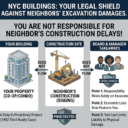
When the Neighbor Builds: What Condo and Co-Op Boards Need to Know

June 29, 2026

Construction in New York City is a fact of life, but when a...

Succession Rights in Limited-Equity Co-ops: Practical Lessons from Mutual Redevelopment Houses v. Manyevitch

June 12, 2026

Succession disputes are among the most sensitive and...

The Post-Settlement Trap: What Fiondella Teaches Co-op Boards About Stipulations and Continuing Habitability Claims

June 9, 2026

For New York cooperative boards and managing agents,...

The Derivative Action Threat: Why “Limited Common Elements” Present Litigation Risks for Condominium Boards and Managers

May 16, 2026

A recent decision by the Appellate Division, First...

Governance and Rule-Making in the Modern Condominium

April 27, 2026

Reflections on 10MSW17D LLC v. Bd. of Managers of 10...

Don’t Delay: Why Timely Enforcement of Common Charges is Critical for Condo Boards

April 15, 2026

A recent decision from the Supreme Court of New York,...

RPAPL § 881 Licenses, and Why Fee Reimbursement Is a Core Deal Term

April 13, 2026

Boards and managers of condominiums, cooperatives, and...

The 432 Park Decision: A Masterclass in Risk Management for New York Condo Boards

April 2, 2026

New York condominium boards and management companies operate...

Protecting Your Building’s Integrity: Lessons from Board of Mgrs. of the 80th at Madison Condominium v. 1055 Madison Ave. Owners LLC

March 31, 2026

As a condominium board member or property manager, your...

Press Enter to search · Esc to close