

Construction in New York City is a fact of life, but when a neighboring developer starts digging, boards and property managers understandably worry about structural damage and liability.
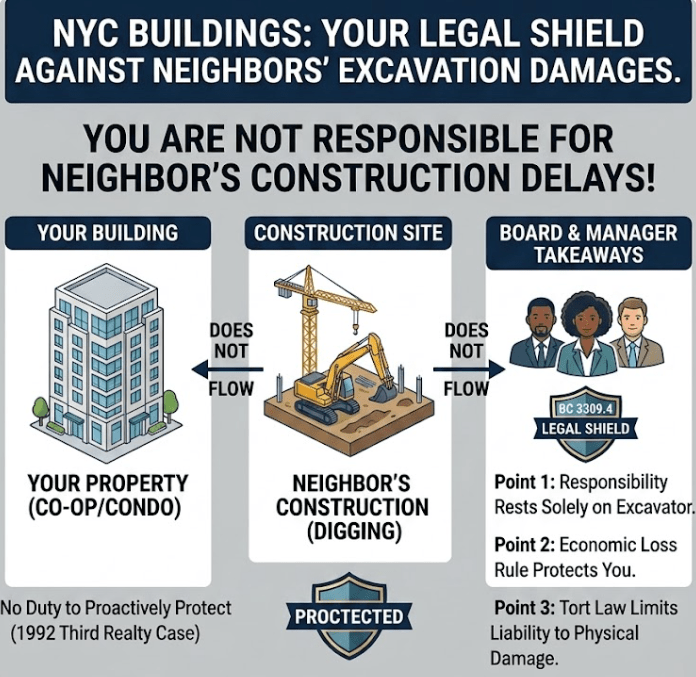
A critical ruling by New York’s Appellate Division (1992 Third Realty LLC v. Third Avenue NY Realty LLC) offers major reassurance: Your building is not responsible for protecting a neighbor’s construction project.
Here is a quick breakdown of the case and the essential takeaways for your board.
The Case: Neighbor Blames Building for Delay Damages
A Manhattan developer began excavation work that, according to the neighboring building owner, caused the adjacent building to lean and settle. The Department of Buildings (DOB) stepped in and issued a stop-work order, directing the developer to halt construction and provide remedial measures to stabilize the neighboring building.
After the building owner sued the developer, the developer fired back with a negligence counterclaim, demanding $16 million in delay damages. Their argument? The existing building should have been designed or retrofitted to handle the neighbor’s future excavation.
On appeal, the Appellate Division reversed the lower court and dismissed the developer’s negligence counterclaim at the pleading stage on two major grounds:
1. No Duty to the Neighbor: A building owner owes zero duty to proactively protect a neighboring developer’s future excavation work.
2. The Burden is on the Digger: Under NYC Building Code § BC 3309.4, the legal responsibility to preserve and protect adjoining structures rests solely on the excavator.
What This Means for Your Board
1. You Are Not an Insurer for Next Door
You do not have to predict future construction next door or alter your property to accommodate it. If a neighbor’s digging damages your building, they are liable for the property damage, not you.
2. The “Economic Loss Rule” Protects You
Even if your building’s condition complicates a neighbor’s excavation, they cannot sue you for purely financial losses (like construction delays or lost profits). Tort law generally restricts recovery to actual physical property damage or bodily injury.
3. The License Request is a Critical Legal Step
By law, the developer must ask you for a “license” (temporary access) to enter your property to install protections, like monitoring equipment or underpinning.
If they don’t ask: They are still fully liable for any damage they cause.
If they ask: Do not simply ignore or refuse them without legal counsel. While this case confirms the excavator bears the legal burden of protection, a separate body of law (RPAPL 881) governs court-ordered access, so unreasonably blocking a legitimate request can create its own complications.
Quick Action Plan for Managers and Boards
Demand Advance Notice: Developers must give you written notice at least 60 days before starting work that requires property access.
Get a Baseline Inspection: Before they break ground, hire an engineer to document your building’s current condition with photos and video. This is your insurance policy if cracks form later.
Review the Monitoring Plan: Ask for the developer’s engineering plan. They are required to monitor your building’s movement. Consider having your own engineer review it to ensure it is robust enough.
Call the DOB If Needed: If you see structural warning signs (sticking doors, new cracks) and the developer ignores you, contact the DOB immediately. As this case proves, a DOB stop-work order forces the developer to fix the issue at their own expense.
Consult Counsel Early: The moment a developer hands you a license agreement to sign, pass it to your building’s attorney. Never sign a neighbor’s access agreement without legal and engineering review.
Here is the Court’s decision: