
• Home
  • About us
  • Capabilities
    • Condo, Coop, HOA Counsel
    • Litigation
    • Business Law
    • Technology
    • Real Estate
    • Employment Law
    • Tax Audits
    • Family Law
  • Insights
  • References
  • FAQ
  • Inquiry
    • Payment
Colbert LawColbert Law
  • Home
  • About us
  • Capabilities
    • Condo, Coop, HOA Counsel
    • Litigation
    • Business Law
    • Technology
    • Real Estate
    • Employment Law
    • Tax Audits
    • Family Law
  • Insights
  • References
  • FAQ
  • Inquiry
    • Payment

Business

Home Business (Page 8)
Condominium Sponsor Members can be Held Responsible

Condominium Sponsor Members can be Held Responsible

Condominium associations often deal with a variety of issues during the transition process from developer control to homeowner control. One common challenge is holding “sponsor members” accountable for problems that arise during the construction or sale of units. Sponsor members are typically developers, builders, or other entities that establish the condominium and retain a level of control during the initial phases. 

Under most state condominium laws, sponsor members owe certain legal duties to the association and unit owners. These duties relate to completing construction properly, providing adequate funding for reserves, and disclosing all relevant information about the property’s condition. If sponsor members breach these duties, the condominium association may have valid legal claims against them. 

There have been many cases across the country where condo associations have pursued legal action against sponsor members for construction defects, budget deficits, or incomplete turnover documentation.

In a recent case, we were able to tie up the sponsor with an injunction claim and motion from dissipating its assets. It is critical to hold the sponsor and its members responsible as early as possible before they transfer assets and liquidate the sponsor entity. Even if the sponsor can’t be stopped, associations can still go after the sponsor members and others who have responsibility.

For example, the Board of Managers the 443 Greenwich Street Condominium sued its sponsor’s members who were designated as board members of the condo during the control period. Like all board members, sponsor members have a fiduciary duty to act in the best interest of the condo and not the sponsor. The 443 Greenwich Street Condominium averred that the sponsor board members fraudulently passed on to the unit owners the costs of construction and maintenance disguised as condominium common charges, and that they deliberately cut corners when renovating the building by making the renovations in a manner departing from the operating plan and calculated to save the sponsor money. The Appellate Division First Department upheld the trial court’s refusal to dismiss the claims of breach of fiduciary duty against the sponsor board members. The Court held that the business judgment rule does not foreclose the cause of action for breach of fiduciary duty. At the pleading stage, the allegations are sufficient to overcome the business judgment rule, as plaintiff has alleged that the sponsor’s principals acted in bad faith and that their actions were tainted by conflict of interest and fraud. See the decision.

When problems arise, it is critical for condo boards to consult experienced legal counsel to review their options. An attorney can help determine if the sponsor member violated any legal duties and whether a lawsuit or settlement demand is warranted. The condo’s governing documents and state laws must also be carefully examined, as they may impact what claims are viable. With proper guidance, condo associations can potentially hold sponsor members financially accountable for their actions.

Condo, Coop, HOA Board vs. Dissidents – Navigating Contentious Times

Condo, Coop, HOA Board vs. Dissidents – Navigating Contentious Times

In the intricate realm of community associations, addressing the process of compelling a vote to remove a board is a crucial but often overlooked aspect. One of the primary challenges arises when the sitting board refrains from calling a special meeting, necessitating potential litigation funded personally by the owners or shareholders. In such scenarios, it becomes imperative for both the dissidents seeking change and the incumbent board to engage legal counsel, ensuring the association’s proper representation and protection.

A prevailing issue within associations is the absence of a clear mechanism for compelling a vote to replace the board when the existing leadership remains resistant to a special meeting. The default resolution often involves legal action, with the onus of funding such litigation falling on the individual owners or shareholders. This financial burden can pose a significant obstacle for those seeking change within the community.

For the sitting board, navigating through these challenges requires legal guidance to ensure that the association is not only properly represented but also shielded from potential vulnerabilities. Boards must recognize that while members may change, the entity remains, and the overall interests of the community need to be secured. Proper legal counsel becomes a cornerstone in safeguarding the association’s stability during periods of transition.

Dissidents advocating for a board change must understand the legal avenues available can empower dissidents to navigate the process more effectively and peacefully, appreciating that their own self interest may be important to them, but if they prevail, that self interest must be set aside and the board has a fiduciary duty to make decisions that are in the best interest of the community as a whole.

Regardless of the prevailing sentiments towards the current board, it is paramount that all parties involved, including incumbents, dissidents, and the professional management team, prioritize fairness and compliance with the organization’s bylaws and applicable laws. Fostering a transparent and equitable environment during this transition is crucial to maintaining the community’s reputation and ensuring a smooth evolution of leadership.

During periods of contention, when ownership interests are at stake, proper management and legal counsel play pivotal roles in guiding the organization through tumultuous times. The emphasis should always be on preserving the integrity of the community, creating an atmosphere where both dissidents and incumbents can navigate change without compromising the overall health of the association.

In the ever-evolving landscape of condo board dynamics, addressing the challenges of compelling a vote to replace the board requires a multifaceted approach. Engaging legal counsel, understanding the available resources, and prioritizing fairness are essential elements in ensuring a smooth transition that upholds the best interests of the community at large.

Unique Challenges for Condo and Coop Boards Facing Local Law 97 Requirements

Unique Challenges for Condo and Coop Boards Facing Local Law 97 Requirements

New York City’s Local Law 97, passed in 2019, aims to drastically reduce greenhouse gas emissions from large buildings. By 2024, condominium and cooperative buildings over 25,000 square feet must meet strict emissions limits or face heavy fines. While the law’s environmental goals are laudable, the legislation poses unique financing challenges for condo and co-op boards as they undertake retrofits to improve energy efficiency. 

Assessing Costs and Financing Options

Performing an Energy Audit
The first step for any board is thoroughly auditing their building’s energy systems to identify inefficiencies. A professional engineering study can cost $10,000-$50,000 depending on building size and complexity. While expensive, the audit provides a critical roadmap for planning upgrades and identifying potential savings to help secure financing.

Understanding the Costs of Retrofits
Based on audit findings, boards must estimate costs to upgrade lighting, heating, ventilation, insulation and windows to improve efficiency. Large buildings may require heating and cooling equipment replacement costing millions. Accurately assessing upgrade costs is key for budgeting.

Securing Financing
Boards have several options to fund upgrades, each with pros and cons:
– Special assessments – spreading costs across all unit owners avoids interest payments but may overburden some financially. 
– Loans – borrowing at favorable rates preserves owner capital but adds interest costs. Securing lender approval may require financial history review.
– Government incentives – grants and rebates can significantly offset costs but often require complex applications with no guarantee of reward.
– Energy services agreements – third party installs upgrades in exchange for sharing cost savings. This avoids upfront costs but reduces potential savings.

Unique Co-op/Condo Challenges

Navigating Complicated Decision Making
Unlike other buildings, co-ops and condos require board or owner/shareholder approval for major financial decisions, requiring extensive consultation and consensus. Streamlined processes are needed to meet tight compliance deadlines.  Using electronic voting applications like www.ballotmanagment.com has helped boards meet their voting requirements which are usually a supermajority of owners in condos to approve borrowing above a certain threshold.

Managing Cash Flow Limitations
Many co-ops/condos operate on tight budgets with limited cash reserves. Large special assessments or loans may be unfeasible, especially amid broader economic uncertainty. Access to flexible government backed financing is crucial. 

Upgrading Older Building Systems 
The older systems found in many co-op/condo buildings often require more extensive upgrades to meet emissions targets, exacerbating costs. Access to qualified contractors may also be limited for outdated technology.

Call for Supportive Policy

While the environmental goals of Local Law 97 are admirable, many co-op and condo boards will struggle to finance the major capital projects required within the law’s tight timeline. To enable success, lawmakers must provide enhanced financing assistance, incentives and flexible compliance options tailored to the unique needs of residential cooperatives and condominiums. The road ahead will not be easy, but ensuring these buildings reduce emissions is critical for the climate future of New York City.

New Federal Corporate Transparency Act Filing Requirement – Coop, Condo and HOA Board Alert

New Federal Corporate Transparency Act Filing Requirement – Coop, Condo and HOA Board Alert

If your entity was created by the filing of a document with the secretary of state, including coops, HOAs and maybe condominiums, the federal government is requiring the reporting of personal identifiable information about certain of their beneficial owners. It’s called the Corporate Transparency Act (“CTA”) and the reporting is to the Financial Crimes Enforcement Network (FinCEN) of the U.S. Department of Treasury. The filing can be done electronically and the failure to do so has harsh penalties that coop, HOA and condo boards must avoid.

Reporting entities in existence prior to January 1, 2024, must file their initial report by December 31, 2024. So existing coop, HOA and condo boards have a year to report. Reporting entities created on or after January 1, 2024, but before January 1, 2025, will have 90 days to file their initial report. Any Reporting entity created on or after January 1, 2025, will have 30 days to file the initial report. FinCEN’s guidance and regulations are evolving and we would hope that FinCEN will provide further guidance as to whether coops, HOAs and condos must file and comply with the CTA.

The willful failure to report complete or updated beneficial ownership information to FinCEN, or the willful provision of or attempt to provide false or fraudulent beneficial ownership information, may result in a civil or criminal penalties, including civil penalties of up to $500 for each day that the violation continues, or criminal penalties including imprisonment for up to two years and/or a fine of up to $10,000. Senior officers of a reporting entity who fail to file a required beneficial ownership interest report may be held accountable for that failure.

Because New York coops and HOAs were created by the filing of a document with the secretary of state they are required to file and comply with the CTA. If a condo board is incorporated, it will be required to file and comply with the CTA as well, but it is not yet clear whether condos which are unincorporated associations in New York are required to file and comply. The safe bet is file and comply for now, but condo boards can wait for now until FinCEN provides some guidance.

Reporting requires the following: a) disclosures about its beneficial owners (as defined by the CTA); b) information about the reporting entity; and c) a certification that its report is true, correct, and complete.

Updated or corrected reports must be filed within 30 days of any change of information previously submitted to FinCEN about the beneficial owners or the reporting entity. 

The issue with community association entities that are required to report under the CTA is who are the beneficial owners that have to give personal information about themselves.

 Under the CTA, a beneficial owner is any individual who, directly or indirectly, either exercises substantial control over the reporting entity or owns or controls at least 25% of the ownership interests of a reporting entity. The regulation provides three specific indicators to determine if an individual has “substantial control:”

  1. The individual serves as a senior officer of a reporting entity; or
  2. The individual has authority over the appointment or removal of any senior officer or a majority of the board of directors (or similar body) of a reporting entity; or
  3. The individual directs, determines, decides, or has substantial influence over important decisions made by a reporting entity.

Beneficial owners of coops, HOAs and condos will likely include the following:

  1. Directors, managers, and certain key officers (as identified pursuant to the CTA) of the coop/HOA/condo;
  2. Shareholders/members/unit owners who own 25% or more of the shares/common interest in the coop, HOA or condo; and
  3. Sponsors of coops/HOAs/condos who remain in control of the entity or have at least 25% ownership therein.

Each beneficial owner must provide the following information in the filing with the FinCEN:

  1. Full legal name;
  2. Date of birth;
  3. Residential street address; and
  4. Unique identifying number contained in:
    • a valid passport,
    • government or tribal identification document, or
    • state-issued driver’s license. If an individual has none of these forms of identification, then a valid foreign passport may be used.

The unique identifying number must be accompanied by the name of the issuing jurisdiction and an image of the document from which the number was obtained.

Reporting entities must provide the following information about the entity:

  1. Full legal name, as well as any trade or d/b/a names;
  2. Street address for the principal place of business, if it is in the United States or the primary U.S. location where business is conducted;
  3. Jurisdiction of formation for both foreign and domestic companies as well as the state or tribal jurisdiction where a foreign company first registers; and
  4. TIN, such as an Employer Identification Number.

In navigating the evolving landscape of FinCEN guidelines, reporting entities must prioritize compliance with beneficial ownership reporting requirements. Staying informed, adhering to specified timelines, and ensuring accurate information submission are imperative to mitigate the risk of penalties. As FinCEN continues to refine its regulations, entities, including coops, HOAs, and condo boards, should remain vigilant for further guidance regarding whether they are covered by the CTA and their reporting obligations.

Navigating the Complex Landscape of E-Bike Bans or Restrictions in Condos, Coops and HOAs

Navigating the Complex Landscape of E-Bike Bans or Restrictions in Condos, Coops and HOAs

In recent times, the proliferation of E-Bikes, coupled with concerns about their combustible batteries, has thrust the issue into the spotlight. Nowhere is this more apparent than on the bustling streets of New York City, where E-Bikes seem ubiquitous. The potential dangers, including fire risks, property damage, and casualties, have prompted association boards to grapple with the critical question of whether to impose a ban on E-Bikes within residential apartments. Addressing this matter is not just a matter of safety but also a source of potential liability for an association and its board if not handled properly.

Legal Considerations

The pivotal starting point for any association board is a careful examination of the governing documents. Does the board possess the requisite authority to either ban or restrict E-Bikes within the community? Once satisfied with this legal foundation, the next step is determining the extent of legislation needed. Boards may deliberate on options ranging from a complete ban to allowing storage in common areas outside apartments or implementing other restrictions designed to safeguard the community.

The National Law Journal recently explored this topic, shedding light on the NYC Housing Authority’s initial ban on E-Bikes, subsequently modified in response to significant opposition. The article suggests an inclination towards adopting guidelines rather than outright bans as a more balanced approach to address concerns.

However, considering that allowing E-Bikes inside buildings could turn catastrophic, a ban may be entirely reasonable for a building or complex with closely situated neighbors.

Drafting and Enforcing Legislation

Whether opting for a ban or guidelines, the meticulous drafting of governing document changes or rules is crucial. It could be that a vote of owners is required or the approach that a board chooses in order to take to pulse of the community. Once the authority is vetted, the drafting must begin. The ban or regulation must not only be clear and concise but also legally enforceable. Ambiguities could lead to challenges, jeopardizing the intended impact of the legislation.

Enforcement presents another challenge for boards, with differences in approach between condos, coops, and HOAs. Boards must evaluate their authority to impose fines and decide whether legal action will be taken to ensure compliance. If legal action becomes necessary, boards should consider the recoverability of legal fees and costs, ensuring that the enforcement efforts are not only effective but also economically viable.

The multifaceted nature of E-Bike legislation in community associations demands careful consideration from condo, coop and HOA boards. Balancing the interests of the community, crafting legally sound legislation, and implementing effective enforcement mechanisms are all integral components of addressing this evolving issue. As communities continue to adapt to new technologies, a proactive and thoughtful approach will be essential in fostering a safe and harmonious living environment.

Condos and Coops are Impacted by Fannie Mae and Freddie Mac Changes

Condos and Coops are Impacted by Fannie Mae and Freddie Mac Changes

Government backed mortgage lenders, Fannie Mae and Freddie Mac, issued temporary project review requirements relating to significant deferred maintenance in condominiums, co-ops, and similar developments.  To assess a project’s eligibility, Fannie Mae and Freddie Mac each promulgated a standardized “Condo Project Questionnaire Form” to obtain information related to significant deferred maintenance, the plan for addressing same, and the corresponding financial burden on condos and unit owners.

In July 2023, at the direction of the Federal Housing Finance Agency (FHFA), Fannie Mae and Freddie Mac updated and relaxed their requirements for lenders to issue loans to prospective buyers of condo units. The new guidance is provided by Fannie Mae Selling Guide Announcement (SEL-2023-06) and Freddie Mac Selling Guide Bulletin 2023-15. These were at the direction of the FHFA to move towards permanent guidelines for lenders servicing condo units. They went into effect onSeptember 18, 2023, for all new loan applications, but lenders were authorized to incorporate changes from the date the guidance was issued a few months ago.

The new requirements apply to all condo loans and all loans in a co-op project with five or more attached units, as well as loans under the waiver of project review policy.   While there may be fewer ineligible projects under the new guidelines, many lenders are likely to remain wary of older condo projects or those that may be unable to finance necessary upgrades in the future.

The Fannie Mae/Freddie Mac project review requirements do some of the following:

  • define critical repairs, material deficiencies, and significant deferred maintenance, including defining routine repairs that are not considered critical;
  • prohibit sale of condo loans and co-op share loans in projects in need of critical repairs;
  • prohibit sale of condo loans and co-op share loans in projects with current evacuation orders due to unsafe conditions;
  • require a review of all structural or mechanical inspection reports that have been completed within 3 years of the project review date;
  • provide new requirements for condo or co-op projects with pending or approved special assessments; and
  • prohibit sale of condo loans and co-op share loans in projects with unfunded repairs totaling more than $10,000 per unit.

Critical Repairs

Repairs and replacements that significantly impact the safety, soundness, structural integrity or habitability of the project’s building(s) and/or that impact unit values, financial viability or marketability of the project. These include:

  • Material deficiencies which, if left uncorrected, have the potential to result in or contribute to critical element or system failure within one year;
  • Any mold, water intrusions or potentially damaging leaks to the project’s building(s) that have not been repaired;
  • Advanced physical deterioration;
  • Any project that failed to pass state, county, or other jurisdictional mandatory inspections and/or certifications specific to structural soundness, safety and habitability; or
  • Any unfunded repairs costing more than $10,000 per unit that should be undertaken within the next 12 months (does not include repairs made by the unit owner or repairs funded through a special assessment).

Routine Repairs

These repairs are not considered to be critical and include work that is:

  • Preventative in nature or part of normal capital replacements (e.g., focused on keeping the project fully functioning and serviceable); and
  • Accomplished within the project’s normal operating budget or through special assessments that are within guidelines.

Material Deficiencies

Physical deficiency that affects a property’s safety, soundness and structural integrity.

Significant Deferred Maintenance

Significant deferred maintenance includes deficiencies that meet one or more of the following criteria:

  • full or partial evacuation of the building to complete repairs is required for more than seven days or an unknown period of time;
  • the project has deficiencies, defects, substantial damage, or deferred maintenance that
    • is severe enough to affect the safety, soundness, structural integrity, or habitability of the improvements;
    • the improvements need substantial repairs and rehabilitation, including many major components; or
    • impedes the safe and sound functioning of one or more of the building’s major structural or mechanical elements, including but not limited to the foundation, roof, load bearing structures, electrical system, HVAC, or plumbing

What do the Bulletins Mean for Condo and Coop Boards?

While the new bulletins only directly impact lenders, condos and coops need to be cognizant of these changes and their likely impact.

Two changes boards should pay particular attention to are:

  • Lenders are now required to review all structural and mechanical inspection reports, including reserve studies, completed in the prior three years from the loan project review.
  • Lenders are now prohibited from issuing loans for complexes with unfunded repairs totaling $10,000 or more per unit.

Additionally, it is likely that lenders will continue requesting an expanded range of documents related to the condo or coop when assessing eligibility.  This may include board meeting minutes, board meeting notices, and other documents related to a condo’s plans for financing and completing future repairs. 

The guidelines continue Fannie Mae’s and Freddie Mac’s efforts to address what they have determined to be risky investments. Condo and coop boards should expect Fannie Mae and Freddie Mac guidelines to continue to evolve.

Navigating Legal Challenges: Condo Boards and the Duty to Maintain Common Elements

Navigating Legal Challenges: Condo Boards and the Duty to Maintain Common Elements

In a recent legal battle, LiNQ1, LLC found itself at odds with 170 East End Condominium and its Board of Managers over allegations of negligence, breach of contract, and more. This case, indexed as No. 154594/16 Appeal No. 953 Case No. 2022-04598, serves as a cautionary tale for New York condominium boards, emphasizing the importance of addressing problems with common elements promptly. The Supreme Court, New York County, entered an order on October 4, 2022, denying LiNQ1, LLC’s motion for summary judgment on various claims. This article delves into the key aspects of the case and the implications for condo boards facing similar challenges.

The Allegations

LiNQ1, LLC accused the Board of Managers of 170 East End Condominium of breaching its obligations under the condo’s bylaws and governing documents. The plaintiff argued that the board failed to maintain and repair certain common elements, leading to issues such as moisture accumulation and recurring mold infestations within the plaintiff’s unit.

The specific elements highlighted included a 90-degree chiller pipe above the kitchen ceiling, the ventilation system, and the building’s façade. These alleged deficiencies were identified by plaintiff experts as sources of the persistent problems.

Breach of Contract and Negligence Claims

LiNQ1, LLC sought summary judgment on claims of breach of contract and negligence. The court, however, affirmed the denial, citing triable issues of fact raised by the defendant. Disputes centered on whether problems with the plaintiff’s HVAC unit, ventilation rebalancing, or the lack of proper flashing were contributing factors to the alleged issues.

Additionally, the court considered whether the defendant could be held liable in negligence for breaching its nondelegable duty to maintain common elements in good repair, citing relevant legal precedent (Onetti v Gatsby Condominium, Multiple Dwelling Law § 78[1]).

Tortious Interference with Contract and Breach of Fiduciary Duty

LiNQ1, LLC’s claims of tortious interference with contract and breach of fiduciary duty faced scrutiny. The court found that the plaintiff failed to demonstrate, as a matter of law, that the board deliberately failed to make repairs to render the unit inhabitable, leading to tenant lease terminations.

Issues of fact concerning the defendant’s alleged bad faith in performing repairs also thwarted the plaintiff’s bid for summary judgment on the breach of fiduciary duty claim.

Private Nuisance and Business Judgment Rule

The court further addressed the private nuisance claim, emphasizing that issues of fact needed resolution at trial. Whether the ongoing mold condition resulted from negligence or intentional wrongdoing remained a question to be determined.

The defendant invoked the business judgment rule, arguing that its decisions regarding maintenance and repairs were shielded from judicial review. However, the court rejected this argument, emphasizing that the rule does not protect actions lacking a legitimate relationship to the condo’s welfare or taken in bad faith.

Declaratory Relief and Future Implications

The court concluded that any declaration of the parties’ rights and obligations must await trial to determine the existence of a justiciable controversy.

Lessons for Condo Boards

This case underscores the vital importance of condo boards proactively addressing issues with common elements. Condominiums are governed by bylaws and regulations, and failure to adhere to these obligations may lead to legal repercussions.

Condo boards should consider regular maintenance, timely repairs, and transparent communication with unit owners. The business judgment rule, while providing a degree of protection, does not shield actions taken in bad faith or unrelated to the condominium’s welfare.

As this case proceeds, it serves as a reminder to all New York condo boards to approach their responsibilities with diligence, recognizing the potential legal risks associated with neglecting common element maintenance and repair duties. The outcome of this case will likely set a precedent for similar disputes in at least the First Department (covering Manhattan and the Bronx), emphasizing the need for boards to act in the best interests of the condominium and its residents.

How New York Condo and Coop Boards Can Halt Short-Term Rentals in Their Buildings

How New York Condo and Coop Boards Can Halt Short-Term Rentals in Their Buildings

The rise of short-term rental platforms has created a significant challenge for condominium and cooperative boards across New York. While such rentals can offer convenience for property owners, they often bring about security concerns, increased wear and tear, and potential legal issues for the building’s permanent residents. As a result, many boards seek to restrict or completely prohibit short-term rentals in their buildings. Here are some effective strategies that condo and coop boards can implement to address this issue:

1. Review Governing Documents and Local Laws The first step for any board is to review their building’s governing documents, such as the by-laws, proprietary lease, house rules, and declaration. These documents may already contain provisions that limit leasing arrangements, including short-term rentals. In addition, boards should familiarize themselves with local laws and zoning regulations that might restrict or regulate short-term rentals.

2. Amend Governing Documents If the current governing documents do not adequately address short-term rentals, the board can propose amendments to explicitly prohibit or limit these arrangements. For condominiums, this might mean amending the declaration or by-laws, which typically requires a supermajority vote from the unit owners. In cooperatives, the proprietary lease and house rules can be amended to include specific language that restricts short-term leasing.

3. Establish Clear Definitions and Policies To enforce any restrictions effectively, boards must clearly define what constitutes a short-term rental. A common benchmark is to set a minimum rental period, such as 30 days, to distinguish between permissible and impermissible leases. The board should also develop consistent policies regarding leasing and communicate these to all residents to ensure understanding and compliance.

4. Implement Monitoring and Enforcement Mechanisms Boards should establish a system to monitor compliance with leasing policies. This could include requiring owners to provide copies of lease agreements for review or implementing a registration system for all tenants. Enforcement mechanisms can range from fines for non-compliance to legal action if necessary.  In New York, if short term renting is not permitted under the governing documents, the condo or coop can register their building on the NYC Office of Special Enforcement’s Prohibited Building List which tells the world including short term rental sites like Airbnb and VRBO that apartments in those buildings cannot be rented on a short-term basis (https://www.nyc.gov/site/specialenforcement/registration-law/pbl.page).

5. Educate Unit Owners and Shareholders Education is key to gaining support for any restrictions on short-term rentals. Boards should explain the potential negative impacts of short-term rentals on the community, such as security risks, increased maintenance costs, and the possible devaluation of properties. Informing unit owners and shareholders of these concerns can help foster a cooperative environment where everyone is invested in protecting the integrity of their building.

6. Work with Local Authorities In some cases, it may be beneficial for boards to work with local authorities to address short-term rental issues. This can include reporting illegal short-term rentals to law enforcement or building inspectors if they violate local housing codes or ordinances.

7. Seek Legal Counsel Before implementing any of the above strategies, it is crucial to seek advice from an attorney who specializes in condominium and cooperative law. Legal counsel can guide boards through the process of amending governing documents, ensure compliance with state and local laws, and provide assistance in the event of any disputes.

In conclusion, while the proliferation of short-term rentals presents a challenge for New York condo and coop boards, there are multiple proactive steps that can be taken to mitigate their impact. By carefully crafting and enforcing clear policies, and with the support of legal professionals, boards can uphold the quality of life in their buildings and maintain a stable residential community.

Claims Condo Boards Can Assert Against Sponsors and Their Members

Claims Condo Boards Can Assert Against Sponsors and Their Members

In the ever-evolving landscape of New York City’s residential housing market, condominium boards may find themselves needing to take legal action against the sponsors of their buildings, particularly after the co-op conversion boom of the 1980s. The sponsor, typically a single-purpose entity, is responsible for assembling the land, constructing the building, and selling the units. However, when construction defects arise or mismanagement is identified, and the sponsor lacks the assets to satisfy claims, unit owners or the condo board may seek to extend liability to the sponsor’s parent companies and principals.

The potential legal claims condo boards can pursue include breach of contract, fraud or misrepresentation under the offering plan, breach of fiduciary duty by sponsor-appointed board members, and fraudulent conveyance of unit sale proceeds.

Breach of Contract Under the Martin Act and AG Regulations, sponsors issue an offering plan that forms part of the contract to sell a condominium unit. When sponsors fail to fulfill the promises made in the offering plan, buyers and boards can enforce these through a breach of contract claim. However, individual principals of the sponsor, despite signing a certification attached to the offering plan, have been found not to be contractually liable based on this certification alone.

Fraud and Misrepresentation The Martin Act uniquely allows only the Attorney General to enforce claims for non-compliance with its statutes and regulations, barring private plaintiffs from bringing such claims. However, if an offering plan contains an affirmative misrepresentation, sponsors can be held liable for fraud. Recent case law has clarified that while sponsors are not liable for undisclosed issues, they may be accountable for active misrepresentations or concealments regarding the property’s condition. Courts have upheld fraud claims against individual principals where there are affirmative misrepresentations.

Breach of Fiduciary Duty Sponsor-appointed board members owe a fiduciary duty to the condominium, not just to the sponsor. Claims of fiduciary duty breaches may be upheld if individual board members have conflicts of interest or engage in wrongdoing. However, claims against board members for collective actions taken on behalf of the condominium are often dismissed unless there is a tort against a third party, such as discrimination.

Fraudulent Conveyance Under Debtor & Creditor Law Transfers made without fair consideration that render a sponsor unable to pay creditors may be considered fraudulent conveyances. Constructive fraudulent conveyance claims do not require proving intent and can be upheld against sponsors and related transferees. Intentional fraudulent conveyance requires proof of intent to defraud but is often inferred from badges of fraud, such as below-market transfers.

In conclusion, while sponsors often use limited liability to protect their assets, there are legal avenues for condo boards to breach this shield. The viability of extending liability to a sponsor’s principals and parent companies will depend on the specifics of the alleged misrepresentations and the actions taken by the sponsor and its board members.

Condo Unit Owners have to Pay Their Common Charges

Condo Unit Owners have to Pay Their Common Charges

The Supreme Court in Richmond County through out a condo unit owner’s defenses to a nonpayment case seeking a money judgment for common charge arrears. The Court found that the affirmative defenses by the investor condo owner were boilerplate and couldn’t withstand summary judgment.

The owner stopped paying common charges because of a water leak within his units. The Court held that under the condo’s governing documents, there is no right of set off and the unit owner couldn’t withhold paying his common charges because of a water leak.

The Court distinguished another case called Granda v. Condominium I v. Morris (222 A.D.2d 520 (2nd Dep’t 1996) where the parties agreed to a withholding of common charges and placement in an escrow. in that condo, there was an enforceable agreement to withhold common charges, in this case, there was none.

As typical for condos, the governing documents provided for an award of legal fees and costs for collection of common charges. The Court granted the condo summary judgment and set an award of attorneys’ fees and costs for an inquest where the Court would decide how much to award the condo.

Read the decision here.

  • 1
  • 2
  • …
  • 7
  • 8
  • 9
  • …
  • 12
  • 13

Recent Attorney Publications

  • When Contractors Lack Licenses: Key Lessons for Condos, Co-ops, and HOAs July 25, 2026
  • When Bankruptcy Won’t Stop Your Foreclosure Sale: What Condo Boards and Management Need to Know About Repeat Filers July 22, 2026
  • When Repetitive Filings Cross the Line: Lessons from Fulton v. Yameogo July 21, 2026
  • Condominium Boards: Why Being Aware of First Mortgage “Standing” Can Protect Your Community’s Bottom Line July 13, 2026
  • Winning the Common Charge Battle: How Condo Boards Prevail Against Defiant Unit Owners July 2, 2026

Contact Us

Send us a note and we'll get back to you promptly.

OFFICES

  • Manhattan Office
  • 315 Madison Avenue, Suite 4032, New York, New York 10017
  • 646.880.3000
  • 646.880.3048
  • Westchester Office
  • 44 South Broadway, 21st Floor, White Plains, New York 10601
  • 646.880.3000
  • 646.880.3048
  • Connecticut Office
  • 55 Post Road W, 2nd Floor, Westport, Connecticut 06880
  • 203.349.8100
  • 646.880.3048

Latest Publications

  • When Contractors Lack Licenses: Key Lessons for Condos, Co-ops, and HOAs July 25, 2026
  • When Bankruptcy Won’t Stop Your Foreclosure Sale: What Condo Boards and Management Need to Know About Repeat Filers July 22, 2026
  • When Repetitive Filings Cross the Line: Lessons from Fulton v. Yameogo July 21, 2026
  • Condominium Boards: Why Being Aware of First Mortgage “Standing” Can Protect Your Community’s Bottom Line July 13, 2026

© 2026 Colbert Law LLC Attorney Advertising. Prior results do not guarantee a similar outcome.

Highend Logo

Manhattan Office

  • 315 Madison Avenue, Suite 4032, New York, New York 10017
  • 646.880.3000
  • 646.880.3048

Westchester Office

  • 44 South Broadway, 21st Floor, White Plains, New York 10601
  • 646.880.3000
  • 646.880.3048

Connecticut Office

  • 55 Post Road W, 2nd Floor, Westport, Connecticut 06880
  • 203.349.8100
  • 646.880.3048

OUR EXPERTISE

When Contractors Lack Licenses: Key Lessons for Condos, Co-ops, and HOAs

July 25, 2026

A recent NYC Civil Court decision (Fortes v. Decorating and...

When Bankruptcy Won’t Stop Your Foreclosure Sale: What Condo Boards and Management Need to Know About Repeat Filers

July 22, 2026

For condominium boards foreclosing on unpaid common charges,...

When Repetitive Filings Cross the Line: Lessons from Fulton v. Yameogo

July 21, 2026

Community association boards—whether governing condos,...

Condominium Boards: Why Being Aware of First Mortgage “Standing” Can Protect Your Community’s Bottom Line

July 13, 2026

When a condominium unit owner defaults on their monthly...

Winning the Common Charge Battle: How Condo Boards Prevail Against Defiant Unit Owners

July 2, 2026

Condominium boards and property managers face a unique,...

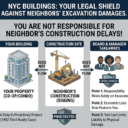
When the Neighbor Builds: What Condo and Co-Op Boards Need to Know

June 29, 2026

Construction in New York City is a fact of life, but when a...

Succession Rights in Limited-Equity Co-ops: Practical Lessons from Mutual Redevelopment Houses v. Manyevitch

June 12, 2026

Succession disputes are among the most sensitive and...

The Post-Settlement Trap: What Fiondella Teaches Co-op Boards About Stipulations and Continuing Habitability Claims

June 9, 2026

For New York cooperative boards and managing agents,...

The Derivative Action Threat: Why “Limited Common Elements” Present Litigation Risks for Condominium Boards and Managers

May 16, 2026

A recent decision by the Appellate Division, First...

Governance and Rule-Making in the Modern Condominium

April 27, 2026

Reflections on 10MSW17D LLC v. Bd. of Managers of 10...

Don’t Delay: Why Timely Enforcement of Common Charges is Critical for Condo Boards

April 15, 2026

A recent decision from the Supreme Court of New York,...

RPAPL § 881 Licenses, and Why Fee Reimbursement Is a Core Deal Term

April 13, 2026

Boards and managers of condominiums, cooperatives, and...

The 432 Park Decision: A Masterclass in Risk Management for New York Condo Boards

April 2, 2026

New York condominium boards and management companies operate...

Protecting Your Building’s Integrity: Lessons from Board of Mgrs. of the 80th at Madison Condominium v. 1055 Madison Ave. Owners LLC

March 31, 2026

As a condominium board member or property manager, your...

Press Enter to search · Esc to close