• Home
  • About us
  • Capabilities
    • Condo, Coop, HOA Counsel
    • Litigation
    • Business Law
    • Technology
    • Real Estate
    • Employment Law
    • Tax Audits
    • Family Law
  • Insights
  • References
  • FAQ
  • Inquiry
    • Payment
Colbert LawColbert Law
  • Home
  • About us
  • Capabilities
    • Condo, Coop, HOA Counsel
    • Litigation
    • Business Law
    • Technology
    • Real Estate
    • Employment Law
    • Tax Audits
    • Family Law
  • Insights
  • References
  • FAQ
  • Inquiry
    • Payment

Condo Coop HOA

Home Condo Coop HOA (Page 12)
Condo Boards have to be Careful in Withholding the Waiver of the Right of First Refusal

Condo Boards have to be Careful in Withholding the Waiver of the Right of First Refusal

The Board of Managers of the Oceana Condominium No. Two learned recently that withholding the waiver of the right of first refusal cannot be used to block an unwanted condo sale.

In this particular condo, the President of the Board owns and lives in the unit directly below the unit being sold, and he allegedly did not want children living above him. The prospective purchaser has young children, and the President also allegedly did not want a sale for the low sales price. The contract was subject to short sale approval by the bank holding the first lien on the unit, a short sale which had been approved by the seller􏰅s bank. The purchaser claimed that the Board was troubled that it would appear in the public record and lower the value of the units in the development, so the Board interfered with her contract with the selling unit owner, so she was not able to purchase the unit. The condo board did not choose to exercise their right of first refusal, but they would not provide the document which this development ordinarily provides, stating that they were not exercising their right of first refusal. Without this document, the purchaser’s lender refused to close. The sale was lost as a result of the Board’s delay, the holder of the second lien on the unit foreclosed on the unit, preventing the purchaser from closing and the purchaser sued.

The Court threw out all of the claims against the Board and individual Board members except for a tortuous interference with contract claim against the Board. So, the litigation continues, with escalated legal fees and costs escalating because of the decision making by the Board or its President. In this particular case it appears that directors and officers insurance responded with a defense but even then the condo is responsible for paying a deductible and claims like this can impact future insurability and/or the cost of insurance. In some cases, we’ve seen individual board members ask for their own counsel because of possible conflicts of interests considering the Board President there seems to be the primary culprit.

With some good legal advice and management guidance, this situation could have been contained and avoided. For the Oceana Condominium No. Two, the saga continues.

Read the decision here.

New Legislation would change standard for Coop and Condo Evictions

New Legislation would change standard for Coop and Condo Evictions

More tenants’ rights legislation. If passed condo and coop owners would have to show “good cause” to evict.

The bills, if enacted, would change how someone owning real estate could treat an occupant of space regardless of whether the occupant had a legal right to occupy the space. These bills apply to all residential real estate except rent-stabilized and rent-controlled apartments, and owner-occupied houses with less than four units.

https://legislation.nysenate.gov/pdf/bills/2021/A5573

Helpful Legal Tips – Opening Up Association Amenities Amidst Covid-19

Helpful Legal Tips – Opening Up Association Amenities Amidst Covid-19

Coops, condos and HOAs are itching to open up amenities that were temporarily closed because of the Covid-19 Pandemic. We are starting to be asked by boards and management for legal advice about opening up pools, gyms, public meeting rooms, roof decks, playrooms, etc. Every association is different but here are some tips that we believe will be helpful.

  1. To the extent authorized by the association’s governing documents and law, increased maintenance and cleaning expenses should be passed on to individual members using common facilities who fail to comply with applicable rules and regulations. 

Most community association boards are generally and specifically authorized by their governing documents to make and adopt rules and regulations governing the use of the common element facilities. If your association has not already done so, the board should consider passing a resolution adopting new rules or amending current rules which impose on owners increased responsibility while using the common element facilities and specifically restrict the use of common facilities by owners and residents who are sick or may have been exposed to Covid-19. Such rules could require those who use the facilities to use appropriate sanitizing and social distancing measures. In which case, the association’s rules and regulations should entitle the association to impose upon the owner the increased costs or expenses associated with the increased cleaning as a result of their behavior. Adopting a disclaimer and waiver form for use of facilities could also cover this so that additional costs to make it safe are passed along to users as opposed to all owners.

  1. Levy fines for non-compliance and earmark fines collected for COVID-19 prevention related measures.

Once the association has adopted its COVID-19 related rules and regulations, the board should be able to enforce them against violators. The board could consider earmarking non-compliance fines to help pay for the increased costs and expenses related to COVID-19 prevention. Be sure to examine your governing documents to make sure fines are within the board’s power. If not a bylaw amendment may be required.

  1. Consider including a line item in the association’s operating budget for increased COVID-19 expenses.

The goal to keep your association community safe could be expensive. Rather than trying to figure out how to pay for it later, perhaps include a new line item in the annual budget. The other benefit is that owners will see (if they read the financials) that the board is proactively acting to make the community safe by planning ahead.

  1. Consider opening only those common facilities and amenities for which the association has developed an enforceable plan of action. 

There is no one-size-fits-all COVID-19 plan, and any prevention methods and measures adopted by the board should be tailored to the specific association. There is also no requirement that the association open (or close) all common facilities and amenities at the same time. Boards could open one amenity at a time and see how it goes and then govern accordingly.

  1. Check with your insurance provider to see if there is coverage.

Before opening any amenity, boards and management should check with their insurance agents to see if their current insurance is adequate. We have learned that insurance companies are relying on exclusions in most policies regarding Covid-19 and not planning to cover certain losses. We will have to wait and see whether this turns out to be the case and whether new insurance coverage for such losses will be available at an additional cost. If there isn’t coverage for claims like people contracting Covid-19 at the pool and suing the association for not taking safety precautions, boards may decide not to open or to open only for persons who sign well crafted disclaimers and waivers. The trouble with those documents is that they may provide a defense to a claim, but the association may still have to pay to defend against it if there isn’t insurance coverage. Whether this is a risk the board wants to take will depend on the board. Boards that don’t want to take the risk themselves, could go to the owners for a vote on the matter and take the burden off of the board’s shoulders.

Covid-19 Condo, Coop, HOA Disclaimers

Covid-19 Condo, Coop, HOA Disclaimers

Covid-19 changed a lot. Condominium, cooperative HOA boards had to change as well. Protecting owners and residents in this new world presents many legal challenges and potential liabilities. Mitigating liability should be on the minds of every board and their management’s.

We haven’t seen an influx of Covid-19 liability lawsuits yet, but they will surely come in time. Insulating community associations and their boards and managers should definitely be on the agenda. Particularly because the insurance industry has indicated that COVID-19 claims will not be covered by insurance per the broad disease and health exclusions found in most policies.

So, what can be done? First, be careful and thoughtful in decision making. Make sure the board has authority to do what it is doing or not doing. This can be tricky, especially with ever changing federal, state and local laws. Before a board makes a decision that has legal implications, consult with an attorney and get sound legal advice. Boards are allowed to rely on the advice of their counsel and that will be a defense if their decision making is challenged by owners or others.

Keep a historical record of the decision making in well thought out minutes and other documentation. Sometimes lawyers will advise just to take minutes on the actual decision made by a board and not add too much detail as it is not required. The other school of thought and advice is to include details when you know the minutes are going to be used to help defend a board’s decision. This is a minefield that seasoned advice can help navigate.

Some boards are considering amending their governing documents to protect against Covid-19 liability for the association and board members individually. As with all disclaimers of liability, they are not a shield against the association being found liable for failing to take reasonable precautions to protect against foreseeable harm or injury. So, a disclaimer of liability, while helpful, is not and should not be relied on by the board to allow it to ignore open and obvious threats or dangerous conditions and take reasonable precautions to avoid them. Amending governing documents, however, is not a simple task and usually requires a meeting of owners and a vote in favor of the amendment by a super majority of owners. After passing, the amendment typically has to be recorded in the land records as well. If successful, a disclaimer of liability for COVID-19 and possible future pandemics is not such a bad idea considering that we expect insurance not to cover this liability, or become very expensive to procure such coverage. Adding a buffer in the governing documents against claims for which, as mentioned above, the association will not likely be able to insure against, should definitely be considered.

During the pandemic, some boards have adopted written waivers for owners and residents to sign before using common element. This is a policy that should be employed moving forward and will give the association and individual board members cover from liability. We’ll have to watch and see whether such waivers hold up in court after they are tested in court cases, but they certainly can’t hurt as another layer of protection. Doing them correctly so that they do not run afoul any other laws, such as discrimination laws, however, is certainly important.

Here’s a sample of an Assumption of the Risk and Waiver of Liability Relating to Coronavirus/COVID-19 form that one condo association adopted. We do not recommend the form, but wanted to give you an idea of what some association boards are adopting. If your association is interested in adopting such a waiver, it should be tailored to your association. There is not a “one size fits all” form that should be used.

The novel coronavirus, COVID-19, has been declared a worldwide pandemic by the World Health Organization. COVID-19 is extremely contagious and is believed to spread mainly from person-to-person contact. As a result, federal, state, and local governments and federal and state health agencies recommend social distancing and have, in many locations, prohibited the congregation of groups of people.

The Board of our condominium association has put in place preventative measures to reduce the spread of COVID-19; however, our condominium cannot guarantee that you or your child(ren) will not become infected with COVID-19. Further, rental of a unit and participating in common area activities could increase your risk and your child(ren)’s risk of contracting COVID-19.

By using the common area facilities in our condominium, you voluntarily assume the risk that you and your child(ren) may be exposed to or infected by COVID-19 by renting and occupying a condominium unit, and/or accessing and using the common areas and amenities including but not limited to the pool, exercise and game rooms, tennis and basketball courts, and other common areas, and that such exposure or infection may result in personal injury, illness, permanent disability, and death. You understand that the risk of becoming exposed to or infected by COVID-19 at our condominium may result from the actions, omissions, or negligence of you and others, including, but not limited to, our condominium’s employees, and other renters and their families.

You voluntarily agree to assume all of the foregoing risks and accept sole responsibility for any injury to you or your child(ren) (including, but not limited to, personal injury, disability, and death), illness, damage, loss, claim, liability, or expense, of any kind, that you or your child(ren) may experience or incur in connection with our condominium or utilization of our condominium’s amenities (“Claims”).

On your behalf, and on behalf of your children, you hereby agree to release, covenant not to sue, discharge, and hold harmless the our condominium association, its Board, employees, agents, and representatives, and our condominium’s owners of and from the Claims, including all liabilities, claims, actions, damages, costs or expenses of any kind arising out of or relating thereto. You understand and agree that this waiver and release includes any Claims based on the actions, omissions, or negligence of the our condominium and its Board, employees, agents, and representatives, and our condominium’s owners whether a COVID-19 infection occurs before, during, or after your occupancy of a unit or use of the common areas at our condominium.

Again, each association is different and requires specific legal advice in order to protect itself from liability and other exposures. Staying ahead of the curve and doing everything legally and reasonably possible to do so, is important.


Another Wrinkle in Holder of Unsold Shares’ Benefit Analysis

Another Wrinkle in Holder of Unsold Shares’ Benefit Analysis

On Thursday, January 28th, the Appeals Court in the First Department which covers Manhattan and Bronx coops issued a decision which clarifies and changed the complicated law regarding holders of unsold shares and their entitlement to special privileges.

In  Pastena v 61 W. 62 Owners Corp. (1st Dept 2019) the First Department said that “paragraph 38 of the proprietary lease, which purportedly exempts holders of unsold shares from certain expenses and fees assessed by the landlord, is void as a matter of law (see Spiegel v 1065 Park Ave. Corp., 305 AD2d 204 [1st Dept 2003])”. The Court’s pronouncement allowed coops to take a strong position that the paragraph in the proprietary lease that holders of unsold shares relied upon to say they didn’t have to pay sublet fees, was void and thus, holders of unsold shares had to pay like all other subletting shareholders. There was a lot of commentary and debate over whether the Court was correct in its statement, but that was the law in Manhattan and the Bronx.

At least until Thursday January 28, 2021, when the Court was given a softball opportunity to clear up its pronouncement. Although not argued below before the Supreme Court, on appeal, a coops counsel raised the Pastena pronouncement for the first time on appeal. The First Department disregarded the argument as not being raised before the Supreme Court below and thus not appropriate for appeal, but decided to speak on it anyway.

In Bellstell 7 Park Ave., LLC v Seven Park Ave. Corp., the First Department clarified/changed its pronouncement in Pastena, explaining now that only original purchasers from the sponsor can benefit from its prior decision voiding a paragraph from the proprietary lease as against public policy, not a subsequent holder of unsold shares.

The First Department now says that “This did not render the entirety of paragraph 38 void, however, as holders of unsold shares are routinely granted special privileges in exchange for their regulatory obligations, as they are, de facto, a different class of stock than an ordinary purchaser”.  This clouds the issue though because the question now is what are the “regulatory obligations” and did the proposed holder of unsold shares comply with the “regulatory obligations” and what if they didn’t.

Coops with these complicated questions could put the burden on the proposed holder of unsold shares who has the burden of establishing their preferential status. Instead of expensive litigation, the parties may be able to negotiate an acceptable resolution. Having experienced counsel to navigate these complex waters is critical.

Federal Government Halts Some Evictions Again

Federal Government Halts Some Evictions Again

Dr. Rochelle Walensky, the director of the US Centers for Disease Control and Prevention, extended an order today halting evictions for some people through March 31, 2021.

It covers people who earn $99,000 or less a year and cannot make payment because of a loss of income or extraordinary medical costs. Tenants must prove they have exhausted efforts to get government assistance to pay rent, are making some effort to provide payment, and will be forced to move to congregate living settings or left homeless by eviction.

Landlords have to press the issue and make tenants seeking this protection prove their eligibility. This however doesn’t mean the tenants are free not to pay rent. Rent is not excused.

Condo Board Access to Units can be Difficult

Condo Board Access to Units can be Difficult

Condo Boards sometimes have to access the inside of units. There are a variety of reasons including repairs to common elements, access to shut off valves, inspections relating to repairs in other parts of the condominium building, or a myriad of other valid, legitimate reasons. The trouble is that governing documents like the condominium’s Declaration and Bylaws may not require such access and even if it does, a unit owner may refuse to grant the access.

Condo Boards sometimes have to bring suit for Court help with access. One condo, the Carriage House Condominium, found itself is such a situation. The Board there required access to Ms. Healy’s unit in order to to make repairs to AC condensers located in her unit that service other units in the condominium.

The Supreme Court ruled that upon one day’s notice, Ms. Healy had to allow HVAC workers performing repairs or services into her unit to perform necessary HVAC maintenance and repairs, and that any such HVAC workers be accompanied by an individual associated with the managing agent for the condominium.

Healy didn’t stop there. She appealed and on appeal the First Department affirmed the Supreme Court’s decision finding no abuse of discretion.

So, the Carriage House Condominium Board had to first try to get access to make the prepare through management. After that failed, they had to retain counsel to bring the lawsuit. The Condominium incurred legal fees to bring the suit and then make the motion and then fight the appeal because the unit owner wouldn’t cooperate. That’s a lot of legal fees, cost and time.

In the end, many condominiums find themselves having to employ the same course of action to obtain access to a unit. Most condominium Declaration and Bylaws provide for reimbursement of legal fees and costs for collection of common charges and other assessments, but not for the type of legal fees incurred for accessing a unit. There may be an end around with fine imposition (assuming a Board has the power to enact and impose such fines) but the valid fines typically will not cover the legal fees and costs.

Knowing all of this, Condominium Board should consider amending their Bylaws to change the legal fee provision and allow them to recover for situations other than just collection of common charges and assessments. It is important to do this correctly and in the end, after a unit owner vote is properly secured according to the bylaws and law, the amended bylaws will have to be recorded against the unit in the public land records before the amendment will be legally effective. This is yet another expense that will likely be well worth it. While a Board is amending the Bylaws, it ought to get the most bang out of its buck by considering other amendments that can be made at the same time as the costs associated with the amendment will be similar whether it is one or a few amendments being done at the same time to the bylaws.

Read the Carriage House Condominium v. Healy, Court decision here.

Can Boards Require Covid Vaccines?

Can Boards Require Covid Vaccines?

Over the next year, Covid-19 vaccines will hopefully become readily available to the general public. Boards of community associations will undoubtedly have to decide on vaccines. Can they mandate them of employees? Can they mandate that resident owners be vaccinated? How about tenants? How about property managers and other independent contractors? Will vaccines become a competitive advantage for contractors selling their wares or services because they are 100% vaccinated? Boards will have a lot to consider and ought to get current legal advice before making any business decisions on vaccines. This is a new world that we are experiencing, but there are all sorts of laws that have to be considered and new ones are sure to be enacted as we muddle through.

With respect to employees, the landscape is getting clearer but the answers are still a little cloudy. Soon enough someone will be fired or not hired because they are not vaccinated and we’ll have some case law to guide us. Here’s were we are on employees.

Mandatory vaccinations are not new but have been historically limited to health care and education market segments. While there is no clear legal prohibition on mandatory vaccines in the employment context, these requirements are subject to several legal exceptions, most notably accommodation for disability, religion and pregnancy.

On December 16, 2020, the Equal Employment Opportunity Commission updated its COVID-19 guidance to express the agency’s views on the legal implications of COVID-19 vaccine under the Americans with Disabilities Act (ADA), Title VII and other EEO laws. The EEOC’s guidance is not binding on courts, but it is expected to be highly influential. Key takeaways from the guidance are as follows:

  • A vaccine is not a medical examination under the ADA, but pre-vaccination questions answered by an employee as a part of an employer’s vaccination program may be ‘disability-related inquiries’ under the ADA that should be avoided absent business necessity.
  •  Employers may need to accommodate an employee with a disability who cannot take the vaccine because of that disability.
  • Employers may need to accommodate an employee’s sincerely held religious beliefs or pregnancy, if either prevents an employee from taking the vaccine.

To date, the Occupational Safety and Health Administration has not taken a position on whether an employer can require the COVID-19 vaccine or must at least offer it to meet statutory safe workplace obligations.

Then there is the question of unionized employees. What does the Collective Bargaining Agreement in place say. There is no real question that the adoption of mandatory and non-mandatory vaccination programs by unionized employers are a mandatory subject of bargaining. But that does not mean that employers cannot start a vaccination program or require vaccination.

Employers with current union contracts should start by examining the management rights and other provisions of their contract to determine if they are broad enough to waive a union’s right to bargain. Even in the absence of a management right to proceed, most employers can still bargain over vaccine program issues with their unions. Most employers will also benefit from keeping their unions involved even if there is a management right to proceed with a vaccination program, as doing so can assist with employee buy in and avoid grievances (and adverse arbitration results).

Aside from the above, board employers need to consider the fact that while many employees may embrace vaccination without hesitation, a large percentage of people are reportedly skeptical or concerned about side effects or other unknown health implications. As time goes by and we learn from experience in vaccinations and their hopeful positive effect, people will likely be less concerned and apprehensive.

In the end, coop, condo, HOA and other community association boards. have to act in the best interest of their association communities. Making decisions on vaccinations are likely going to be on the board meeting agendas soon enough. Navigating these uncertain times is difficult without experienced professional advice.

Boards need to make sure their Policy Changes Pass Legal Muster

Boards need to make sure their Policy Changes Pass Legal Muster

Community associations are quasi governments which can make their own rules provided that they don’t run afoul the law. Whenever changing rules, coop, condo, HOA and other community association boards must make sure that their good intention rule changes aren’t going to get them into trouble. With a litigious owner (especially one who is an attorney, “professional plaintiff”, a person without financial constraints or maybe just with strong principles), a board could end up in litigation which spans years and even after the board members are no longer even board members.

A good example of rule making gone wild happened in a New York cooperative called Woodstock Owners Corp. The coop enacted a no sublet policy but only with respect to owners who bought after a certain date (in that case October 2002). Bianca Razzano, a shareholder, was not allowed to sublet under that rule and she sued in 2009 and continued litigating, appealing, discovering, and fighting on and on for years. Eleven years later, the parties were still litigating with an order just being issued this year in 2020. She sued the coop Board, the management company and an individual board member.

On one appeal, the Court struck down the sublet policy, declaring it violative of Business Corporation Law Section 501(c) which essentially prohibits unequal treatment of shareholders. The litigation continued with Ms. Razzano trying to expand her case to include emotional distress damage claims. The Court put a stop to that, but this was years after the genesis of the dispute.

It is not clear whether the cooperative obtained legal advice regarding its sublet policy but it should have. In some instances, boards try to avoid incurring legal fees on rule making and take a let’s do it and see if anyone objects strategy. This is not advised. Experienced community association counsel should be able to advise a board and keep it out of trouble like the trouble experienced by the Woodstock cooperative got into, without incurring substantial legal expenses. The legal expenses that the cooperative, management and board member in the Woodstock case experienced, pales in comparison to the expenses of experienced legal advice.

Read the Bianca Razzano v. Woodstock Owners Corp. decision here and keep your board out of similar trouble. Don’t let matters spiral out of control.

Both Landlords and Tenants may be Better Off Working Out Covid Decisions Sooner than Later

Both Landlords and Tenants may be Better Off Working Out Covid Decisions Sooner than Later

Stay, go. Throw them out, keep them. Tenants and landlords will have to decide which route they want to go in these challenging economic times. The Covid pandemic has wrecked havoc on the real estate market and may continue to do so for awhile.

Tenants aren’t paying rent because they didn’t plan for these circumstances, or are just looking to renegotiate for better terms. Landlords with those nonpaying tenants are struggling as well. Some are over leveraged themselves with big loans to pay, taxes, other operating expenses, etc. that continue on irrespective of whether the tenants are paying. Without rent being paid, however, landlords risk default on their own obligations which can be crippling.

When disputes happen, there is always the landlord-tenant courts, but the pandemic has negatively impacted the court system as well. With a flood of nonpayment and eviction cases on hold when the court’s closed at the beginning of the year, there is an extreme backlog of cases and courts are still not open for in person appearances in many places, making virtual appearances the new norm. Judges, as well as the attorney bar, are slowly figuring things out, but cannot be relied upon as a quick fix to the economic and other woes of landlords and tenants.

We are seeing a lot of compromise across the negotiation tables. The parties are negotiating away rights. Sometimes deferring rent so that it will eventually become due, and in other cases, forgiving rent obligations. Tenants who want to stay in business, especially ones with personal guaranties backing their leases which are harder to run away from, are compromising as well. Sometimes, just turning over the keys to the landlord to allow for a new rental with a paying tenant is the best course of action. In those instances, landlords may recover possession but filling the space with a financially capable replacement is sometimes daunting; especially now.

As we progress through this pandemic, there is likely going to be a ripple effect on the economy from non-paying tenants and landlords who both aren’t willing to budge. Landlords who can’t easily get possession and still have to carry their debt and other business obligations, sometimes have to give in a bit in order to keep the tenants in business in hopes that they can start paying again. The word bankruptcy is being thrown around a lot these days, sometimes as a negotiating point by tenants. The risk of tenant bankruptcies is real and at the end the landlords are still left holding the bag of their own financial obligations.

Appreciating all of this, tenants and landlords are best to try to work out their differences early on and perhaps share the pain in renegotiation deals if it makes sense or negotiating early exists by a tenant if that makes more sense. Addressing the issues up front rather than kicking the can down the road to see what happens may be in everyones best interest. In the end, if too many cans are kicked it is going to get even more difficult to achieve a swift economic recovery which is in the best interest of both landlords and tenants.

  • 1
  • 2
  • …
  • 11
  • 12
  • 13
  • …
  • 19
  • 20

Recent Attorney Publications

  • When Contractors Lack Licenses: Key Lessons for Condos, Co-ops, and HOAs July 25, 2026
  • When Bankruptcy Won’t Stop Your Foreclosure Sale: What Condo Boards and Management Need to Know About Repeat Filers July 22, 2026
  • When Repetitive Filings Cross the Line: Lessons from Fulton v. Yameogo July 21, 2026
  • Condominium Boards: Why Being Aware of First Mortgage “Standing” Can Protect Your Community’s Bottom Line July 13, 2026
  • Winning the Common Charge Battle: How Condo Boards Prevail Against Defiant Unit Owners July 2, 2026

Contact Us

Send us a note and we'll get back to you promptly.

OFFICES

  • Manhattan Office
  • 315 Madison Avenue, Suite 4032, New York, New York 10017
  • 646.880.3000
  • 646.880.3048
  • Westchester Office
  • 44 South Broadway, 21st Floor, White Plains, New York 10601
  • 646.880.3000
  • 646.880.3048
  • Connecticut Office
  • 55 Post Road W, 2nd Floor, Westport, Connecticut 06880
  • 203.349.8100
  • 646.880.3048

Latest Publications

  • When Contractors Lack Licenses: Key Lessons for Condos, Co-ops, and HOAs July 25, 2026
  • When Bankruptcy Won’t Stop Your Foreclosure Sale: What Condo Boards and Management Need to Know About Repeat Filers July 22, 2026
  • When Repetitive Filings Cross the Line: Lessons from Fulton v. Yameogo July 21, 2026
  • Condominium Boards: Why Being Aware of First Mortgage “Standing” Can Protect Your Community’s Bottom Line July 13, 2026

© 2026 Colbert Law LLC Attorney Advertising. Prior results do not guarantee a similar outcome.

Highend Logo

Manhattan Office

  • 315 Madison Avenue, Suite 4032, New York, New York 10017
  • 646.880.3000
  • 646.880.3048

Westchester Office

  • 44 South Broadway, 21st Floor, White Plains, New York 10601
  • 646.880.3000
  • 646.880.3048

Connecticut Office

  • 55 Post Road W, 2nd Floor, Westport, Connecticut 06880
  • 203.349.8100
  • 646.880.3048

OUR EXPERTISE

When Contractors Lack Licenses: Key Lessons for Condos, Co-ops, and HOAs

July 25, 2026

A recent NYC Civil Court decision (Fortes v. Decorating and...

When Bankruptcy Won’t Stop Your Foreclosure Sale: What Condo Boards and Management Need to Know About Repeat Filers

July 22, 2026

For condominium boards foreclosing on unpaid common charges,...

When Repetitive Filings Cross the Line: Lessons from Fulton v. Yameogo

July 21, 2026

Community association boards—whether governing condos,...

Condominium Boards: Why Being Aware of First Mortgage “Standing” Can Protect Your Community’s Bottom Line

July 13, 2026

When a condominium unit owner defaults on their monthly...

Winning the Common Charge Battle: How Condo Boards Prevail Against Defiant Unit Owners

July 2, 2026

Condominium boards and property managers face a unique,...

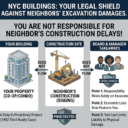
When the Neighbor Builds: What Condo and Co-Op Boards Need to Know

June 29, 2026

Construction in New York City is a fact of life, but when a...

Succession Rights in Limited-Equity Co-ops: Practical Lessons from Mutual Redevelopment Houses v. Manyevitch

June 12, 2026

Succession disputes are among the most sensitive and...

The Post-Settlement Trap: What Fiondella Teaches Co-op Boards About Stipulations and Continuing Habitability Claims

June 9, 2026

For New York cooperative boards and managing agents,...

The Derivative Action Threat: Why “Limited Common Elements” Present Litigation Risks for Condominium Boards and Managers

May 16, 2026

A recent decision by the Appellate Division, First...

Governance and Rule-Making in the Modern Condominium

April 27, 2026

Reflections on 10MSW17D LLC v. Bd. of Managers of 10...

Don’t Delay: Why Timely Enforcement of Common Charges is Critical for Condo Boards

April 15, 2026

A recent decision from the Supreme Court of New York,...

RPAPL § 881 Licenses, and Why Fee Reimbursement Is a Core Deal Term

April 13, 2026

Boards and managers of condominiums, cooperatives, and...

The 432 Park Decision: A Masterclass in Risk Management for New York Condo Boards

April 2, 2026

New York condominium boards and management companies operate...

Protecting Your Building’s Integrity: Lessons from Board of Mgrs. of the 80th at Madison Condominium v. 1055 Madison Ave. Owners LLC

March 31, 2026

As a condominium board member or property manager, your...

Press Enter to search · Esc to close