
• Home
  • About us
  • Capabilities
    • Condo, Coop, HOA Counsel
    • Litigation
    • Business Law
    • Technology
    • Real Estate
    • Employment Law
    • Tax Audits
    • Family Law
  • Insights
  • References
  • FAQ
  • Inquiry
    • Payment
Colbert LawColbert Law
  • Home
  • About us
  • Capabilities
    • Condo, Coop, HOA Counsel
    • Litigation
    • Business Law
    • Technology
    • Real Estate
    • Employment Law
    • Tax Audits
    • Family Law
  • Insights
  • References
  • FAQ
  • Inquiry
    • Payment

COVID-19

Home COVID-19 (Page 3)
Coronavirus – Building Volunteers – Yes, No or Maybe?

Coronavirus – Building Volunteers – Yes, No or Maybe?

With coops, condos and HOAs sheltering in place because of the Coronavirus, boards and their management are faced with many challenges.  In these difficult times, it is possible that building staff may become ill and can’t be replaced in a timely way.  Even when regular staff is in place and healthy,  people may want to volunteer to help or just get out of their apartments.  What’s a board to do?

A significant consideration is potential liability.  When a person volunteers, they can expose an association to liability to others.  They also expose themselves to possible liability and create a situation where the association may be liable to the volunteer.  

If your association is going to allow volunteers or, because of the unprecedented circumstances we all find ourselves, has no choice but to allow volunteers to pitch in, the first thing you should do is find out if the association’s insurance policies cover the volunteer and the association for what may happen during or because of the volunteer work.  For example, what if a volunteer has the virus and assists as a doorman or porter, or delivers packages to apartments, and infects other residents while volunteering.  What if the volunteer is negligent in some way and causes property damage.  The association should make sure that insurance is in place to protect all involved.  Your insurance professional should have the answer as to whether your insurance covers the volunteer and the association and whether there are any exclusions or limitations. If insurance is not in place, perhaps you can procure adequate insurance before allowing volunteer service so that everyone is protected.

Another consideration is having the volunteer sign an indemnification and waiver agreement under which the volunteer agrees to indemnify and defend the association and waives claims against the association. This would protect the association but not the volunteer.  The agreement should spell out that the person is a volunteer and that they are volunteering to perform services which does not create an employment arrangement and there is no expectation of renumeration for the volunteer work.  If you are a union building and the person is volunteering for a task that a union employee performs, you ought to confirm with the union representative that there is no issue with the union.

If your association is in desperate need of building volunteers and has no choice but an “all hands on deck” approach, you should do your best to assure that volunteers are safe and that your community is safe from the volunteers.  This is quite a challenge with the virus which sometimes is symptomless.  It seems reasonable to inquire of volunteers as to whether they have any symptoms, have been tested or have been exposed to someone who has tested positive for the virus or has symptoms of the virus.  The association must be careful to treat all people equally and not discriminate in questioning or making determinations as to who may volunteer and who may not.  Otherwise, unfortunately, you may be inviting a lawsuit in our litigious society. 

In sum, it seems better for community associations to be wary before allowing volunteers to perform staff functions.  However, in a pinch, consider insurance, a volunteer agreement and take other reasonable measures to protect the volunteer, the association and your community members.  It is best to follow the guidance of your property manager, attorney and other professionals when making decisions like this one.


Coronavirus – What can condo, coop and HOA Boards and Management Do?

Coronavirus – What can condo, coop and HOA Boards and Management Do?

On March 11, 2020, the World Health Organization declared the coronavirus outbreak (“COVID-19”) a pandemic. The Centers for Disease Control has detailed recommendations for individual preparation and response to the outbreak of COVID-19. The President just declared a National State of Emergency and many states including New York declared a State of Emergency.  This is a scary time throughout the world and we have to take action now to help our associations.

This is especially true for condominiums, cooperatives and homeowners associations.  Unlike the schools, sporting events or other large gatherings, owners in these communities live amongst each other sharing common area.  When quarantined or told to stay home from the office or to work from home, they are still a part of a mass of people who are stuck living amongst each other.  So what can management and boards do to protect their community associations?

Consider whether your House Rules are Sufficient.  You are a quasi government with your own house rules.  For the most part you are allowed to make your own rules provided that they do so within the confines of the law.  The board should review their house rules and determine whether new rules are needed.  Rule changes can be done by a board vote.  With residents home from work and children out of school, there are going to be a lot more people in the common areas during the day for the unforeseeable future. The rules may have to change.  There is usually a rule concerning not creating a nuisance condition.  Is having a fever and using the common areas like the laundry, rooftop recreational area, gym, playrooms, pool, etc., a nuisance?  Perhaps spell it out in a rule change.  You should confer with counsel to make sure the rule is within the confines of the law, doesn’t discriminate and is evenly applied.  Otherwise, your good intentions, could turn into a discrimination claim or a lawsuit.  Be careful and considerate.  But, rule making that protects all owners and residents and that is in the best interest of the whole community will likely help.

Keep Everyone Informed. The media is saturated with national and local information and misinformation but what about information on your particular association.  Let your owners and residents know that the board and management are at the helm, steering the ship with confidence and all of their interests in mind.  If your association has a website, post regular information on the rules, rule changes, places that you’ve installed hand sanitizer, cleaning processes that are being employed in the common areas and anything else that you are doing as a board or management to protect your associations during this unsettled time.

Take Charge of the Common Areas.  The board is charged with governing the community and the common areas.  If the common areas are not particularly cleaned on more of a regularly basis, one could see owners and residents who contract the virus, complaining that the board or managment was negligent in performing their obligations to the community and/or breached their fiduciary or contractual duty to the community.  Review what is being done re the common areas.

For example, the board and management might review the frequency of the cleaning of any shared community areas such as a clubhouse, pool, gym, etc. In addition, the Board should review how well the shared areas are actually being cleaned. Further, the association may want to assess whether additional hand sanitizers, automated soap dispensers or disinfectant wipes need to be added to common areas. A board may even consider shuttering common areas or amenities on a temporary basis.

If an individual suspected or confirmed to have COVID-19 has been in the common area, it is recommended by the CDC to close off those areas and wait up to 24 hours before beginning to clean and disinfect.

Consider Alternative to In-Person Board Meetings.  It may be a good idea to put off in person board meetings for the time being.  Board meetings in New York can be done telephonically as long as everyone can hear each other.  Online board meetings are a possibility as well. Some products like Office of the Board (www.officeoftheboard.com), allow boards to meet online, or even make board decisions without a meeting provided that everyone is unanimous.  Decisions that are unanimous can be done by unanimous written consent and don’t require a board meeting.  Where a meeting is required consider having management or the board members coordinate a telephone call or a video-conference for the board to get together and make decisions.  Staying outside a meeting room or each others apartments for the time being is probably a good idea until we learn more about the virus and how it is transmitted.  

Postpone Annual Meetings.  If your association’s annual meeting is coming up, postpone it for now unless a prompt unit owner decision is absolutely necessary. There are electronic voting applications which allow for owners to vote electronically from wherever they are.  Like in person board meetings, annuals should be postponed or an alternative way of having electronic voting should be explored.  Your counsel should be consulted about whether the new laws in New York on electronic voting applies to your association or whether you need a bylaw change to allow electronic voting.  If your association can electronic vote now, it should be explored as congregation of owners is not necessary.

Avoid Liability.  As mentioned, it is inevitable that a resident will contract the virus.  It is also likely that a resident could infect another resident with the virus or that an association employee may have the virus and infect a resident or be infected by the resident.  The virus situation should be no different than a unit owner to unit owner issue about noise or leaking, or a staff-resident or resident-staff issue.  Illness and safety is always concerning and heightens the stakes. However, in the end, the board is charged with operating the association, maintaining the common elements and doing its best to be reasonable and act for the best interest of the association. In rule making or taking action, be considerate yet protective of the entire community for which you represent.  Exercise your business judgment as a board collectively.  Do not make self interested decisions and when in doubt consult your professionals.  

In sum, when faced with a health crisis like COVID-19, the association’s board and management should be proactive in thinking about upcoming annual meetings, board meetings, community events, etc. We recommend keeping everyone informed about what the board and management is doing to protect the community from the virus. Community associations should also review their rules and may wish to consult with legal counsel regarding the association’s options under the law and governing documents of the association. 

Coronavirus – Condo and Coop Boards Must Prepare

Coronavirus – Condo and Coop Boards Must Prepare

Property managers have been huddling, considering what to advise their condo and coop boards.  Disinfecting wipes and Purell dispensers in the lobby, a great idea but is that enough for a board to protect its residents and avoid liability.   What happens when a unit owner or shareholder contracts the Coronavirus and is quarantined in their apartment.   The government has asked residents to stay home, but that home in New York City may be shared by hundreds of other condo or coop residents who live in close proximity and share the same common areas.  What’s a board to do to protect its residents from each other.

Being proactive and taking precautions is definitely recommended.  Boards have to be reasonable in trying to protect their owners and residents.  If someone was complaining of second-hand smoke in an apartment, the board may require that openings in the offending apartment be sealed in order to try to prevent the smoke from escaping into other apartments.   If a shareholder or owner has mold in their apartment and the board finds out, the board would require the the mold be treated and condition resolved.  If a registered sex offender moves into the building, notifying residents generally that there is a sex offender living in the building would be alright; however, pointing to the particular apartment might bring a harassment or other claim against the cooperative or condominium (as well as deter people from buying into the building in the future).  

If a board finds out that one of its residents has tested positive for Coronavirus, it needs to be really careful to act reasonably and not cause a panic.  First, is it really true.  Rumors can lead to defamation claims.  There is no registry of Coronavirus victims so unless the resident reports that they have Coronavirus, in all likelihood the board will not know for sure.  The board could notify residents that it believes that a neighbor in the building has contracted the Coronavirus but it shouldn’t identify the suspected apartment or residents else it could be inviting a lawsuit, especially if it turns out to be wrong.

If a board is sure that a resident has the coronavirus, it should take reasonable precautions to protect neighbors.  Perhaps communicating with the person who contracted the virus and asking them to seal all opening into other apartments, would be reasonable.  Asking them not to use the common areas of the building would also be reasonable.  How about asking them not to use the building’s elevators where close proximity with other elevator users is almost guaranteed.  Or, maybe asking them to where face masks if venturing out of their apartment in the building? 

A board could consider making a house rule that persons who contract the Coronavirus cannot use the common areas of the building and if they are traversing the building, they need to wear a face mask. This is a new area for condos and coops so there is little court guidance. Consulting with counsel before enacting rules is recommended.  The board should be as reasonable as possible without violating the persons rights. Encoring the rule is an entirely different challenge.  Fining the person for violating the rule or bringing a court action to enjoin the person are enforcement mechanisms but will they really be effective or will it be too late where infections in the rest of the building may result in the meantime. 

Consider this – CNN has reported that in Hong Kong, experts are investigating whether Coronavirus can be spread through bathroom pipes.  In a high-rise tower a 62-year-old woman was diagnosed with the virus about a week-and-a-half after a 75-year-old man in the same building became infected.  Then three more residents became infected.  “The possibility of the virus being transmitted through pipes immediately drew comparisons to the 2003 SARS outbreak, when this method became a major source of transmission. At the Amoy Gardens housing estate, there were more than 300 infections and 42 deaths after defective plumbing allowed the virus to spread through the building.”  Perhaps having building professionals review your building’s plumbing, heating, air conditioning and other systems to assure or at least minimize the risk that the virus can travel from apartment to apartment through those systems would be a good idea.  At the very least, it would give the board cover in the event that it were challenged or criticized for not doing enough to protect its residents.

Now consider what will happen when a board does nothing or very little and one owner who has the virus, infects another resident in the building.  The resident catching the virus from another resident, may bring a lawsuit against the board for breaching its duty and causing the resident injury.  It is inevitable in the litigious society in which we live that this will happen and it is not clear how court’s will react.  Boards should be proactive now in taking precautions.  The more reasonable a board is, the less likely that a Court will find that it breached its duty to the injured resident.  If a board does nothing, it runs the risk of being sued and held liable.  And property managers should know by now, that they will be looked to by their boards for guidance and if the boards are sued, they may turn to their property managers.  Property managers should review their management contracts and see what their indemnification provisions say.  Are they indemnified and defended for all things, or is there an exclusion for negligence.  Is it negligent for property managers not to have advised their boards to take certain precautions or actions in response to the Coronavirus?  In the end if a party is injured, it is likely that the boards and property managers will both be blamed.  So, taking precautions now is important for both boards and their property managers.

So, what should a board and property manager do.  Before they learn that someone in the building has contracted the Coronavirus, they should clean more often and use disinfecting products in the common areas.  They should keep abreast at what the government is suggesting be done. They should be monitoring the Centers for Disease Control and Prevention, and the  New York City Department of Health.  The Department of Health is developing more extensive guidance for property owners and managers, and once published, they should be employed.

Buildings can and should take steps to limit the possibility of transmission, not to mention make their residents and staff feel safer. They should be cleaning and disinfecting high-traffic surfaces like front-door handles and elevator buttons, as well as common rooms, like gyms and laundry rooms. They can also place hand-sanitizer around the building. They could also post signs encouraging residents to be vigilant about keeping their homes disinfected and to cover their mouths when they cough or sneeze and to wash their hands frequently.

Once a resident contracts the virus, the playing field changes as the risk of danger to other residents escalates.  As stated, having professionals opine on whether building systems must be modified to minimize transmission risks from apartment-to-apartment is a good idea.  Communicating with the person and asking them not to use the common areas would be a reasonable approach.  Passing a house rule that anyone who has the Coronavirus should not use the common elements of the building, may be appropriate.  Alerting staff that they should not enter the apartment of the infected person without safety equipment would be appropriate.  What happens when staff refuses to enter the apartment or enters the apartment and contracts the disease?  Another area of concern for a board, its residents, staff and others.  This is a complicated situation and will probably get more complicated as time goes by and more and more people are infected with the virus.  For the time being, boards should be as reasonable as possible to protect its residents without running afoul the legal rights of the infected residents.

  • 1
  • 2
  • 3

Recent Attorney Publications

  • When Contractors Lack Licenses: Key Lessons for Condos, Co-ops, and HOAs July 25, 2026
  • When Bankruptcy Won’t Stop Your Foreclosure Sale: What Condo Boards and Management Need to Know About Repeat Filers July 22, 2026
  • When Repetitive Filings Cross the Line: Lessons from Fulton v. Yameogo July 21, 2026
  • Condominium Boards: Why Being Aware of First Mortgage “Standing” Can Protect Your Community’s Bottom Line July 13, 2026
  • Winning the Common Charge Battle: How Condo Boards Prevail Against Defiant Unit Owners July 2, 2026

Contact Us

Send us a note and we'll get back to you promptly.

OFFICES

  • Manhattan Office
  • 315 Madison Avenue, Suite 4032, New York, New York 10017
  • 646.880.3000
  • 646.880.3048
  • Westchester Office
  • 44 South Broadway, 21st Floor, White Plains, New York 10601
  • 646.880.3000
  • 646.880.3048
  • Connecticut Office
  • 55 Post Road W, 2nd Floor, Westport, Connecticut 06880
  • 203.349.8100
  • 646.880.3048

Latest Publications

  • When Contractors Lack Licenses: Key Lessons for Condos, Co-ops, and HOAs July 25, 2026
  • When Bankruptcy Won’t Stop Your Foreclosure Sale: What Condo Boards and Management Need to Know About Repeat Filers July 22, 2026
  • When Repetitive Filings Cross the Line: Lessons from Fulton v. Yameogo July 21, 2026
  • Condominium Boards: Why Being Aware of First Mortgage “Standing” Can Protect Your Community’s Bottom Line July 13, 2026

© 2026 Colbert Law LLC Attorney Advertising. Prior results do not guarantee a similar outcome.

Highend Logo

Manhattan Office

  • 315 Madison Avenue, Suite 4032, New York, New York 10017
  • 646.880.3000
  • 646.880.3048

Westchester Office

  • 44 South Broadway, 21st Floor, White Plains, New York 10601
  • 646.880.3000
  • 646.880.3048

Connecticut Office

  • 55 Post Road W, 2nd Floor, Westport, Connecticut 06880
  • 203.349.8100
  • 646.880.3048

OUR EXPERTISE

When Contractors Lack Licenses: Key Lessons for Condos, Co-ops, and HOAs

July 25, 2026

A recent NYC Civil Court decision (Fortes v. Decorating and...

When Bankruptcy Won’t Stop Your Foreclosure Sale: What Condo Boards and Management Need to Know About Repeat Filers

July 22, 2026

For condominium boards foreclosing on unpaid common charges,...

When Repetitive Filings Cross the Line: Lessons from Fulton v. Yameogo

July 21, 2026

Community association boards—whether governing condos,...

Condominium Boards: Why Being Aware of First Mortgage “Standing” Can Protect Your Community’s Bottom Line

July 13, 2026

When a condominium unit owner defaults on their monthly...

Winning the Common Charge Battle: How Condo Boards Prevail Against Defiant Unit Owners

July 2, 2026

Condominium boards and property managers face a unique,...

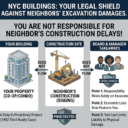
When the Neighbor Builds: What Condo and Co-Op Boards Need to Know

June 29, 2026

Construction in New York City is a fact of life, but when a...

Succession Rights in Limited-Equity Co-ops: Practical Lessons from Mutual Redevelopment Houses v. Manyevitch

June 12, 2026

Succession disputes are among the most sensitive and...

The Post-Settlement Trap: What Fiondella Teaches Co-op Boards About Stipulations and Continuing Habitability Claims

June 9, 2026

For New York cooperative boards and managing agents,...

The Derivative Action Threat: Why “Limited Common Elements” Present Litigation Risks for Condominium Boards and Managers

May 16, 2026

A recent decision by the Appellate Division, First...

Governance and Rule-Making in the Modern Condominium

April 27, 2026

Reflections on 10MSW17D LLC v. Bd. of Managers of 10...

Don’t Delay: Why Timely Enforcement of Common Charges is Critical for Condo Boards

April 15, 2026

A recent decision from the Supreme Court of New York,...

RPAPL § 881 Licenses, and Why Fee Reimbursement Is a Core Deal Term

April 13, 2026

Boards and managers of condominiums, cooperatives, and...

The 432 Park Decision: A Masterclass in Risk Management for New York Condo Boards

April 2, 2026

New York condominium boards and management companies operate...

Protecting Your Building’s Integrity: Lessons from Board of Mgrs. of the 80th at Madison Condominium v. 1055 Madison Ave. Owners LLC

March 31, 2026

As a condominium board member or property manager, your...

Press Enter to search · Esc to close