
• Home
  • About us
  • Capabilities
    • Condo, Coop, HOA Counsel
    • Litigation
    • Business Law
    • Technology
    • Real Estate
    • Employment Law
    • Tax Audits
    • Family Law
  • Insights
  • References
  • FAQ
  • Inquiry
    • Payment
Colbert LawColbert Law
  • Home
  • About us
  • Capabilities
    • Condo, Coop, HOA Counsel
    • Litigation
    • Business Law
    • Technology
    • Real Estate
    • Employment Law
    • Tax Audits
    • Family Law
  • Insights
  • References
  • FAQ
  • Inquiry
    • Payment

Posts by Joseph Colbert, Esq.

Home Author Joseph Colbert, Esq. (Page 4)

About Joseph Colbert, Esq.

With offices in New York and Connecticut, we are ready to handle your legal needs. We have been representing condo, coop and HOA boards, businesses and individual clients for over twenty five years.

Condominium Construction Defect Lawsuits: When Sponsors Bring Architects into the Fray

Condominium Construction Defect Lawsuits: When Sponsors Bring Architects into the Fray

Condominium boards embroiled in construction defect lawsuits against developers (sponsors) often see a further complication arise: the sponsor bringing in the project architects as third-party defendants. Sometimes the condo can sue the project architect directly but many times the focus is on the developer and its members and they point the finger at the architect. This tactic can introduce additional complexities into the condo board’s case against the sponsor. A recent New York case sheds light on this dynamic.

In the case of Board of Managers of the 15 Union Square West Condominium v. BCRE 15 Union Square West LLC, the condo board sued the building’s sponsor. The sponsor, in turn, filed claims against various third-party defendants, including the project architects, Perkins Eastman Architects P.C. Perkins Eastman argued that the sponsor’s claims against them were time-barred under their contract and that certain claims were duplicative and should be dismissed.

Key Points for Condo Boards

  • Shifting Focus: When the sponsor brings the architects into the lawsuit, it can divert attention from their own potential liability for construction defects. Condo boards need to maintain a strong focus on the primary case against the sponsor. If there are additional pockets to pay for damages sought by the condo, great. But, stay focused on moving the condo’s case against the sponsor and its members forward.
  • Statutes of Limitations: There is a limited window of opportunity to file claims against architects based on design flaws or oversight errors. Expired statutes of limitations can protect architects and prohibit claims against the if too much time goes by.
  • Breach of Contract vs. Professional Negligence: Sponsors may attempt to pursue architects on both breach of contract and professional negligence grounds. However, demonstrating professional negligence requires proving a violation of broader industry standards that goes beyond the contract itself.
  • Contractual Indemnification: Contractual indemnification clauses, by which sponsors might seek to shift liability to architects, often have time limits that diminish their usefulness.

In view of this, condo boards should be aware that sponsors may try to deflect blame and responsibility by bringing architects into the lawsuit. This additional layer of complexity can delay the condo’s suit and make it more complicated because of the additional parties and issues involved, but in the end, if there are more parties available to pay for the damages sought. However, it could end up being a good thing provided experienced counsel is leading the charge and stays focused on pushing the condo’s claims full speed ahead.

Here’s the case.

Case-4-20-24Download
Employers, Your Non-Compete Agreements Must Have Time Limits

Employers, Your Non-Compete Agreements Must Have Time Limits

In the recent case of L&M Pilates Brooklyn Mgmt, LLC v. Milla Lerner, the New York Supreme Court reaffirmed the importance of including specific time restrictions in non-compete agreements. Without them, your attempts to protect your business interests could be thwarted as the agreement will be deemed unenforceable.

Guidance from the Case

An independent pilates instructor violated her contract by opening a competing studio in the same area while still under contract. Despite a non-compete and non-solicitation clause in the contract, there was a dispute over the time limitation. The employer argued that a one-year restriction applied to both elements, but the contract’s wording explicitly limited the one-year term to the non-solicitation only.

The court’s decision highlights key points for employers:

  • Non-competes must be time-bound: Non-compete provisions without clear time limits will be considered unenforceable.
  • Ambiguity hurts enforceability: The court will not attempt to revise an agreement’s missing terms. In this case, even though the employer acknowledged the lack of a time limit earlier in a cease-and-desist letter, it couldn’t be fixed at the time of the lawsuit.
  • Protecting customer relationships: While the non-compete failed, the court upheld the validity of the non-solicitation clause. This recognizes that employers have a legitimate interest in protecting client relationships developed through employee interactions.


Key Takeaways for Employers

  1. Clearly define time limits: When drafting or reviewing non-compete agreements, explicitly state the time restriction for the non-compete clause.
  2. Seek legal guidance: Consult with an attorney to ensure your non-compete agreements are well-crafted and legally valid in your jurisdiction. AI will not save you and your business in court.
  3. Reasonableness matters: Even with time limits, restrictions must be reasonable in scope, duration, and geographic area to be enforceable.
  4. Focus on non-solicitation: A well-defined non-solicitation clause can safeguard customer relationships, potentially having a better chance of enforcement than a broad non-compete.


Protecting Your Business

Non-compete agreements, when used strategically, protect crucial business interests. However, without careful attention to their terms, including time limitations, they can fail their intended purpose. Review your existing agreements and consult with an employment lawyer for the best protection tailored to your specific needs.

Read the decision here.

httpsiapps.courts.state_.ny_.usnyscefViewDocumentdocIndexjOjozod0FcpybGXFzXpShADownload
When Negotiations Fail: Forcing Your Association’s Neighbor to Grant a License for Protection May Be the Only Way

When Negotiations Fail: Forcing Your Association’s Neighbor to Grant a License for Protection May Be the Only Way

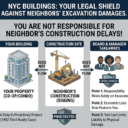
Property managers, take heed! A recent court case highlights the power you have to protect your associations when a neighboring building owner does not cooperate in giving a license for protection on their property so that the association can perform its work . In this case, the court awarded a license fee and mandated typical insurance, but did not reimburse the unneighborly neighbor for any additional professional fees or costs and did not grant any other consideration for the license.

The Case of the Unneighborly Neighbor

The specifics of the case may vary, but the core situation is this: Building A requires repairs to its facade, and in order to do so, Building A has to install protection on Building B’s property to protect Building B. Here’s where the trouble begins.

Building A ideally seeks a license agreement with Building B, allowing the repairs to proceed with clear terms for access and consideration if the access is really intrusive. However, if Building B proves uncooperative and refuses such an agreement, Building A is forced to go to court to obtain a court-ordered license.

The Burden of Proof Lies with the Repairing Building A

It’s crucial to understand that the burden of proof lies with Building A, the entity seeking the license. In order to obtain the court-ordered license, Building A must demonstrate:

  • Necessity of the Repairs: The court needs to be convinced that the repairs are essential and cannot be performed without protecting Building B’s property.
  • Minimal Encroachment: Building A must show they have minimized the intrusion onto Building B’s property as much as possible.
  • Security Measures: A plan outlining how Building B’s property will be protected during the repairs needs to be presented.

The Unforeseen Costs of Uncooperativeness

Building B’s refusal to cooperate may backfire. While they avoid granting explicit permission for the protection, they also forfeit the opportunity to negotiate a potentially favorable consideration package. It’s generally better for the parties to negotiate an out-of-court license than to leave it to a Judge to make a decision on the license terms and consideration. The court, in its decision, may not consider reimbursing Building B for its signifiant attorneys fees incurred regarding the matter. In the case, Building B was looking for up to a $10,000 reimbursement during negotiations which was dwarfed once litigation started. Building B walked away with no reimbursement by the Court.

The Takeaway: Cooperation is Key

This case serves as a cautionary tale for both parties involved. For property managers, it underscores the importance of pursuing clear agreements with neighboring property owners before embarking on facade repairs. For uncooperative neighbors, it demonstrates the potential financial burden of refusing a reasonable license agreement.

By fostering open communication and seeking mutually beneficial solutions, property managers can avoid the hassle and expense of litigation, ensuring a smoother and more cost-effective repair process for everyone involved. It is critical to bring in experienced counsel early on in the license process in order to facilitate negotiations and if necessary, bring the neighbor to Court. The Matter of Board of Managers of Ariel Condominium v. Broadway Metro Association, L.P. case gives, associations that require a license from their uncooperative neighbors, another tool in their arsenal for compelling the neighbor to be neighborly. Read the decision here.

Court Ruling Highlights Coop Power to Compel Shareholder Access for Repairs

Court Ruling Highlights Coop Power to Compel Shareholder Access for Repairs

A recent case decided by the New York Supreme Court (390 Riverside Owners Corp. v. Stout) underscores the importance of shareholders granting access to their apartments for necessary repairs, and actions that property managers and coop boards can take when shareholder-proprietary tenants do not do so.

The Issue:

  • A co-op board requested access to a shareholder’s apartment to repair a leak affecting the unit below. Shareholders refused, disputing the source of the leak and the necessity of the board’s proposed repairs.

The Court’s Ruling:

  • The court ruled in favor of the co-op board, ordering the shareholders to grant access. The key points:
    • Proprietary Leases are Critical: These leases typically grant the co-op board broad access rights for maintenance and repairs.
    • Business Judgment Rule: Decisions on repairs made in good faith by the board are protected by the business judgment rule, limiting judicial interference. Management did a good job laying the foundation with an expert plumber and investigation into the need for the repair in this particular invasive way.

Lessons for Property Managers and Co-op Boards:

  • Document Your Case: Gather evidence, such as professional plumber or engineer reports, to substantiate the repairs’ necessity.
  • Follow the Lease: Adhere to the procedures for requesting access and repairs laid out in the proprietary lease.
  • Act Reasonably: The board must show it exercised good faith and followed reasonable procedures when requesting access.
  • Communicate Clearly: Transparent communication with shareholders about the reasons for repairs can help avoid disputes.

Why Shareholders Should Grant Access

  • Prevent Further Damage: Refusing access can worsen the situation and lead to increased costs and damage to other units.
  • Fulfilling Obligations: Proprietary leases place a duty on shareholders to allow necessary repairs.
  • Avoiding Costly Litigation: Denying access could result in legal action and the responsibility to pay the co-op board’s legal fees. In this case, the Court awarded the coop legal fees and set the matter down for a hearing on the amount to award.

Read the case here.

Proactive Management and Record Keeping Lead to Coop Victories

Proactive Management and Record Keeping Lead to Coop Victories

The recent case of Alford v. 72nd Tenants Corp. offers a stark reminder for property managers in the cooperative housing sector: Disputes over terraces and other potentially shared spaces can lead to costly lawsuits. Even when your client board operates in good faith, detailed records play a vital role in successfully defending their actions.

Case Background: “Terrace” or Tenant Trouble?

A tenant-shareholder claimed that a rooftop area adjacent to her apartment qualified as a “terrace” under her proprietary lease. When the cooperative performed extensive repairs to the roof, the tenant alleged a breach of contract, and a kitchen sink of claims, due to delays and inconveniences.

The court, however, ruled in favor of the cooperative. The key factor was counsel’s ability to demonstrate through good record keeping that the board’s obligation was to protect the building’s structural integrity which outweighed the tenant’s claimed right to uninterrupted enjoyment of their own space, and that the board satisfied its obligation.

Why Your Records are Your Boards’ Legal Shield

This case highlights the importance of meticulous records for property managers. In Alford, the cooperative’s defense crucially relied on evidence documenting:

  • Initial Condition of the Space: Detailed descriptions, photos, and engineering assessments of the pre-existing damage supported the necessity of repairs.
  • Decision-Making Process: Board meeting minutes, resolutions, and correspondence with architects and engineers demonstrated reasoned and deliberate decision-making.
  • External Delays: Evidence of permitting delays, contractor changes, and unforeseen circumstances justified the repair timeline.

Lessons for Property Management Companies

This case illustrates crucial lessons for managing cooperative properties:

  1. Lease Language Matters: Analyze in advance what proprietary leases and offering plans define as leased spaces, balconies, terraces, or other areas of potential confusion, to allow attorneys to raise the right defenses like standing in the lawsuit from the inception.
  2. Documentation is Essential: Maintain thorough records of board decisions, maintenance actions, resident communication, and any unforeseen project delays.
  3. You are Critical to Lawyers Building a Defense: Your efforts are the building blocks for attorneys defending your coop boards. Proactive legal guidance along the way will help minimizing dispute risks.

While strong proprietary lease language is the first line of defense, meticulous record-keeping is your best insurance against costly lawsuits. By prioritizing documentation, property managers can empower their cooperative clients to confidently defend their actions and protect the best interests of the community as a whole. The decision in Alford v. 72nd Tenants Corp. shows the myriad of claims that plaintiff lodged and the coop was able to get thrown out by stellar management of a difficult situation.

Migrant “Land Invasion” – Squatting – What to do?

Migrant “Land Invasion” – Squatting – What to do?

Recent reports about social media trends encouraging individuals to exploit “squatter’s rights” laws are raising concerns for property owners. It’s crucial to understand this complex issue and proactive steps landlords and associations can take.

The reason is a legal loophole that gives would-be trespassers the right to stay in possession if they only stay in a property long enough to claim legal residency — otherwise known as “squatter’s rights.” In New York City, it’s only 30 days of living at a property.

So a homeless migrant just has to stay below the radar for 30 days and then the property owner has to take them to Court to have them legally removed. The process can be complicated and takes a long time. Unlike a known tenant, the squatters are anonymous in most cases and have to be served and then usually they won’t show up in Court. After multiple adjournments which the Courts routinely afford tenants who don’t appear, a property owner will get a default judgment of possession and eviction. Then, a lockout by a marshal has to be scheduled and occur. If the squatter shows up in Court and argues against the eviction, they might be able to steer the proceeding to a trial which adds time to the process. It is extremely frustrating to property owners and now influencers are trying to rally migrants to find abandoned property and squat to take advantage of our system which protects people who trespass and take possession of the property of others.

Proactive Steps for Property Owners

  • Regular Monitoring: Frequent inspections of vacant properties help identify potential squatters early, before they establish strong legal claims. With all the news around this issue, if you have a property, get to it quickly now and make sure you aren’t already a victim of squatting.
  • Secure the Property: Board up windows, keep utilities disconnected, install alarms, and maintain overall good condition to deter squatting.
  • Documentation: Meticulous records of ownership, property upkeep, and lack of permission for occupancy strengthen your legal case.
  • Time is of the Essence: The moment you suspect a squatter, consult with an attorney specializing in landlord-tenant law. Delays work in the squatter’s favor.

Challenges for Condos & HOAs

In the condominiums and homeowners associations that we represent, squatting happens to owners and because the association doesn’t own the property, it is difficult to address the squatting. Coops are a different form of ownership where the coop owns the building, so it can take action as the owner against squatters. There are tactics that experienced counsel can take for the boards.

What Condo & HOA Management and Owners Can Do:

  1. Check Governing Documents:
  • Bylaws/Rules: Look for provisions on unit owner responsibilities for vacant units, security measures, or authority granted to the board in exceptional circumstances.
  • Lien Authority: Investigate if the association has a lien for unpaid assessments that could form the basis for a foreclosure action, which might indirectly resolve a squatting issue.
  • Consider amending the governing documents to give the association more rights in these squatting situations.
  1. Support the Owner:
  • Notify & Advise: Alert the unit owner immediately and advise them to seek urgent legal counsel specializing in eviction proceedings.
  • Enforce HOA Rules: If the squatter is causing disturbances violating HOA rules, fines or other sanctions against the unit owner may add pressure to act.
  • Security: Consider enhancing association-wide security to deter squatting.
  • Bring a Nuisance Injunction Action: The association usually has authority to bring lawsuits to abate nuisance conditions or rule violations. If so, the association may be able to commence suit to stop nuisances or violations by the squatters which may pressure them to leave.
Condo Boards and Managers Beware: Ignoring Complaints of Rule Violations Lands You in Court

Condo Boards and Managers Beware: Ignoring Complaints of Rule Violations Lands You in Court

A brand new Appellate Court decision underscores condo boards’ duty to act in good faith when residents report violations of building rules and regulations. In the case of Bacharach v. Board of Managers of the Brooks-Van Horn Condominium, the board faced legal action after years of alleged inaction regarding excessive noise complaints. The New York Court which oversees the trial courts in Manhattan and the Bronx, refused to dismiss the case against the board and clarified that property managers and condo boards cannot merely leave it to owners to address their own owner-to-owner complaints and the board has to act in good faith when receiving a complaint that an owner if violating the rules.

Case Summary

  • Residents complained about unreasonable noise from a neighboring unit due to unapproved flooring installation.
  • Despite repeated requests over several years, the board didn’t adequately investigate or enforce the Condo’s noise rules.
  • Frustrated residents sued the board for breach of duty and sought an injunction to address the noise issue.

Court Ruling

  • The court denied the board’s motion to dismiss, determining:
    • The Condo’s bylaws are ambiguous as to whether the board has discretion to refrain from acting upon complaints of rule violations.
    • The board’s inaction may not be covered by the well-established business judgment rule, which requires actions in good faith for the benefit of the community.
    • “The alleged multiyear gap between plaintiffs’ first complaint and the board’s first action in response to the complaints suggests that the board may not have acted in good faith.”

Takeaways for Condo Boards & Property Managers

  1. “Discretion” Doesn’t Mean Inaction: While boards have flexibility in enforcement, ignoring legitimate complaints can be seen as a breach of duty.
  2. Document Clarity Matters: Review your bylaws and rules to ensure they clearly define the board’s authority and enforcement responsibilities.
  3. Good Faith Response Is KEY: Taking complaints seriously, even if your ultimate ruling favors the accused party, shows you’re fulfilling your role.
  4. Timely Action Builds Trust: Promptly addressing potential violations can prevent issues from escalating and damaging resident relations.

Proactive Steps

  • Establish and Follow Complaint Procedures: Have a clear process for documenting, investigating, and responding to complaints.
  • Regular Bylaw Review: Ensure your rules remain enforceable and fair.
  • Seek Legal Guidance Early: Advice from an attorney specializing in condo law can help you navigate complex disputes.

Here is the decision.

NY Real Estate Alert: New Disclosure Rules Start Tomorrow

NY Real Estate Alert: New Disclosure Rules Start Tomorrow

The New York State Real Property Law, Article 14, known as the Property Condition Disclosure Act, underwent a recent amendment that is effective March 20, 2024. This update impacts residential real estate transactions throughout the state. The $500 credit by a seller to a buyer for not having to provide the disclosure has been removed. Here’s what real estate agents, buyers, and sellers need to know:

Key Changes & Their Implications

  • Mandatory Disclosure Form: The amendment introduces a standardized disclosure form that sellers of residential property must complete and provide to potential buyers. There is no longer an option to pay $500 and not do so. This aims to streamline the process and ensure that all buyers receive consistent, essential information about the property’s condition. Expect that buyers will want the disclosure included in the contract.
  • Expanded Scope of Disclosure: The standard form requires sellers to disclose a wider range of information about the property, including:
    • Structural issues (roof, foundation, etc.)
    • Presence of lead paint or asbestos
    • Mechanical systems (heating, plumbing, electrical)
    • Environmental hazards (mold, radon)
    • Any known defects or malfunctions
  • Impact on Seller Liability: The amendment clarifies that the seller is not liable for errors in the disclosure statement unless they had actual knowledge of the defect and intentionally withheld the information. This emphasizes the importance of honesty and transparency on the seller’s part.
  • Buyer’s Right to Inspect: The updated law underscores the buyer’s right to have professional inspections performed, encouraging due diligence before finalizing the purchase.

Benefits for Buyers and Sellers

  • Increased Buyer Confidence: The standardized form and expanded disclosures provide buyers with more detailed information upfront, allowing them to make informed decisions and reducing the likelihood of surprises after closing.
  • Protecting Sellers: While sellers must be accurate, the amendment offers protection from liability for unintentional omissions. This encourages transparency without undue risk exposure.
  • Streamlined Transactions: A standardized format aims to simplify the disclosure process, potentially preventing delays and disputes during the sale.

What Do You Need to Do?

  • Sellers: Familiarize yourself with the new disclosure form and gather supporting documentation. Be truthful and accurate in your disclosures. If you aren’t, you expose yourself to post closing litigation.
  • Buyers: Carefully review the seller’s disclosure statement and schedule professional inspections to verify the property’s condition to your satisfaction.
  • Real Estate Agents: Educate your clients about the changes, provide the updated disclosure form to sellers, and advise buyers of their rights.

Where to Find More Information

The amended Property Condition Disclosure Act and the standard form can be found on the New York State Senate website (https://www.nysenate.gov/). Here is the amended law.

How Strong Is Your Liability Shield? Understanding Bylaws & Board Actions

How Strong Is Your Liability Shield? Understanding Bylaws & Board Actions

Could your condo bylaws save you from a costly lawsuit? A recent Brooklyn court decision highlights the critical role bylaws play when unit owners and their Board of Managers clash.

Case Background

  • Plaintiffs (unit owners) alleged negligence by the Condominium Board and individual members in addressing water damage within their unit.
  • The Board argued that the condo’s bylaws provide personal liability protection to board members.

Key Legal Principles

  • Business Judgment Rule: Courts generally defer to condo board decisions made within their authority and in good faith. Plaintiff must demonstrate fraud or self-dealing to overcome this protection.
  • Condominium Bylaws: These form a contract between the board and unit owners. Bylaws often include provisions specifically limiting individual liability of board members for actions taken in their official capacity.

Court’s Ruling

  • Negligence claims against individual board members were dismissed due to protections under the condominium bylaws.
  • Board-level claims (breach of duty, negligence) remain pending.
  • Additional rulings denied summary judgment for both sides, highlighting the factual issues still in dispute.

Takeaways for Boards & Property Managers

  1. Bylaws as Safeguards: Well-drafted bylaws offer substantial protection in lawsuits alleging negligence or breach of duty, provided board members acted within their authority and in good faith. Periodic review of bylaws is essential.
  2. Fiduciary Responsibility: The board still maintains a duty of care towards the condominium property and unit owners. Neglect or willful disregard of this duty may expose the board as a whole to liability.
  3. Proactive Maintenance: Address potential issues (e.g., water leaks) promptly to minimize damage and mitigate the risk of disputes escalating to legal action.
  4. Thorough Documentation: Maintain meticulous records of board actions, maintenance, and owner communications. This serves as evidence of responsible decision-making.
  5. Discovery Compliance: Non-compliance with discovery procedures can hinder your defense. Understand the obligations from counsel regarding the preservation and sharing of case-relevant information.

Here is the decision (Szymczyk v. Board of Managers of 363 16th Street Condominium).

Business Judgment Rule: How to Protect Your Board (and Secure Tranquility)

Business Judgment Rule: How to Protect Your Board (and Secure Tranquility)

The recent case of Levy v. 103-25 68th Ave. Owners, Inc. offers some valuable insights for property managers and board members within cooperative housing communities.

In June 2018, the Levys commenced this action against the co-op defendants and the occupants of the neighboring apartment, alleging, inter alia, that the co-op defendants exceeded the scope of their authority, discriminated against them for having children, and acted in bad faith. 

The Business Judgement Rule

This rule affords a degree of protection to boards of directors when making decisions within the scope of their authority. Courts generally defer to board decisions if they are made:

  • For the purposes of the cooperative community: Decisions should align with the overall well-being of the community.
  • Within the board’s authority: Actions shouldn’t violate governing documents (e.g., bylaws, proprietary lease).
  • In good faith: Board members must act without ulterior motives or personal gain.

Limits of Board Authority

The Levy case highlights that the Business Judgment Rule is not absolute but it can be used to insulate boards, along with their property manager agents, unless they

  • Exceed their authority: Boards cannot take actions that contradict the cooperative’s governing documents.
  • Act with discriminatory intent: Decisions cannot be based on factors like race, religion, familial status, or other protected characteristics.
  • Show Bad faith: Self-interest, malice, or disregard for the community’s well-being can invalidate the protection of the Business Judgement Rule.

Best Practices

To avoid issues like management and the board did in the Levy case, it’s imperative that property managers and board members:

  • Understand Governing Documents: Thoroughly familiarize yourselves with the cooperative’s bylaws, proprietary lease, and any other relevant rules and regulations.
  • Document Decision-Making: Maintain clear records to demonstrate careful and informed processes behind decisions.
  • Act Impartially: Treat residents fairly and avoid even the appearance of preferential treatment or discrimination.
  • Prioritize Community Interests: Decisions should always prioritize the well-being of the cooperative community as a whole.

The Levy case underscores the importance of due diligence, fair treatment, and a commitment to serving the entire cooperative community. By being mindful of these principles, property managers and board members avoid liability for the entity and themselves personally. Here’s the decision.

  • 1
  • 2
  • 3
  • 4
  • 5

Recent Attorney Publications

  • When Contractors Lack Licenses: Key Lessons for Condos, Co-ops, and HOAs July 25, 2026
  • When Bankruptcy Won’t Stop Your Foreclosure Sale: What Condo Boards and Management Need to Know About Repeat Filers July 22, 2026
  • When Repetitive Filings Cross the Line: Lessons from Fulton v. Yameogo July 21, 2026
  • Condominium Boards: Why Being Aware of First Mortgage “Standing” Can Protect Your Community’s Bottom Line July 13, 2026
  • Winning the Common Charge Battle: How Condo Boards Prevail Against Defiant Unit Owners July 2, 2026

Contact Us

Send us a note and we'll get back to you promptly.

OFFICES

  • Manhattan Office
  • 315 Madison Avenue, Suite 4032, New York, New York 10017
  • 646.880.3000
  • 646.880.3048
  • Westchester Office
  • 44 South Broadway, 21st Floor, White Plains, New York 10601
  • 646.880.3000
  • 646.880.3048
  • Connecticut Office
  • 55 Post Road W, 2nd Floor, Westport, Connecticut 06880
  • 203.349.8100
  • 646.880.3048

Latest Publications

  • When Contractors Lack Licenses: Key Lessons for Condos, Co-ops, and HOAs July 25, 2026
  • When Bankruptcy Won’t Stop Your Foreclosure Sale: What Condo Boards and Management Need to Know About Repeat Filers July 22, 2026
  • When Repetitive Filings Cross the Line: Lessons from Fulton v. Yameogo July 21, 2026
  • Condominium Boards: Why Being Aware of First Mortgage “Standing” Can Protect Your Community’s Bottom Line July 13, 2026

© 2026 Colbert Law LLC Attorney Advertising. Prior results do not guarantee a similar outcome.

Highend Logo

Manhattan Office

  • 315 Madison Avenue, Suite 4032, New York, New York 10017
  • 646.880.3000
  • 646.880.3048

Westchester Office

  • 44 South Broadway, 21st Floor, White Plains, New York 10601
  • 646.880.3000
  • 646.880.3048

Connecticut Office

  • 55 Post Road W, 2nd Floor, Westport, Connecticut 06880
  • 203.349.8100
  • 646.880.3048

OUR EXPERTISE

When Contractors Lack Licenses: Key Lessons for Condos, Co-ops, and HOAs

July 25, 2026

A recent NYC Civil Court decision (Fortes v. Decorating and...

When Bankruptcy Won’t Stop Your Foreclosure Sale: What Condo Boards and Management Need to Know About Repeat Filers

July 22, 2026

For condominium boards foreclosing on unpaid common charges,...

When Repetitive Filings Cross the Line: Lessons from Fulton v. Yameogo

July 21, 2026

Community association boards—whether governing condos,...

Condominium Boards: Why Being Aware of First Mortgage “Standing” Can Protect Your Community’s Bottom Line

July 13, 2026

When a condominium unit owner defaults on their monthly...

Winning the Common Charge Battle: How Condo Boards Prevail Against Defiant Unit Owners

July 2, 2026

Condominium boards and property managers face a unique,...

When the Neighbor Builds: What Condo and Co-Op Boards Need to Know

June 29, 2026

Construction in New York City is a fact of life, but when a...

Succession Rights in Limited-Equity Co-ops: Practical Lessons from Mutual Redevelopment Houses v. Manyevitch

June 12, 2026

Succession disputes are among the most sensitive and...

The Post-Settlement Trap: What Fiondella Teaches Co-op Boards About Stipulations and Continuing Habitability Claims

June 9, 2026

For New York cooperative boards and managing agents,...

The Derivative Action Threat: Why “Limited Common Elements” Present Litigation Risks for Condominium Boards and Managers

May 16, 2026

A recent decision by the Appellate Division, First...

Governance and Rule-Making in the Modern Condominium

April 27, 2026

Reflections on 10MSW17D LLC v. Bd. of Managers of 10...

Don’t Delay: Why Timely Enforcement of Common Charges is Critical for Condo Boards

April 15, 2026

A recent decision from the Supreme Court of New York,...

RPAPL § 881 Licenses, and Why Fee Reimbursement Is a Core Deal Term

April 13, 2026

Boards and managers of condominiums, cooperatives, and...

The 432 Park Decision: A Masterclass in Risk Management for New York Condo Boards

April 2, 2026

New York condominium boards and management companies operate...

Protecting Your Building’s Integrity: Lessons from Board of Mgrs. of the 80th at Madison Condominium v. 1055 Madison Ave. Owners LLC

March 31, 2026

As a condominium board member or property manager, your...

Press Enter to search · Esc to close