
• Home
  • About us
  • Capabilities
    • Condo, Coop, HOA Counsel
    • Litigation
    • Business Law
    • Technology
    • Real Estate
    • Employment Law
    • Tax Audits
    • Family Law
  • Insights
  • References
  • FAQ
  • Inquiry
    • Payment
Colbert LawColbert Law
  • Home
  • About us
  • Capabilities
    • Condo, Coop, HOA Counsel
    • Litigation
    • Business Law
    • Technology
    • Real Estate
    • Employment Law
    • Tax Audits
    • Family Law
  • Insights
  • References
  • FAQ
  • Inquiry
    • Payment

Boards

Home Boards (Page 13)
Can Boards Require Covid Vaccines?

Can Boards Require Covid Vaccines?

Over the next year, Covid-19 vaccines will hopefully become readily available to the general public. Boards of community associations will undoubtedly have to decide on vaccines. Can they mandate them of employees? Can they mandate that resident owners be vaccinated? How about tenants? How about property managers and other independent contractors? Will vaccines become a competitive advantage for contractors selling their wares or services because they are 100% vaccinated? Boards will have a lot to consider and ought to get current legal advice before making any business decisions on vaccines. This is a new world that we are experiencing, but there are all sorts of laws that have to be considered and new ones are sure to be enacted as we muddle through.

With respect to employees, the landscape is getting clearer but the answers are still a little cloudy. Soon enough someone will be fired or not hired because they are not vaccinated and we’ll have some case law to guide us. Here’s were we are on employees.

Mandatory vaccinations are not new but have been historically limited to health care and education market segments. While there is no clear legal prohibition on mandatory vaccines in the employment context, these requirements are subject to several legal exceptions, most notably accommodation for disability, religion and pregnancy.

On December 16, 2020, the Equal Employment Opportunity Commission updated its COVID-19 guidance to express the agency’s views on the legal implications of COVID-19 vaccine under the Americans with Disabilities Act (ADA), Title VII and other EEO laws. The EEOC’s guidance is not binding on courts, but it is expected to be highly influential. Key takeaways from the guidance are as follows:

  • A vaccine is not a medical examination under the ADA, but pre-vaccination questions answered by an employee as a part of an employer’s vaccination program may be ‘disability-related inquiries’ under the ADA that should be avoided absent business necessity.
  •  Employers may need to accommodate an employee with a disability who cannot take the vaccine because of that disability.
  • Employers may need to accommodate an employee’s sincerely held religious beliefs or pregnancy, if either prevents an employee from taking the vaccine.

To date, the Occupational Safety and Health Administration has not taken a position on whether an employer can require the COVID-19 vaccine or must at least offer it to meet statutory safe workplace obligations.

Then there is the question of unionized employees. What does the Collective Bargaining Agreement in place say. There is no real question that the adoption of mandatory and non-mandatory vaccination programs by unionized employers are a mandatory subject of bargaining. But that does not mean that employers cannot start a vaccination program or require vaccination.

Employers with current union contracts should start by examining the management rights and other provisions of their contract to determine if they are broad enough to waive a union’s right to bargain. Even in the absence of a management right to proceed, most employers can still bargain over vaccine program issues with their unions. Most employers will also benefit from keeping their unions involved even if there is a management right to proceed with a vaccination program, as doing so can assist with employee buy in and avoid grievances (and adverse arbitration results).

Aside from the above, board employers need to consider the fact that while many employees may embrace vaccination without hesitation, a large percentage of people are reportedly skeptical or concerned about side effects or other unknown health implications. As time goes by and we learn from experience in vaccinations and their hopeful positive effect, people will likely be less concerned and apprehensive.

In the end, coop, condo, HOA and other community association boards. have to act in the best interest of their association communities. Making decisions on vaccinations are likely going to be on the board meeting agendas soon enough. Navigating these uncertain times is difficult without experienced professional advice.

Boards need to make sure their Policy Changes Pass Legal Muster

Boards need to make sure their Policy Changes Pass Legal Muster

Community associations are quasi governments which can make their own rules provided that they don’t run afoul the law. Whenever changing rules, coop, condo, HOA and other community association boards must make sure that their good intention rule changes aren’t going to get them into trouble. With a litigious owner (especially one who is an attorney, “professional plaintiff”, a person without financial constraints or maybe just with strong principles), a board could end up in litigation which spans years and even after the board members are no longer even board members.

A good example of rule making gone wild happened in a New York cooperative called Woodstock Owners Corp. The coop enacted a no sublet policy but only with respect to owners who bought after a certain date (in that case October 2002). Bianca Razzano, a shareholder, was not allowed to sublet under that rule and she sued in 2009 and continued litigating, appealing, discovering, and fighting on and on for years. Eleven years later, the parties were still litigating with an order just being issued this year in 2020. She sued the coop Board, the management company and an individual board member.

On one appeal, the Court struck down the sublet policy, declaring it violative of Business Corporation Law Section 501(c) which essentially prohibits unequal treatment of shareholders. The litigation continued with Ms. Razzano trying to expand her case to include emotional distress damage claims. The Court put a stop to that, but this was years after the genesis of the dispute.

It is not clear whether the cooperative obtained legal advice regarding its sublet policy but it should have. In some instances, boards try to avoid incurring legal fees on rule making and take a let’s do it and see if anyone objects strategy. This is not advised. Experienced community association counsel should be able to advise a board and keep it out of trouble like the trouble experienced by the Woodstock cooperative got into, without incurring substantial legal expenses. The legal expenses that the cooperative, management and board member in the Woodstock case experienced, pales in comparison to the expenses of experienced legal advice.

Read the Bianca Razzano v. Woodstock Owners Corp. decision here and keep your board out of similar trouble. Don’t let matters spiral out of control.

Nonjudicial Foreclosures – Weapon in Cooperative Board’s Arsenal

Nonjudicial Foreclosures – Weapon in Cooperative Board’s Arsenal

Because of the unique form of ownership in cooperative housing corporations, boards have a weapon in its arsenal to enforce shareholder obligations – the nonjudicial foreclosure sale. In cooperatives, owners are shareholders in the cooperative corporation and lessees under a property lease with the cooperative. Because of this ownership structure, proprietary leases contain provisions allowing for termination of the lease for breaches and because shares are security interests, they can be sold by the board at a nonjudicial foreclosure sale. This weapon was confirmed by Appellate Division, Second Department in a decision a few weeks ago in Hargraves v. Tyler Towers Owners Corp.

The facts of that case were a bit complicated but in the end, the cooperative shareholder withheld paying maintenance because he didn’t agree with the coop board’s position on an agreement with the shareholder, and ended up in a lot of hot water. The coop served the shareholder with a notice to cure and after the cure period expired without the shareholder paying, the cooperative terminated the proprietary lease and then notified the shareholder under the lease that it was considering the shares for the apartment forfeited and sold at a nonjudicial foreclosure sale.

When receiving the last notice of sale, the shareholder woke up and brought suit to try to stop the weapon from being used by the cooperative, but the Court held that the shareholder was too late. Like a commercial lease where a Yellowstone Injunction could be sought before the cure period expired, the shareholder couldn’t bring a preliminary injunction demand against the cooperative after the cure period expired. It was too late and the shareholder should have done so before the cure period expired.

You snooze, you lose and in this case, the cooperative board used a powerful weapon of a nonjudicial foreclosure sale, to address its dispute with a nonpaying shareholder.

Read the decision here.

Arbitration – Boards and Owners See it through Different Lenses

Arbitration – Boards and Owners See it through Different Lenses

Many bylaws include an arbitration provision. Something like, any dispute between the Unit Owners and the Condominium shall be submitted to binding arbitration in accordance with the rules of the American Arbitration Association and that the decision in any arbitration shall be binding upon all of the parties thereto and may be entered in any court of appropriate jurisdiction. Complaining unit owners often overlook it and boards may stay away from it. Some argue that an arbitration agreement in the condos governing documents only applies to breaches under the governing documents and not disputes outside the four corners of the documents; however, the usual “any dispute” and “shall be submitted” language in an arbitration provision, is awfully broad and arguably goes beyond the four corners.

That said, there are drawbacks of arbitration. For example, discovery is not a right of the parties (that is, unless the arbitration provision covers discovery. Instead, an arbitrator or even a arbitration panel of several decision makers, decides whether the parties need discovery. Another issue is getting discovery from third parties. Although an arbitrator or panel can subpoena third parties to testify at an arbitration hearing, there is no right to subpoena third parties for pre-arbitration discovery. The third party can simply ignore a subpoena and unlike a court, an arbitrator is essentially powerless to compel compliance.

Some people believe that arbitration is a less expensive approach that a litigation, but that is not always the case. Some arbitrations can be as contentious as litigations and sometimes take longer than a court lawsuit.

Unit owners and boards should consider what their governing documents say about arbitration and if appropriate in a given case, consider arbitration instead of litigation. Consulting with counsel who is experienced in both litigation and arbitration like Colbert Law, is always recommended.

Federal Court Decision makes it hard for Coop Boards to stay out of Neighbor Disputes

Federal Court Decision makes it hard for Coop Boards to stay out of Neighbor Disputes

Right before the pandemic started and we weren’t compelled to quarantine and stay closer to our neighbors for longer period of time, a Federal Court made a decision that makes it’s harder for cooperative boards to stay out of neighbor-neighbor disputes without risk of liability.

The case involved Kings Park Manor, a rental building owner, and complainant, Donahue Francis. The bickering between Francis and his neighbor Raymond Endres was unbelievable. The Court described it as a “brazen and relentless campaign of racial harassment, abuse, and threats.” In the parties’ words, according to the Court, “Francis heard Endres say ‘Jews, fucking Jews,’ while standing in front of their apartments Endres then called Francis, who is black, a ‘fucking nigger’. It got worse and worse and the building owner decided to stay out of it and directed management (who also ended up sued) to do the same.

The lawsuit was in Federal Court and ended up on appeal where the Second Circuit in Manhattan issued a decision which should make coop boards think twice before deciding not to intervene in disputes between shareholders; or at least ones that rise to the level of the Francis-Endres dispute. If a coop board decides to stay out despite the Court decision it ought to create a proper and thorough record vetted by counsel so that it can defend it if sued.

In the Kings Park case the Court ruled that the Fair Housing Act requires a landlord (like a coop) to take racial harassment as seriously as it takes other tenant misconduct, and that it constitutes intentional discrimination for a landlord to selectively ignore misconduct. The court held that the act covers discrimination not only when renting an apartment to a tenant but also extends to the relationship after the tenant moves in. Thus, a landlord is not allowed to harass or otherwise discriminate against a tenant because of race by failing to address complaints. The court reasoned that the landlord had remedies, such as terminating the lease, and it should have taken action rather sticking its head in the sand.

Read the decision here.

Tick Tock, Tick Tock, 4 Month Statute of Limitations is a Powerful Board Defense

Tick Tock, Tick Tock, 4 Month Statute of Limitations is a Powerful Board Defense

Most lawsuits challenging the propriety of decisions by cooperative and condominium boards are subject to a four-month statute of limitations. So if a complainant doesn’t start a lawsuit within four months of the board decision, they are time barred. Thus, boards have a solid statute of limitations defense unless a plaintiff acts really quickly. If sued past the four months, the board can move for dismissal and if presented properly, the lawsuit should be dismissed. It is critical for boards to maintain substantial records of such business decisions in minutes so that the timing for the four month start can be established and when suit is filed, help counsel present an effective dismissal motion.

The vast majority of complaints by aggrieved shareholders and unit owners challenging the propriety of board decisions are presented as actions for declaratory judgment. Crafty plaintiff’s lawyers probably do so because they do not specialize in condo/coop and business law, or they are trying to lawyer around the short statute of limitations. The New York Court of Appeals, however, has decreed that, regardless of how styled, if an action could lawfully be commenced as an Article 78 Proceeding, then the four-month statute of limitations applicable to these proceedings applies, as set forth in CPLR Section 217 (1). Armed with this knowledge and well-documented board business decisions, an aggressive condo/coop attorney should be able to effectively put an end to a lawsuit.

5 Things Property Managers Must Know about Zoom Board Meetings

5 Things Property Managers Must Know about Zoom Board Meetings

Boards sometimes have to take prompt action to protect unit owners

Boards sometimes have to take prompt action to protect unit owners

The Porter House Condominium Board seems to be a classic example of waiting to see what happens because we don’t want to incur the cost right now.  Without professional management and seasoned counsel to advise them how to protect unit owners (which is a part of the board’s fiduciary duty by the way) boards wait too long to act and then end up spending more money to undue what they could have avoided had they acted as required.

Porter House is now tangled up in a multi-party lawsuit against a neighbor who build a building arguably in violation of an easement for light and air, and for restricted elevations.  Trouble is, the building was built.  The Board acted after the fact and now is trying to undo what was already done.  This is a tough way to solve a problem like this.  It is not clear whey the board didn’t act before the building was built, but clearly the strategy of let us wait and see is turning into a very expense course that this Board charted.

The Supreme Court in New York County just decided motions about the case and it is going to move into a discovery stage once all the parties and the new ones (the next door developer is pointing the finger at other now) join in the litigation.

Aggressive action at the inception, before or while the building was being built to enforce the easement would have been a better course.  With constructions like this, there are often access agreements for protections that the Building Department requires.  The Porter House Condominium Board seems to have dropped the proverbial ball by not taking action at that time when it had more leverage. Here’s more on the case.

Insulating Yourself from Personal Liability for Your Business

Insulating Yourself from Personal Liability for Your Business

Serendipity Labs Westport Presents

Insulating Yourself from Personal Liability for Your Business

September 23rd, 2020 3:00-3:45PM| Q&AtoFollow

Many people know that in order to protect their personal assets, they need to incorporate their businesses. For example, forming an LLC for their business is a good first step. However, much more is necessary. Owners often fail to appreciate that if they do not observe corporate formalities and operate their businesses in a particular way, their personal assets could be exposed irrespective of the initial incorporation. Attorney Joe Colbert who serves as general, corporate and litigation counsel for many businesses will discuss the exposure points and how to avoid them so your personal assets are protected.

Joseph Colbert has practiced business law for over twenty five years. Among New York?s and Connecticut?s most successful and prominent attorneys, Joe has been identified among the top attorneys in the tri-state area. He is a general practitioner who focuses on the representation of organizations and individuals as general, corporate and litigation counsel. Joe taught as an Adjunct Professor Law for many years and also serves as a mediator and arbitrator. Colbert Law has various practice areas with offices in New York and Connecticut (www.colbertlaw.us).

Register at Link Below:
https:/ / serendipitylabs.zoom.us/ webinar/ register/ WN_pPJzAP0ORtyOIbdEXNrcJQ

Serendipity Labs Westport
55 Post Road W, 2nd Floor | Westport, CT 06880

page1image8542592
page1image6870096
Court Compels Coop and Shareholder to have Virtual Hearing on Attorney Fee Award

Court Compels Coop and Shareholder to have Virtual Hearing on Attorney Fee Award

Justice Lebovits of the Supreme Court, New York County, just decided that a cooperative shareholder who is facing an award of legal fees against him, must appear at a virtual hearing on the amount of the legal fee award.  The cooperative at One West 64th Street in Manhattan won the case and the Court decided that the shareholder’s continued seeking books and records in the lawsuit was in bad faith and warranted an award of legal fees to the coop under the proprietary lease.

After Covid-19, an in person hearing was not possible.  The coop pressed on and wanted a virtual hearing on the attorney fees award. The motion practice proceeded, resulting in Justice Lebovits’ decision on September 4, 2020.  The Court recognized that:

This court is aware of only one New York case addressing the issue of virtual hearings since the beginning of the pandemic. In A.S. v N.S., Justice Tandra L. Dawson of Supreme Court, New York County, carefully considered the issue and held that under the circumstances of the case before her (a contentious custody dispute), holding a virtual hearing was feasible, fair, and preferable to further postponing trial. (See 2020 NY Slip Op 20161 [Sup Ct, NY County July 1, 2020].)

Justice Lebovits agreed with that conclusion and ordered a virtual hearing.  According to the Court:

Judiciary Law § 2-b (3) confers power on this court “to devise and make new process and [*3]forms of proceedings, necessary to carry into effect the powers and jurisdiction possessed by it.” This statutory provision “explicitly authorize[s] the courts’ use of innovative procedures where “necessary to carry into effect the powers and jurisdiction possessed by” the court. (People v Wrotten, 14 NY3d 33, 37 [2009] [internal quotation marks omitted].)

Read the decision here.

  • 1
  • 2
  • …
  • 12
  • 13
  • 14
  • …
  • 18
  • 19

Recent Attorney Publications

  • When Contractors Lack Licenses: Key Lessons for Condos, Co-ops, and HOAs July 25, 2026
  • When Bankruptcy Won’t Stop Your Foreclosure Sale: What Condo Boards and Management Need to Know About Repeat Filers July 22, 2026
  • When Repetitive Filings Cross the Line: Lessons from Fulton v. Yameogo July 21, 2026
  • Condominium Boards: Why Being Aware of First Mortgage “Standing” Can Protect Your Community’s Bottom Line July 13, 2026
  • Winning the Common Charge Battle: How Condo Boards Prevail Against Defiant Unit Owners July 2, 2026

Contact Us

Send us a note and we'll get back to you promptly.

OFFICES

  • Manhattan Office
  • 315 Madison Avenue, Suite 4032, New York, New York 10017
  • 646.880.3000
  • 646.880.3048
  • Westchester Office
  • 44 South Broadway, 21st Floor, White Plains, New York 10601
  • 646.880.3000
  • 646.880.3048
  • Connecticut Office
  • 55 Post Road W, 2nd Floor, Westport, Connecticut 06880
  • 203.349.8100
  • 646.880.3048

Latest Publications

  • When Contractors Lack Licenses: Key Lessons for Condos, Co-ops, and HOAs July 25, 2026
  • When Bankruptcy Won’t Stop Your Foreclosure Sale: What Condo Boards and Management Need to Know About Repeat Filers July 22, 2026
  • When Repetitive Filings Cross the Line: Lessons from Fulton v. Yameogo July 21, 2026
  • Condominium Boards: Why Being Aware of First Mortgage “Standing” Can Protect Your Community’s Bottom Line July 13, 2026

© 2026 Colbert Law LLC Attorney Advertising. Prior results do not guarantee a similar outcome.

Highend Logo

Manhattan Office

  • 315 Madison Avenue, Suite 4032, New York, New York 10017
  • 646.880.3000
  • 646.880.3048

Westchester Office

  • 44 South Broadway, 21st Floor, White Plains, New York 10601
  • 646.880.3000
  • 646.880.3048

Connecticut Office

  • 55 Post Road W, 2nd Floor, Westport, Connecticut 06880
  • 203.349.8100
  • 646.880.3048

OUR EXPERTISE

When Contractors Lack Licenses: Key Lessons for Condos, Co-ops, and HOAs

July 25, 2026

A recent NYC Civil Court decision (Fortes v. Decorating and...

When Bankruptcy Won’t Stop Your Foreclosure Sale: What Condo Boards and Management Need to Know About Repeat Filers

July 22, 2026

For condominium boards foreclosing on unpaid common charges,...

When Repetitive Filings Cross the Line: Lessons from Fulton v. Yameogo

July 21, 2026

Community association boards—whether governing condos,...

Condominium Boards: Why Being Aware of First Mortgage “Standing” Can Protect Your Community’s Bottom Line

July 13, 2026

When a condominium unit owner defaults on their monthly...

Winning the Common Charge Battle: How Condo Boards Prevail Against Defiant Unit Owners

July 2, 2026

Condominium boards and property managers face a unique,...

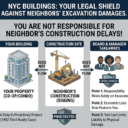
When the Neighbor Builds: What Condo and Co-Op Boards Need to Know

June 29, 2026

Construction in New York City is a fact of life, but when a...

Succession Rights in Limited-Equity Co-ops: Practical Lessons from Mutual Redevelopment Houses v. Manyevitch

June 12, 2026

Succession disputes are among the most sensitive and...

The Post-Settlement Trap: What Fiondella Teaches Co-op Boards About Stipulations and Continuing Habitability Claims

June 9, 2026

For New York cooperative boards and managing agents,...

The Derivative Action Threat: Why “Limited Common Elements” Present Litigation Risks for Condominium Boards and Managers

May 16, 2026

A recent decision by the Appellate Division, First...

Governance and Rule-Making in the Modern Condominium

April 27, 2026

Reflections on 10MSW17D LLC v. Bd. of Managers of 10...

Don’t Delay: Why Timely Enforcement of Common Charges is Critical for Condo Boards

April 15, 2026

A recent decision from the Supreme Court of New York,...

RPAPL § 881 Licenses, and Why Fee Reimbursement Is a Core Deal Term

April 13, 2026

Boards and managers of condominiums, cooperatives, and...

The 432 Park Decision: A Masterclass in Risk Management for New York Condo Boards

April 2, 2026

New York condominium boards and management companies operate...

Protecting Your Building’s Integrity: Lessons from Board of Mgrs. of the 80th at Madison Condominium v. 1055 Madison Ave. Owners LLC

March 31, 2026

As a condominium board member or property manager, your...

Press Enter to search · Esc to close