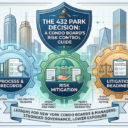
The recent case of Alford v. 72nd Tenants Corp. offers a stark reminder for property managers in the cooperative housing sector: Disputes over terraces and other potentially shared spaces can lead to costly lawsuits. Even when your client board operates in good faith, detailed records play a vital role in successfully defending their actions.
Case Background: “Terrace” or Tenant Trouble?
A tenant-shareholder claimed that a rooftop area adjacent to her apartment qualified as a “terrace” under her proprietary lease. When the cooperative performed extensive repairs to the roof, the tenant alleged a breach of contract, and a kitchen sink of claims, due to delays and inconveniences.
The court, however, ruled in favor of the cooperative. The key factor was counsel’s ability to demonstrate through good record keeping that the board’s obligation was to protect the building’s structural integrity which outweighed the tenant’s claimed right to uninterrupted enjoyment of their own space, and that the board satisfied its obligation.
Why Your Records are Your Boards’ Legal Shield
This case highlights the importance of meticulous records for property managers. In Alford, the cooperative’s defense crucially relied on evidence documenting:
- Initial Condition of the Space: Detailed descriptions, photos, and engineering assessments of the pre-existing damage supported the necessity of repairs.
- Decision-Making Process: Board meeting minutes, resolutions, and correspondence with architects and engineers demonstrated reasoned and deliberate decision-making.
- External Delays: Evidence of permitting delays, contractor changes, and unforeseen circumstances justified the repair timeline.
Lessons for Property Management Companies
This case illustrates crucial lessons for managing cooperative properties:
- Lease Language Matters: Analyze in advance what proprietary leases and offering plans define as leased spaces, balconies, terraces, or other areas of potential confusion, to allow attorneys to raise the right defenses like standing in the lawsuit from the inception.
- Documentation is Essential: Maintain thorough records of board decisions, maintenance actions, resident communication, and any unforeseen project delays.
- You are Critical to Lawyers Building a Defense: Your efforts are the building blocks for attorneys defending your coop boards. Proactive legal guidance along the way will help minimizing dispute risks.
While strong proprietary lease language is the first line of defense, meticulous record-keeping is your best insurance against costly lawsuits. By prioritizing documentation, property managers can empower their cooperative clients to confidently defend their actions and protect the best interests of the community as a whole. The decision in Alford v. 72nd Tenants Corp. shows the myriad of claims that plaintiff lodged and the coop was able to get thrown out by stellar management of a difficult situation.

Recent reports about social media trends encouraging individuals to exploit “squatter’s rights” laws are raising concerns for property owners. It’s crucial to understand this complex issue and proactive steps landlords and associations can take.
The reason is a legal loophole that gives would-be trespassers the right to stay in possession if they only stay in a property long enough to claim legal residency — otherwise known as “squatter’s rights.” In New York City, it’s only 30 days of living at a property.
So a homeless migrant just has to stay below the radar for 30 days and then the property owner has to take them to Court to have them legally removed. The process can be complicated and takes a long time. Unlike a known tenant, the squatters are anonymous in most cases and have to be served and then usually they won’t show up in Court. After multiple adjournments which the Courts routinely afford tenants who don’t appear, a property owner will get a default judgment of possession and eviction. Then, a lockout by a marshal has to be scheduled and occur. If the squatter shows up in Court and argues against the eviction, they might be able to steer the proceeding to a trial which adds time to the process. It is extremely frustrating to property owners and now influencers are trying to rally migrants to find abandoned property and squat to take advantage of our system which protects people who trespass and take possession of the property of others.
Proactive Steps for Property Owners
- Regular Monitoring: Frequent inspections of vacant properties help identify potential squatters early, before they establish strong legal claims. With all the news around this issue, if you have a property, get to it quickly now and make sure you aren’t already a victim of squatting.
- Secure the Property: Board up windows, keep utilities disconnected, install alarms, and maintain overall good condition to deter squatting.
- Documentation: Meticulous records of ownership, property upkeep, and lack of permission for occupancy strengthen your legal case.
- Time is of the Essence: The moment you suspect a squatter, consult with an attorney specializing in landlord-tenant law. Delays work in the squatter’s favor.
Challenges for Condos & HOAs
In the condominiums and homeowners associations that we represent, squatting happens to owners and because the association doesn’t own the property, it is difficult to address the squatting. Coops are a different form of ownership where the coop owns the building, so it can take action as the owner against squatters. There are tactics that experienced counsel can take for the boards.
What Condo & HOA Management and Owners Can Do:
- Check Governing Documents:
- Bylaws/Rules: Look for provisions on unit owner responsibilities for vacant units, security measures, or authority granted to the board in exceptional circumstances.
- Lien Authority: Investigate if the association has a lien for unpaid assessments that could form the basis for a foreclosure action, which might indirectly resolve a squatting issue.
- Consider amending the governing documents to give the association more rights in these squatting situations.
- Support the Owner:
- Notify & Advise: Alert the unit owner immediately and advise them to seek urgent legal counsel specializing in eviction proceedings.
- Enforce HOA Rules: If the squatter is causing disturbances violating HOA rules, fines or other sanctions against the unit owner may add pressure to act.
- Security: Consider enhancing association-wide security to deter squatting.
- Bring a Nuisance Injunction Action: The association usually has authority to bring lawsuits to abate nuisance conditions or rule violations. If so, the association may be able to commence suit to stop nuisances or violations by the squatters which may pressure them to leave.

A brand new Appellate Court decision underscores condo boards’ duty to act in good faith when residents report violations of building rules and regulations. In the case of Bacharach v. Board of Managers of the Brooks-Van Horn Condominium, the board faced legal action after years of alleged inaction regarding excessive noise complaints. The New York Court which oversees the trial courts in Manhattan and the Bronx, refused to dismiss the case against the board and clarified that property managers and condo boards cannot merely leave it to owners to address their own owner-to-owner complaints and the board has to act in good faith when receiving a complaint that an owner if violating the rules.
Case Summary
- Residents complained about unreasonable noise from a neighboring unit due to unapproved flooring installation.
- Despite repeated requests over several years, the board didn’t adequately investigate or enforce the Condo’s noise rules.
- Frustrated residents sued the board for breach of duty and sought an injunction to address the noise issue.
Court Ruling
- The court denied the board’s motion to dismiss, determining:
- The Condo’s bylaws are ambiguous as to whether the board has discretion to refrain from acting upon complaints of rule violations.
- The board’s inaction may not be covered by the well-established business judgment rule, which requires actions in good faith for the benefit of the community.
- “The alleged multiyear gap between plaintiffs’ first complaint and the board’s first action in response to the complaints suggests that the board may not have acted in good faith.”
Takeaways for Condo Boards & Property Managers
- “Discretion” Doesn’t Mean Inaction: While boards have flexibility in enforcement, ignoring legitimate complaints can be seen as a breach of duty.
- Document Clarity Matters: Review your bylaws and rules to ensure they clearly define the board’s authority and enforcement responsibilities.
- Good Faith Response Is KEY: Taking complaints seriously, even if your ultimate ruling favors the accused party, shows you’re fulfilling your role.
- Timely Action Builds Trust: Promptly addressing potential violations can prevent issues from escalating and damaging resident relations.
Proactive Steps
- Establish and Follow Complaint Procedures: Have a clear process for documenting, investigating, and responding to complaints.
- Regular Bylaw Review: Ensure your rules remain enforceable and fair.
- Seek Legal Guidance Early: Advice from an attorney specializing in condo law can help you navigate complex disputes.
Here is the decision.

Condominium and HOA boards in New York have lien foreclosure rights against delinquent properties. But, when the primary mortgage lender isn’t qualified to do business in New York, delays and complications can arise. Here’s what you need to know:
The Challenge
- Out-of-State Lender Restrictions: Foreign lenders (those based outside NY) may be barred from suing in NY courts if they’re “doing business” in the state without authorization. This can lead to foreclosure delays as owners raise it as a defense. (see article in the NYLJ)
- “Doing Business” Uncertainty: No clear definition exists, leaving room for disputes about lender activity within NY that could stall their foreclosure action.
- Priority Concerns: In many cases, your association’s lien takes second position to the primary mortgage. If there’s insufficient equity in the property, foreclosing on your lien may not yield full recovery.
The Opportunity
- Know Your Lien Rights: Attorney consultation is crucial to understand your position and options, even if foreclosure isn’t your ideal outcome.
- Proactive Lien Filing: Track delinquencies diligently to maintain priority and increase your leverage in negotiations.
- Strategic Collaboration: If the lender is unqualified, propose solutions:
- Funding Your Foreclosure: The lender solves its authority problem and association’s can recover arrears faster.
- Lien Buyout: You recoup losses without foreclosure costs, lenders clear the path for their own action.
Key Takeaways
- Act Early: Proactive monitoring and lien filing strengthen your position. Don’t be caught waiting on a stalled lender.
- Get Legal Guidance: Every case is unique, so tailor your strategy with an experienced condominium/HOA attorney.
- Negotiate Creatively: Collaboration can be a faster, less costly pathway to recovery than allowing a case to languish in court.

The New York State Real Property Law, Article 14, known as the Property Condition Disclosure Act, underwent a recent amendment that is effective March 20, 2024. This update impacts residential real estate transactions throughout the state. The $500 credit by a seller to a buyer for not having to provide the disclosure has been removed. Here’s what real estate agents, buyers, and sellers need to know:
Key Changes & Their Implications
- Mandatory Disclosure Form: The amendment introduces a standardized disclosure form that sellers of residential property must complete and provide to potential buyers. There is no longer an option to pay $500 and not do so. This aims to streamline the process and ensure that all buyers receive consistent, essential information about the property’s condition. Expect that buyers will want the disclosure included in the contract.
- Expanded Scope of Disclosure: The standard form requires sellers to disclose a wider range of information about the property, including:
- Structural issues (roof, foundation, etc.)
- Presence of lead paint or asbestos
- Mechanical systems (heating, plumbing, electrical)
- Environmental hazards (mold, radon)
- Any known defects or malfunctions
- Impact on Seller Liability: The amendment clarifies that the seller is not liable for errors in the disclosure statement unless they had actual knowledge of the defect and intentionally withheld the information. This emphasizes the importance of honesty and transparency on the seller’s part.
- Buyer’s Right to Inspect: The updated law underscores the buyer’s right to have professional inspections performed, encouraging due diligence before finalizing the purchase.
Benefits for Buyers and Sellers
- Increased Buyer Confidence: The standardized form and expanded disclosures provide buyers with more detailed information upfront, allowing them to make informed decisions and reducing the likelihood of surprises after closing.
- Protecting Sellers: While sellers must be accurate, the amendment offers protection from liability for unintentional omissions. This encourages transparency without undue risk exposure.
- Streamlined Transactions: A standardized format aims to simplify the disclosure process, potentially preventing delays and disputes during the sale.
What Do You Need to Do?
- Sellers: Familiarize yourself with the new disclosure form and gather supporting documentation. Be truthful and accurate in your disclosures. If you aren’t, you expose yourself to post closing litigation.
- Buyers: Carefully review the seller’s disclosure statement and schedule professional inspections to verify the property’s condition to your satisfaction.
- Real Estate Agents: Educate your clients about the changes, provide the updated disclosure form to sellers, and advise buyers of their rights.
Where to Find More Information
The amended Property Condition Disclosure Act and the standard form can be found on the New York State Senate website (https://www.nysenate.gov/). Here is the amended law.

Could your condo bylaws save you from a costly lawsuit? A recent Brooklyn court decision highlights the critical role bylaws play when unit owners and their Board of Managers clash.
Case Background
- Plaintiffs (unit owners) alleged negligence by the Condominium Board and individual members in addressing water damage within their unit.
- The Board argued that the condo’s bylaws provide personal liability protection to board members.
Key Legal Principles
- Business Judgment Rule: Courts generally defer to condo board decisions made within their authority and in good faith. Plaintiff must demonstrate fraud or self-dealing to overcome this protection.
- Condominium Bylaws: These form a contract between the board and unit owners. Bylaws often include provisions specifically limiting individual liability of board members for actions taken in their official capacity.
Court’s Ruling
- Negligence claims against individual board members were dismissed due to protections under the condominium bylaws.
- Board-level claims (breach of duty, negligence) remain pending.
- Additional rulings denied summary judgment for both sides, highlighting the factual issues still in dispute.
Takeaways for Boards & Property Managers
- Bylaws as Safeguards: Well-drafted bylaws offer substantial protection in lawsuits alleging negligence or breach of duty, provided board members acted within their authority and in good faith. Periodic review of bylaws is essential.
- Fiduciary Responsibility: The board still maintains a duty of care towards the condominium property and unit owners. Neglect or willful disregard of this duty may expose the board as a whole to liability.
- Proactive Maintenance: Address potential issues (e.g., water leaks) promptly to minimize damage and mitigate the risk of disputes escalating to legal action.
- Thorough Documentation: Maintain meticulous records of board actions, maintenance, and owner communications. This serves as evidence of responsible decision-making.
- Discovery Compliance: Non-compliance with discovery procedures can hinder your defense. Understand the obligations from counsel regarding the preservation and sharing of case-relevant information.
Here is the decision (Szymczyk v. Board of Managers of 363 16th Street Condominium).

The recent case of Levy v. 103-25 68th Ave. Owners, Inc. offers some valuable insights for property managers and board members within cooperative housing communities.
In June 2018, the Levys commenced this action against the co-op defendants and the occupants of the neighboring apartment, alleging, inter alia, that the co-op defendants exceeded the scope of their authority, discriminated against them for having children, and acted in bad faith.
The Business Judgement Rule
This rule affords a degree of protection to boards of directors when making decisions within the scope of their authority. Courts generally defer to board decisions if they are made:
- For the purposes of the cooperative community: Decisions should align with the overall well-being of the community.
- Within the board’s authority: Actions shouldn’t violate governing documents (e.g., bylaws, proprietary lease).
- In good faith: Board members must act without ulterior motives or personal gain.
Limits of Board Authority
The Levy case highlights that the Business Judgment Rule is not absolute but it can be used to insulate boards, along with their property manager agents, unless they
- Exceed their authority: Boards cannot take actions that contradict the cooperative’s governing documents.
- Act with discriminatory intent: Decisions cannot be based on factors like race, religion, familial status, or other protected characteristics.
- Show Bad faith: Self-interest, malice, or disregard for the community’s well-being can invalidate the protection of the Business Judgement Rule.
Best Practices
To avoid issues like management and the board did in the Levy case, it’s imperative that property managers and board members:
- Understand Governing Documents: Thoroughly familiarize yourselves with the cooperative’s bylaws, proprietary lease, and any other relevant rules and regulations.
- Document Decision-Making: Maintain clear records to demonstrate careful and informed processes behind decisions.
- Act Impartially: Treat residents fairly and avoid even the appearance of preferential treatment or discrimination.
- Prioritize Community Interests: Decisions should always prioritize the well-being of the cooperative community as a whole.
The Levy case underscores the importance of due diligence, fair treatment, and a commitment to serving the entire cooperative community. By being mindful of these principles, property managers and board members avoid liability for the entity and themselves personally. Here’s the decision.

A monumental shift has shaken the foundations of real estate law. The long-standing 6% commission that sellers typically pay real estate agents is now a thing of the past. The National Association of Realtors (NAR) made a dramatic announcement last Friday, settling significant antitrust lawsuits and ushering in a new era for real estate transactions.
What Happened?
The NAR has reached a $418 million settlement and agreed to changes in long-established industry rules. These modifications dismantle the current model where sellers pay for both their own broker and the buyer’s broker. Critics of this system alleged that it artificially inflated housing prices.
Potential Ramifications
- Significant Commission Reductions: Real estate commissions could drop by 25-50%. This could lead to thousands of dollars in savings for homebuyers and sellers.
- Alternative Brokerage Models: Flat-fee and discount brokerages, already in existence, may flourish as viable options.
- Legal Challenges: While landmark, this settlement might still face scrutiny over concerns of continued collusion and ‘steering’ behaviors within the industry.
- Increased Transparency: Buyers and sellers may find greater clarity and negotiation power regarding agents’ compensation.
What This Means for Lawyers
This settlement presents both challenges and opportunities for attorneys specializing in real estate law:
- Contract Revisions: Standard real estate contracts will need revisions to reflect the decoupling of buyer and seller agent fees.
- Client Education: Lawyers will need to advise clients thoroughly about commission structures, alternatives, and potential negotiation strategies.
- Litigation Potential: Disputes over commissions and compliance with new NAR rules may become more common.
The Future
This settlement raises intriguing questions about the future of real estate and the role attorneys will play. Will commission levels stabilize? Could further legal challenges reshape the landscape? Only time will tell.

A recent class-action settlement addressing foreclosure procedures in New York State has significant implications for condominium and homeowners’ associations (HOAs) that have owners in arrears. The law involved only applies to foreclosures of home loans, and not condo and HOA foreclosure of common charge liens and experienced counsel need to make this clear at the initial filing of the foreclosure action or risk having the action dragged into a mandatory court process where owners could be appointed legal counsel and the action delayed.
Where condos and HOA boards took a back seat to lender foreclosure actions, simply appearing in the actions and waiting for lenders to prosecute the action, condo and HOA boards may better off starting their own foreclosure action which should not be covered by this delayed process that lenders will have to go through. This will avoid delays and the extension of the owners not paying their common charges and speed up recovery by the condos and HOAs.
The Settlement Background
- New York courts were routinely bypassing a mandatory process in residential foreclosure cases of home loans by lenders – assessing whether a homeowner qualifies for appointed legal counsel.
- This violation of state law prompted a class-action lawsuit, which the courts recently settled.
- The settlement could lead to “do-overs” for thousands of foreclosure cases by lenders, potentially delaying proceedings by lenders. Condos and HOAs have to make sure to argue against getting dragged into this delayed process which could substantially delay lender foreclosures.
- While NY Civil Procedure Laws & Rules § 3408, which is the law at issue, applies specifically to foreclosures of home loans, this settlement may embolden judges to favor homeowner rights in all foreclosure contexts and condos and HOAs must have experienced counsel argue against such a result for them.
What Condo/HOA Boards and Management Can Do
- Consult Your Attorney: Discuss whether the settlement could impact your ongoing or planned foreclosure actions. Consider any proactive or preventive measures.
- Stay Informed: Keep up-to-date on any evolving case law or procedural changes in New York related to homeowner rights in foreclosure.
This settlement underscores the complexities of foreclosure law and the evolving focus on protecting homeowners. Condos and HOAs Condo and HOA boards and management must have experienced counsel fighting for them and must be vigilant in understanding their legal rights and prepared to navigate an increasingly challenging environment.

As a board member or property manager for a condominium, cooperative or HOA, you shoulder significant responsibility. You make decisions impacting the finances, safety, and quality of life for a whole community. Your actions are, of course, guided by your entity’s governing documents – but were these documents designed to protect the association and its members in the best way possible?
Having experienced counsel review your governing documents isn’t just a good idea; it’s a critical step in safeguarding your association from costly disputes and potential liabilities. Let’s examine why:
1. Clarity and Consistency: Keeping Up with the Law
Governing documents – like your bylaws, declarations, and rules – may contain outdated language or internal inconsistencies that invite misinterpretations. Laws governing community associations change over time. An attorney can ensure that your documents are:
- Clear and Unambiguous: Are your rules around noise restrictions specific enough to be enforceable, or too vague to hold up in a dispute? Precision matters.
- In Line with Current Laws: Did a new state law change the requirements around virtual board meetings or electronic voting? Your attorney will catch potential conflicts.
- Internally Consistent: Do your bylaws conflict with your declaration of covenants on a key point, such as short-term rental allowances? This opens loopholes.
2. Protecting the Association’s Interests
Your governing documents are your shield from potential legal challenges. A savvy attorney will spot areas where you may be vulnerable and suggest strengthening them through amendments. For example:
- Enforcement Provisions: Do your documents allow the board to effectively levy fines or pursue legal remedies against rule-breakers?
- Dispute Resolution: Is there a clear procedure outlined for mediating disputes between residents, or between residents and the board? Predefined processes save time and costs.
- Insurance Requirements: Are there gaps in your coverage when it comes to board liability or a specific requirement that owners/shareholders maintain certain insurance? Your attorney identify areas that need to be improved to mitigate risk to the entity and board.
3. Avoiding Costly Mistakes
Proactive legal review is far less expensive than a lawsuit. Here are some common scenarios an attorney’s guidance can help prevent:
- Unenforceable Rules: Imagine spending time and resources enforcing a rule that turns out to be poorly worded and thus invalid.
- Discrimination Claims: Inadvertent use of language in your rules that could be perceived as discriminatory could open the door to costly litigation, even if no ill intent was present.
- Financial Mismanagement: Without clear guidance on board spending authority, your association risks financial trouble.
An Investment, Not an Expense
A clear, legally sound set of governing documents provides the solid foundation your entity needs to thrive. Don’t leave your community’s future to chance. Your proactive approach will pay dividends in peace of mind and long-term stability.