
• Home
  • About us
  • Capabilities
    • Condo, Coop, HOA Counsel
    • Litigation
    • Business Law
    • Technology
    • Real Estate
    • Employment Law
    • Tax Audits
    • Family Law
  • Insights
  • References
  • FAQ
  • Inquiry
    • Payment
Colbert LawColbert Law
  • Home
  • About us
  • Capabilities
    • Condo, Coop, HOA Counsel
    • Litigation
    • Business Law
    • Technology
    • Real Estate
    • Employment Law
    • Tax Audits
    • Family Law
  • Insights
  • References
  • FAQ
  • Inquiry
    • Payment

Real Estate

Home Real Estate (Page 6)
Condos and Coops are Impacted by Fannie Mae and Freddie Mac Changes

Condos and Coops are Impacted by Fannie Mae and Freddie Mac Changes

Government backed mortgage lenders, Fannie Mae and Freddie Mac, issued temporary project review requirements relating to significant deferred maintenance in condominiums, co-ops, and similar developments.  To assess a project’s eligibility, Fannie Mae and Freddie Mac each promulgated a standardized “Condo Project Questionnaire Form” to obtain information related to significant deferred maintenance, the plan for addressing same, and the corresponding financial burden on condos and unit owners.

In July 2023, at the direction of the Federal Housing Finance Agency (FHFA), Fannie Mae and Freddie Mac updated and relaxed their requirements for lenders to issue loans to prospective buyers of condo units. The new guidance is provided by Fannie Mae Selling Guide Announcement (SEL-2023-06) and Freddie Mac Selling Guide Bulletin 2023-15. These were at the direction of the FHFA to move towards permanent guidelines for lenders servicing condo units. They went into effect onSeptember 18, 2023, for all new loan applications, but lenders were authorized to incorporate changes from the date the guidance was issued a few months ago.

The new requirements apply to all condo loans and all loans in a co-op project with five or more attached units, as well as loans under the waiver of project review policy.   While there may be fewer ineligible projects under the new guidelines, many lenders are likely to remain wary of older condo projects or those that may be unable to finance necessary upgrades in the future.

The Fannie Mae/Freddie Mac project review requirements do some of the following:

  • define critical repairs, material deficiencies, and significant deferred maintenance, including defining routine repairs that are not considered critical;
  • prohibit sale of condo loans and co-op share loans in projects in need of critical repairs;
  • prohibit sale of condo loans and co-op share loans in projects with current evacuation orders due to unsafe conditions;
  • require a review of all structural or mechanical inspection reports that have been completed within 3 years of the project review date;
  • provide new requirements for condo or co-op projects with pending or approved special assessments; and
  • prohibit sale of condo loans and co-op share loans in projects with unfunded repairs totaling more than $10,000 per unit.

Critical Repairs

Repairs and replacements that significantly impact the safety, soundness, structural integrity or habitability of the project’s building(s) and/or that impact unit values, financial viability or marketability of the project. These include:

  • Material deficiencies which, if left uncorrected, have the potential to result in or contribute to critical element or system failure within one year;
  • Any mold, water intrusions or potentially damaging leaks to the project’s building(s) that have not been repaired;
  • Advanced physical deterioration;
  • Any project that failed to pass state, county, or other jurisdictional mandatory inspections and/or certifications specific to structural soundness, safety and habitability; or
  • Any unfunded repairs costing more than $10,000 per unit that should be undertaken within the next 12 months (does not include repairs made by the unit owner or repairs funded through a special assessment).

Routine Repairs

These repairs are not considered to be critical and include work that is:

  • Preventative in nature or part of normal capital replacements (e.g., focused on keeping the project fully functioning and serviceable); and
  • Accomplished within the project’s normal operating budget or through special assessments that are within guidelines.

Material Deficiencies

Physical deficiency that affects a property’s safety, soundness and structural integrity.

Significant Deferred Maintenance

Significant deferred maintenance includes deficiencies that meet one or more of the following criteria:

  • full or partial evacuation of the building to complete repairs is required for more than seven days or an unknown period of time;
  • the project has deficiencies, defects, substantial damage, or deferred maintenance that
    • is severe enough to affect the safety, soundness, structural integrity, or habitability of the improvements;
    • the improvements need substantial repairs and rehabilitation, including many major components; or
    • impedes the safe and sound functioning of one or more of the building’s major structural or mechanical elements, including but not limited to the foundation, roof, load bearing structures, electrical system, HVAC, or plumbing

What do the Bulletins Mean for Condo and Coop Boards?

While the new bulletins only directly impact lenders, condos and coops need to be cognizant of these changes and their likely impact.

Two changes boards should pay particular attention to are:

  • Lenders are now required to review all structural and mechanical inspection reports, including reserve studies, completed in the prior three years from the loan project review.
  • Lenders are now prohibited from issuing loans for complexes with unfunded repairs totaling $10,000 or more per unit.

Additionally, it is likely that lenders will continue requesting an expanded range of documents related to the condo or coop when assessing eligibility.  This may include board meeting minutes, board meeting notices, and other documents related to a condo’s plans for financing and completing future repairs. 

The guidelines continue Fannie Mae’s and Freddie Mac’s efforts to address what they have determined to be risky investments. Condo and coop boards should expect Fannie Mae and Freddie Mac guidelines to continue to evolve.

Navigating Legal Challenges: Condo Boards and the Duty to Maintain Common Elements

Navigating Legal Challenges: Condo Boards and the Duty to Maintain Common Elements

In a recent legal battle, LiNQ1, LLC found itself at odds with 170 East End Condominium and its Board of Managers over allegations of negligence, breach of contract, and more. This case, indexed as No. 154594/16 Appeal No. 953 Case No. 2022-04598, serves as a cautionary tale for New York condominium boards, emphasizing the importance of addressing problems with common elements promptly. The Supreme Court, New York County, entered an order on October 4, 2022, denying LiNQ1, LLC’s motion for summary judgment on various claims. This article delves into the key aspects of the case and the implications for condo boards facing similar challenges.

The Allegations

LiNQ1, LLC accused the Board of Managers of 170 East End Condominium of breaching its obligations under the condo’s bylaws and governing documents. The plaintiff argued that the board failed to maintain and repair certain common elements, leading to issues such as moisture accumulation and recurring mold infestations within the plaintiff’s unit.

The specific elements highlighted included a 90-degree chiller pipe above the kitchen ceiling, the ventilation system, and the building’s façade. These alleged deficiencies were identified by plaintiff experts as sources of the persistent problems.

Breach of Contract and Negligence Claims

LiNQ1, LLC sought summary judgment on claims of breach of contract and negligence. The court, however, affirmed the denial, citing triable issues of fact raised by the defendant. Disputes centered on whether problems with the plaintiff’s HVAC unit, ventilation rebalancing, or the lack of proper flashing were contributing factors to the alleged issues.

Additionally, the court considered whether the defendant could be held liable in negligence for breaching its nondelegable duty to maintain common elements in good repair, citing relevant legal precedent (Onetti v Gatsby Condominium, Multiple Dwelling Law § 78[1]).

Tortious Interference with Contract and Breach of Fiduciary Duty

LiNQ1, LLC’s claims of tortious interference with contract and breach of fiduciary duty faced scrutiny. The court found that the plaintiff failed to demonstrate, as a matter of law, that the board deliberately failed to make repairs to render the unit inhabitable, leading to tenant lease terminations.

Issues of fact concerning the defendant’s alleged bad faith in performing repairs also thwarted the plaintiff’s bid for summary judgment on the breach of fiduciary duty claim.

Private Nuisance and Business Judgment Rule

The court further addressed the private nuisance claim, emphasizing that issues of fact needed resolution at trial. Whether the ongoing mold condition resulted from negligence or intentional wrongdoing remained a question to be determined.

The defendant invoked the business judgment rule, arguing that its decisions regarding maintenance and repairs were shielded from judicial review. However, the court rejected this argument, emphasizing that the rule does not protect actions lacking a legitimate relationship to the condo’s welfare or taken in bad faith.

Declaratory Relief and Future Implications

The court concluded that any declaration of the parties’ rights and obligations must await trial to determine the existence of a justiciable controversy.

Lessons for Condo Boards

This case underscores the vital importance of condo boards proactively addressing issues with common elements. Condominiums are governed by bylaws and regulations, and failure to adhere to these obligations may lead to legal repercussions.

Condo boards should consider regular maintenance, timely repairs, and transparent communication with unit owners. The business judgment rule, while providing a degree of protection, does not shield actions taken in bad faith or unrelated to the condominium’s welfare.

As this case proceeds, it serves as a reminder to all New York condo boards to approach their responsibilities with diligence, recognizing the potential legal risks associated with neglecting common element maintenance and repair duties. The outcome of this case will likely set a precedent for similar disputes in at least the First Department (covering Manhattan and the Bronx), emphasizing the need for boards to act in the best interests of the condominium and its residents.

Condo Unit Owners have to Pay Their Common Charges

Condo Unit Owners have to Pay Their Common Charges

The Supreme Court in Richmond County through out a condo unit owner’s defenses to a nonpayment case seeking a money judgment for common charge arrears. The Court found that the affirmative defenses by the investor condo owner were boilerplate and couldn’t withstand summary judgment.

The owner stopped paying common charges because of a water leak within his units. The Court held that under the condo’s governing documents, there is no right of set off and the unit owner couldn’t withhold paying his common charges because of a water leak.

The Court distinguished another case called Granda v. Condominium I v. Morris (222 A.D.2d 520 (2nd Dep’t 1996) where the parties agreed to a withholding of common charges and placement in an escrow. in that condo, there was an enforceable agreement to withhold common charges, in this case, there was none.

As typical for condos, the governing documents provided for an award of legal fees and costs for collection of common charges. The Court granted the condo summary judgment and set an award of attorneys’ fees and costs for an inquest where the Court would decide how much to award the condo.

Read the decision here.

Condo, Coop and HOA Boards in NYC can Apply to be Placed on the City’s No Short Term Renting List

Condo, Coop and HOA Boards in NYC can Apply to be Placed on the City’s No Short Term Renting List

Local Law 18, also known as the “Short-Term Rental Registration Law,” requires owners and/or renters (hosts) who want to rent out their residential units for less than 30 days to register with the New York City’s Mayor’s Office of Special Enforcement (OSE) before doing so. This law should be a game changer for condo, coop and HOA boards that have been battling with short term renters in their buildings which prohibit short term renting. The NYC law also permits certain qualified owners, including association boards, to add their building to OSE’s “prohibited building list” to prevent any short-term rental of any dwelling unit therein. Airbnb, VRBO, Booking.com and other short-term renting sites will be prohibited from authorizing bookings for unregistered short-term rentals. Short-term rentals that are properly registered, still are only allowed in Class-A multiple-dwelling buildings if the host remains in the same apartment with his or her guests, and no more than two guests are allowed at a time. The guests must also have unfettered access to all of the rooms located in that apartment.

Beginning Monday, March 6, 2023, boards can start registering their buildings for the “prohibited building list.” Building owners and boards should visit OSE’s website to access the registration or the prohibited buildings list application. OSE’s final rules (Rules), which also go into effect on March 6, 2023, provide that owners, boards, and/or managers of buildings that submit a prohibited building list application.

The application is going to require the following information:

  1. The name of a natural person making the application;
  2. A working phone number for the applicant;
  3. An email address for the applicant;
  4. The address of the building the applicant seeks to add to the list;
  5. An explanation of the relationship between the owner and the applicant;
  6. Any proof or documentation requested by the administering agency to substantiate the request where the administering agency has cause to require further verification; and
  7. The applicant must also certify that leases and other occupancy agreements for dwelling units within the building prohibit short-term rentals.


To support such application requests, we suggest boards submit their governing documents which provide that short-term rentals are prohibited in their building and if it is not clear, a board resolution providing that such short-term rentals are prohibited.

Neighbor Construction Impact can be Dangerous

Neighbor Construction Impact can be Dangerous

In representing hundreds of condos, coops and HOA’s across New York City, neighboring construction impact is a regular concern. It can range from access and protection licenses for neighbors to perform construction projects to physical, sound or nuisance impact. The scariest situations can be the physical impact and that just happened at 10th Fifth Avenue and a row house at 12th Fifth Avenue after their neighbor’s building construction at 14-16 Fifth Avenue became dangerous.

It started with falling debris and the impact then manifested itself physically. Department of Building inspectors ordered the evacuation of the residents after finding signs of movement with cracks and separation on the facade of 10th Fifth Avenue.  

If there is concern about neighboring construction’s physical impact on a building, bringing in the correct team of professionals quickly can be critical. A structural engineer can evaluate the situation visibly and perform invasive testing regarding structural stability if necessary. Having a baseline established to monitor against is very important. The neighbor should have been monitoring vibration and impact from an engineering perspective on its neighbors and there is likely liability in this situation for the damages that have incurred. Engineers often recommend vibration monitoring devices which measure vibration and can be set to issue alerts above a certain level so that the baseline that is established can be checked to see if the vibration has affected the building being monitored.

Having the right team in place to protect a building being impacted is not something that a board should wait to do. Boards should be concerned about these life, health and safety issues and have a fiduciary duty to look out for the best interest of their owners and residents. There are ways to try to get the neighbor to pay for or reimburse the building for these services but even if they aren’t willing to do so voluntarily, being proactive can avoid damage and in some instances save lives.

Here’s an article on what the DOB found at 10th Fifth Avenue.

Mayor’s Office of Special Enforcement Adopts Anti-AirBnB Rules and Roadmap for Prohibited Buildings Registration

Mayor’s Office of Special Enforcement Adopts Anti-AirBnB Rules and Roadmap for Prohibited Buildings Registration

The NYC OSE has adopted final rules for Local Law 18 which coop, condo and HOA boards and their managing agents should become familiar. The rules cover the registration and requirements for short term rentals in NYC. But for coops, condo and HOAs that prohibit short term rentals, the rules provide a glimpse at the roadmap to registering their buildings with the OSE. This is a relief to boards of these associations which prohibit short term renting in their governing documents and have struggled with enforcement.

Section 21-09 of the rules covers the prohibited buildings list. The application on the OSE’s website seems to be opening for registration on March 6, 2023. The application will require the name of a natural person making the application, a phone number and email for the person, the address of the building, an explanation of the relationship between the owner and applicant and “any proof or documentation requested … to substantiate the request ….” The applicant must certify that the leases and other occupancy agreements prohibit short term rentals. The last requirement of “proof or documentation” is likely the more difficult one because we aren’t sure what the OSE will require. Associations that are professionally managed could have their managers make the application or it may be a board member doing so. The “proof or documentation” will likely be the association’s governing documents that prohibit or limit short term renting. For example, bylaws could say that rentals for less than a year are prohibited. We’ll have to see what the OSE requests and requires before adding an association building to the prohibited list.

The OSE plans to publish the list of prohibited buildings on its website and update it in real time. It is not clear if the OSE has a deal with AirBnb re making sure that it does not allow listings in buildings on the prohibited list. We’ll have to wait and see how this all pans out.

Here are the rules.

Local-Law-18-Final-RulesDownload

Condo and Coop Boards get rules from the NYC Department of Buildings on complying with Local Law 97

Condo and Coop Boards get rules from the NYC Department of Buildings on complying with Local Law 97

Under NYC Local Law 97 (Annual Greenhouse Gas Emissions), most buildings larger than 25,000 square feet must meet caps on their greenhouse gas emissions beginning in 2024 or face hefty fines. By 2030 and 2050 there are increasingly tighter limits. 2024 though is right around the corner and the NYC Department of Buildings has finally issued rules on how condo and coop boards can comply with Local Law 97.

Boards and their management should familiarize themselves with the DOB’s 26 pages of rules which gives guidance on complying with this looming legal requirement. Here is the final rule the DOB released.

Final-Rule-Procedures-for-Reporting-on-and-Complying-with-Annual-Greenhouse-Gas-Emissions-for-Certain-BuildingsDownload
Boards have to watch their Officers – Florida Condo President arrested 3 times for hiding cameras in homes

Boards have to watch their Officers – Florida Condo President arrested 3 times for hiding cameras in homes

What a way to wake up on Christmas morning. Happy holidays to all.

Robert Orr, president of the Las Brisas Condominium Association in Florida was arrested for the third time for installing hidden surveillance cameras in owners homes. I can understand the first time, but three times. Here is the article. Mr. Orr ought to hire himself a criminal defense attorney, but the condo association should put their insurance carrier on notice in case the victims decide to point their fingers back at that board for not taking action to remove President Orr after the first, then second arrest. Three times is a charm and perhaps the owners will take action if the board isn’t willing to do so.

Condo governing documents typically include a provision indemnifying board members for acting within the scope of their authority as board members. This conduct by Orr should fall without that indemnification, but one might ask what was the rest of the board doing after it learned about the first and second arrest for invading owners’ privacy and installing surveillance cameras inside homes without authority. If an association officer is accused for bad conduct like this, boards should consider whether removing the officer from his or her position is a good idea during an official investigation and resolution of the matter. Boards can change officers simply with a board vote. Boards have a fiduciary duty to all of their owners. If an officer is accused of installing cameras inside people’s homes, removing the officer is one of the first things a board should consider. Boards typically can’t remove board members themselves and need an owners’ vote to do so depending on their bylaws. Noticing an owners meeting for the owners to make a decision on board member removal may also be a good idea. In the end, the board is above any one member and if an officer acts improperly, the board should look out for the best interest of the entire community.

Second Department says HOA Board Pet Restriction has to be a Declaration Amendment

Second Department says HOA Board Pet Restriction has to be a Declaration Amendment

The appeals court which governs over Brooklyn, Staten Island and Long Island, just issued a decision holding that the Meadowbrook Pointe Homeowners Association, Inc.’s rule that dogs greater than 25 pounds can’t be on the association premises, was unenforcible and should have been done by an amendment to the HOA’s Declaration. That would have required a vote of 66 2/3% of the owners and then a recording of the amended Declaration against each of the HOA units.

The Second Department explained that:

[T]he plaintiff demonstrated, prima facie, that the board’s adoption of the house rule was not authorized by the condominium bylaws, and thus, the adoption of that rule was not protected by the business judgment rule (see Yusin v Saddle Lakes Home Owners Assn., Inc., 73 AD3d 1168, 1171; Strathmore Ridge Homeowners Assn., Inc. v Mendicino, 63 AD3d 1038). Since neither the condominium bylaws nor the condominium declaration of covenants, restrictions, easements, charges, and liens (hereinafter the declaration) contained any restriction on the size of dogs permitted on the condominium premises, the house rule constituted an amendment of a permitted use of the plaintiff’s unit, which, pursuant to Article X of the condominium bylaws, required approval by 66 2⁄3% of the homeowners at a noticed meeting, and an amendment to the declaration (see Gabriel v Board of Mgrs. of the Gallery House Condominium, 130 AD3d 482; Board of Mgrs. of Vil. View Condominium v Forman, 78 AD3d 628, 630).

Turan v Meadowbrook Pointe Homeowners Assn., Inc., 2022 NY Slip Op 07255

It is critical for boards to have experienced counsel analyze whether a rule change is sufficient or whether an amendment to the governing documents by an owners’ vote is necessary. Read the decision here.

Turan-v-Meadowbrook-Pointe-Homeowners-Assn.-Inc.-2022-NY-Slip-Op-07255Download
Condo Boards have to be Careful in Giving Licenses

Condo Boards have to be Careful in Giving Licenses

Condominiums that want to give exclusive use of common space to a particular unit owner, often use a license agreement to do so. Selling common space requires approval by unit owners and sometimes all of them voting in favor of a sale because all unit owners in a condominium owns a percentage of the common elements. Boards get around this hurdle by using a license which is a legal instrument that has to be carefully drafted in order to comply with the law and avoid all sorts of problems for the condo.

A new case filed in the New York State Supreme Court in Manhattan shows how the devil is in the details of these license agreements and choosing specific wording in them can be problematic. In MGP 1011 LLC v. Condominium Board of The Citizen 360 Condominium, Index No. 654809/2022, the complaining plaintiff (identified as Mallory G. Parker, the sole member of the LLC in the complaint) bought a condo apartment in the defendant 82 unit condo from a prior owner who bought from the sponsor. The sponsor sold purchasers the exclusive use to parking spaces ($150k a space) and storage lockers as ancillary amenities, which were memorialized in license agreements by the sponsor controlled board to those unit owners. Parking spaces in the condo were licensed by the condo (because they are common element) to the unit owners.

In the license the condo specified that “Parking Spaces will be able to accommodate automobiles with a maximum weight of approximately 6000 lbs. and with maximum length of approximately 17 feet.” The condo could have left out that detail from the license, but didn’t. Well, Ms. Parker’s LLC bought a condominium unit from owners who bought the unit from the sponsor along with a license for a parking space, and is complaining essentially that the condo breached the license agreement because her Acura RDX SUV which is 3783 lbs. and 15.5 feet doesn’t fit in the parking space she licensed.

I am sure that the condo will defend the case or figure out a way to settle it, but one lesson from the dispute is that condo boards have to be very careful in crafting license agreements. Words really do have meaning and sometimes, like in the Parker – Citizens 360 Condominium dispute, it’s better not to use them at all and at other times being very specific it important. Here is the complaint for inquiring minds.

Citizen-360-holdings-llc-case-1Download
  • 1
  • 2
  • …
  • 5
  • 6
  • 7
  • …
  • 10
  • 11

Recent Attorney Publications

  • When Contractors Lack Licenses: Key Lessons for Condos, Co-ops, and HOAs July 25, 2026
  • When Bankruptcy Won’t Stop Your Foreclosure Sale: What Condo Boards and Management Need to Know About Repeat Filers July 22, 2026
  • When Repetitive Filings Cross the Line: Lessons from Fulton v. Yameogo July 21, 2026
  • Condominium Boards: Why Being Aware of First Mortgage “Standing” Can Protect Your Community’s Bottom Line July 13, 2026
  • Winning the Common Charge Battle: How Condo Boards Prevail Against Defiant Unit Owners July 2, 2026

Contact Us

Send us a note and we'll get back to you promptly.

OFFICES

  • Manhattan Office
  • 315 Madison Avenue, Suite 4032, New York, New York 10017
  • 646.880.3000
  • 646.880.3048
  • Westchester Office
  • 44 South Broadway, 21st Floor, White Plains, New York 10601
  • 646.880.3000
  • 646.880.3048
  • Connecticut Office
  • 55 Post Road W, 2nd Floor, Westport, Connecticut 06880
  • 203.349.8100
  • 646.880.3048

Latest Publications

  • When Contractors Lack Licenses: Key Lessons for Condos, Co-ops, and HOAs July 25, 2026
  • When Bankruptcy Won’t Stop Your Foreclosure Sale: What Condo Boards and Management Need to Know About Repeat Filers July 22, 2026
  • When Repetitive Filings Cross the Line: Lessons from Fulton v. Yameogo July 21, 2026
  • Condominium Boards: Why Being Aware of First Mortgage “Standing” Can Protect Your Community’s Bottom Line July 13, 2026

© 2026 Colbert Law LLC Attorney Advertising. Prior results do not guarantee a similar outcome.

Highend Logo

Manhattan Office

  • 315 Madison Avenue, Suite 4032, New York, New York 10017
  • 646.880.3000
  • 646.880.3048

Westchester Office

  • 44 South Broadway, 21st Floor, White Plains, New York 10601
  • 646.880.3000
  • 646.880.3048

Connecticut Office

  • 55 Post Road W, 2nd Floor, Westport, Connecticut 06880
  • 203.349.8100
  • 646.880.3048

OUR EXPERTISE

When Contractors Lack Licenses: Key Lessons for Condos, Co-ops, and HOAs

July 25, 2026

A recent NYC Civil Court decision (Fortes v. Decorating and...

When Bankruptcy Won’t Stop Your Foreclosure Sale: What Condo Boards and Management Need to Know About Repeat Filers

July 22, 2026

For condominium boards foreclosing on unpaid common charges,...

When Repetitive Filings Cross the Line: Lessons from Fulton v. Yameogo

July 21, 2026

Community association boards—whether governing condos,...

Condominium Boards: Why Being Aware of First Mortgage “Standing” Can Protect Your Community’s Bottom Line

July 13, 2026

When a condominium unit owner defaults on their monthly...

Winning the Common Charge Battle: How Condo Boards Prevail Against Defiant Unit Owners

July 2, 2026

Condominium boards and property managers face a unique,...

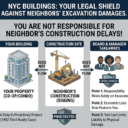
When the Neighbor Builds: What Condo and Co-Op Boards Need to Know

June 29, 2026

Construction in New York City is a fact of life, but when a...

Succession Rights in Limited-Equity Co-ops: Practical Lessons from Mutual Redevelopment Houses v. Manyevitch

June 12, 2026

Succession disputes are among the most sensitive and...

The Post-Settlement Trap: What Fiondella Teaches Co-op Boards About Stipulations and Continuing Habitability Claims

June 9, 2026

For New York cooperative boards and managing agents,...

The Derivative Action Threat: Why “Limited Common Elements” Present Litigation Risks for Condominium Boards and Managers

May 16, 2026

A recent decision by the Appellate Division, First...

Governance and Rule-Making in the Modern Condominium

April 27, 2026

Reflections on 10MSW17D LLC v. Bd. of Managers of 10...

Don’t Delay: Why Timely Enforcement of Common Charges is Critical for Condo Boards

April 15, 2026

A recent decision from the Supreme Court of New York,...

RPAPL § 881 Licenses, and Why Fee Reimbursement Is a Core Deal Term

April 13, 2026

Boards and managers of condominiums, cooperatives, and...

The 432 Park Decision: A Masterclass in Risk Management for New York Condo Boards

April 2, 2026

New York condominium boards and management companies operate...

Protecting Your Building’s Integrity: Lessons from Board of Mgrs. of the 80th at Madison Condominium v. 1055 Madison Ave. Owners LLC

March 31, 2026

As a condominium board member or property manager, your...

Press Enter to search · Esc to close